Department of Nephrology and Hypertension, Medical School Hannover, Hanover, Germany.
BMC Nephrol. 2012 Aug 15;13:86. doi: 10.1186/1471-2369-13-86.
One hallmark of uremia is the impairment of neuro-cognitive function. Anecdotal clinical description from the early days of chronic dialysis therapy impressively illustrates the improvement of those functions by chronic hemodialysis treatment. Fortunately, today, uremia is only rarely observed in industrialized countries as many patients seek medical/nephrological attention prior to the occurrence of deadly complications of uremia.
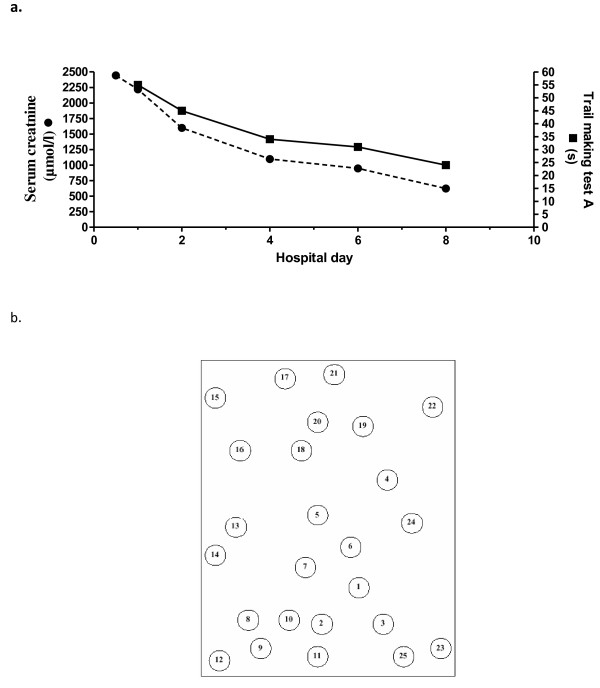
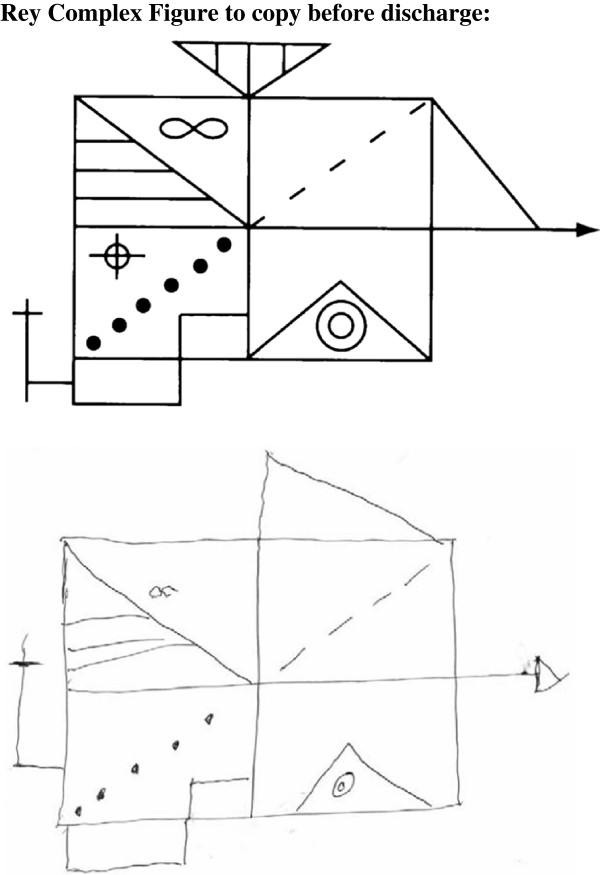
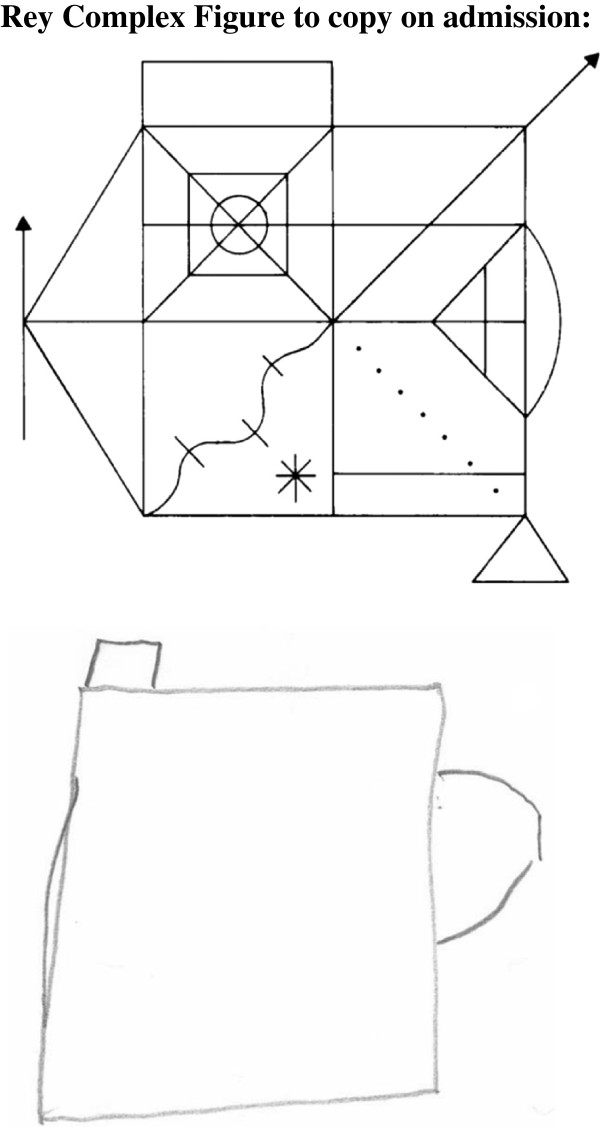
We report a rare case of severe uremia and describe the day to day improvement in neuro-cognitive function by dialysis using state of the arte test battery--starting at a serum creatinine of 2443 μmol/l.
Especially executive functions, which are assumed to be localized in the frontal cerebral regions, are impaired in severe uremia and improve remarkably with the correction of severe uremia, i.e., initiation of dialysis.
尿毒症的一个标志是神经认知功能受损。慢性透析治疗早期的临床描述令人印象深刻地说明了慢性血液透析治疗对这些功能的改善。幸运的是,如今,由于许多患者在发生尿毒症致命并发症之前就寻求医疗/肾脏科的关注,因此在工业化国家很少观察到尿毒症。
我们报告了一例罕见的严重尿毒症病例,并描述了使用最先进的测试电池进行透析治疗,每天都在改善神经认知功能 - 从血清肌酐 2443 μmol/L 开始。
特别是执行功能,据认为位于额叶大脑区域,在严重尿毒症中受损,并且随着严重尿毒症的纠正(即开始透析)而显著改善。