Dipartimento di Fisiopatologia Medico-Chirurgica e dei Trapianti, Università di Milano, Via Fratelli Cervi 93, 20090 Segrate, Italy.
Oxid Med Cell Longev. 2012;2012:973927. doi: 10.1155/2012/973927. Epub 2012 Jul 26.
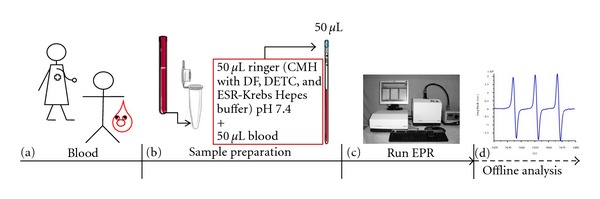
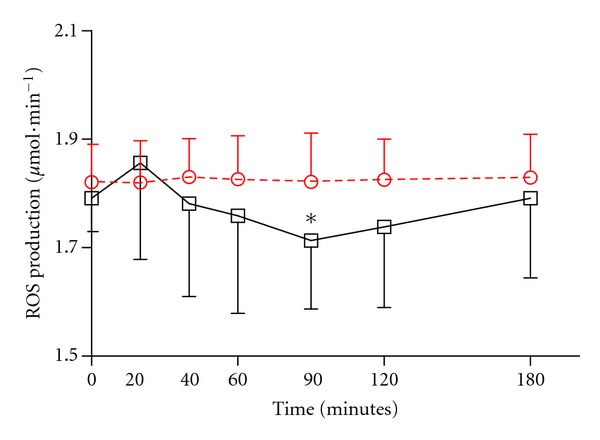
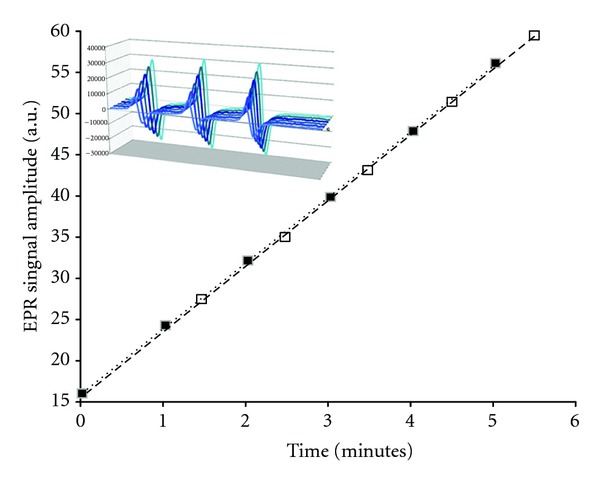
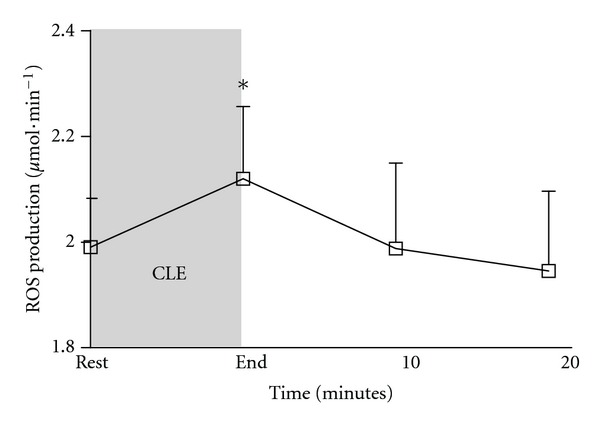
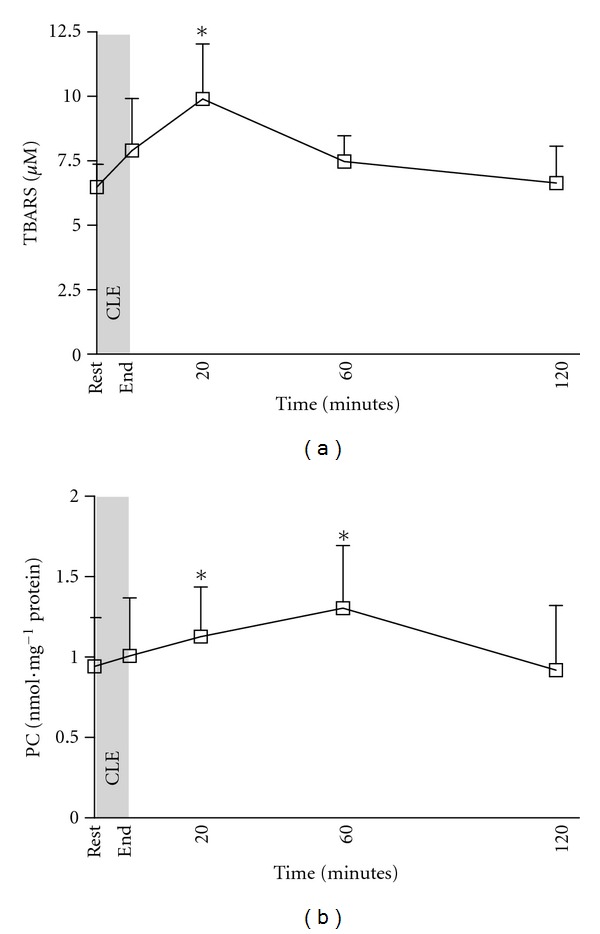
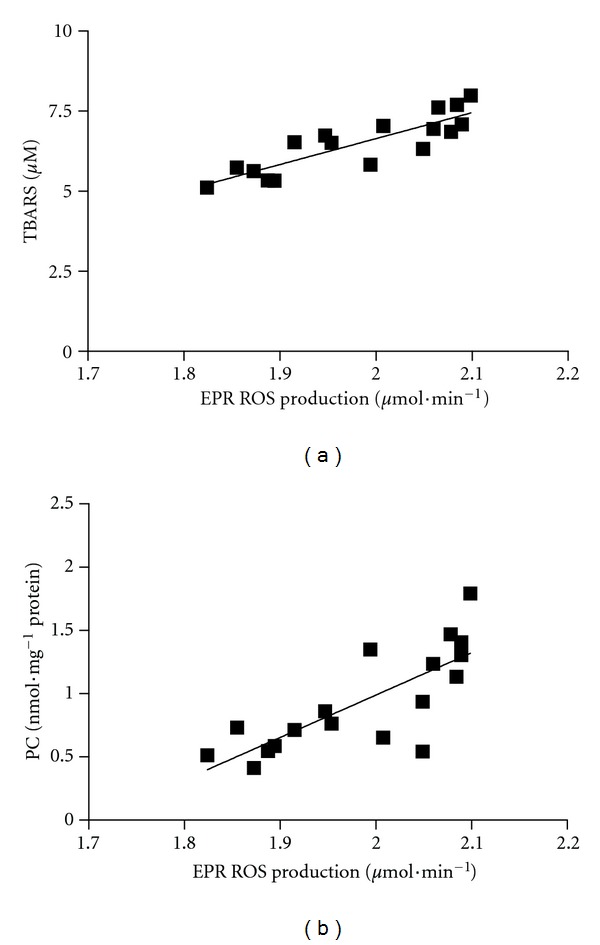
Despite the growing interest in the role of reactive oxygen species (ROS) in health and disease, reliable quantitative noninvasive methods for the assessment of oxidative stress in humans are still lacking. EPR technique, coupled to a specific spin probe (CMH: 1-hydroxy-3-methoxycarbonyl-2,2,5,5-tetramethylpyrrolidine) is here presented as the method of choice to gain a direct measurement of ROS in biological fluids and tissues. The study aimed at demonstrating that, differently from currently available "a posteriori" assays of ROS-induced damage by means of biomolecules (e.g., proteins and lipids) spin-trapping EPR provides direct evidence of the "instantaneous" presence of radical species in the sample and, as signal areas are proportional to the number of excited electron spins, lead to absolute concentration levels. Using a recently developed bench top continuous wave system (e-scan EPR scanner, Bruker) dealing with very low ROS concentration levels in small (50 μL) samples, we successfully monitored rapid ROS production changes in peripheral blood of athletes after controlled exercise and sedentary subjects after antioxidant supplementation. The correlation between EPR results and data obtained by various enzymatic assays (e.g., protein carbonyls and thiobarbituric acid reactive substances) was determined too. Synthetically, our method allows reliable, quick, noninvasive quantitative determination of ROS in human peripheral blood.
尽管人们对活性氧(ROS)在健康和疾病中的作用越来越感兴趣,但仍缺乏可靠的、定量的、非侵入性的人体氧化应激评估方法。电子顺磁共振(EPR)技术与特定的自旋探针(CMH:1-羟基-3-甲氧羰基-2,2,5,5-四甲基吡咯烷)相结合,是一种可直接测量生物体液和组织中 ROS 的方法。本研究旨在证明,与目前通过生物分子(如蛋白质和脂质)进行的“事后”ROS 诱导损伤的检测方法不同,自旋捕获 EPR 提供了样品中自由基存在的直接证据,并且由于信号区域与激发电子自旋的数量成正比,因此可以得到绝对浓度水平。本研究使用了最近开发的台式连续波系统(e-scan EPR 扫描仪,Bruker),该系统可处理小样本(50μL)中非常低的 ROS 浓度水平,成功监测了经过控制运动后的运动员外周血中 ROS 产生的快速变化以及抗氧化剂补充后的久坐受试者的 ROS 产生变化。还确定了 EPR 结果与各种酶促测定法(例如,蛋白质羰基和硫代巴比妥酸反应物质)获得的数据之间的相关性。综合来看,我们的方法可用于可靠、快速、非侵入性地定量测定人外周血中的 ROS。