Fingelkurts Andrew A, Fingelkurts Alexander A, Bagnato Sergio, Boccagni Cristina, Galardi Giuseppe
BM-Science - Brain and Mind Technologies Research Centre, Espoo, Finland.
Open Neuroimag J. 2012;6:55-68. doi: 10.2174/1874440001206010055. Epub 2012 Jul 27.
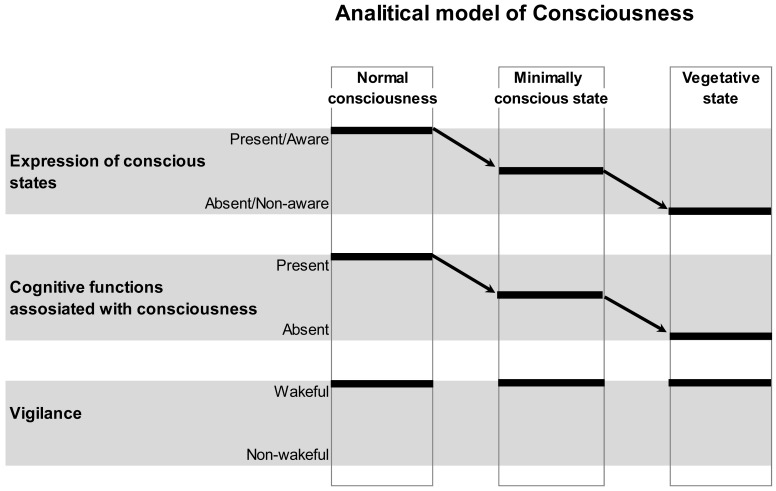
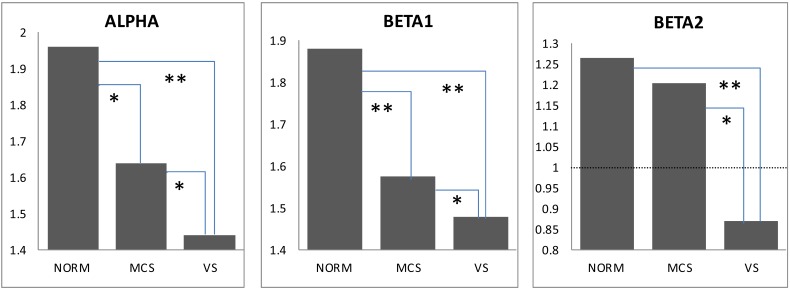
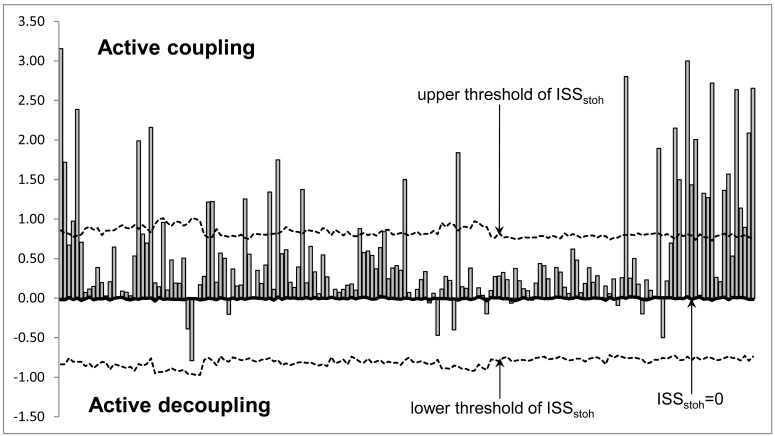
The default mode network (DMN) has been consistently activated across a wide variety of self-related tasks, leading to a proposal of the DMN's role in self-related processing. Indeed, there is limited fMRI evidence that the functional connectivity within the DMN may underlie a phenomenon referred to as self-awareness. At the same time, none of the known studies have explicitly investigated neuronal functional interactions among brain areas that comprise the DMN as a function of self-consciousness loss. To fill this gap, EEG operational synchrony analysis [1, 2] was performed in patients with severe brain injuries in vegetative and minimally conscious states to study the strength of DMN operational synchrony as a function of self-consciousness expression. We demonstrated that the strength of DMN EEG operational synchrony was smallest or even absent in patients in vegetative state, intermediate in patients in minimally conscious state and highest in healthy fully self-conscious subjects. At the same time the process of ecoupling of operations performed by neuronal assemblies that comprise the DMN was highest in patients in vegetative state, intermediate in patients in minimally conscious state and minimal in healthy fully self-conscious subjects. The DMN's frontal EEG operational module had the strongest decrease in operational synchrony strength as a function of selfconsciousness loss, when compared with the DMN's posterior modules. Based on these results it is suggested that the strength of DMN functional connectivity could mediate the strength of self-consciousness expression. The observed alterations similarly occurred across EEG alpha, beta1 and beta2 frequency oscillations. Presented results suggest that the EEG operational synchrony within DMN may provide an objective and accurate measure for the assessment of signs of self-(un)consciousness in these challenging patient populations. This method therefore, may complement the current diagnostic procedures for patients with severe brain injuries and, hence, the planning of a rational rehabilitation intervention.
默认模式网络(DMN)在各种各样的自我相关任务中一直被激活,这使得人们提出了DMN在自我相关加工中的作用。事实上,功能磁共振成像(fMRI)证据有限,表明DMN内的功能连接可能是一种被称为自我意识现象的基础。同时,已知的研究中没有一项明确研究过构成DMN的脑区之间的神经元功能相互作用与自我意识丧失的关系。为了填补这一空白,对处于植物状态和最低意识状态的重度脑损伤患者进行了脑电图操作同步分析[1,2],以研究DMN操作同步强度与自我意识表达的关系。我们证明,植物状态患者的DMN脑电图操作同步强度最小甚至不存在,最低意识状态患者的同步强度处于中等水平,而健康的完全有自我意识的受试者的同步强度最高。同时,构成DMN的神经元组件执行的操作解耦过程在植物状态患者中最高,在最低意识状态患者中处于中等水平,在健康的完全有自我意识的受试者中最小。与DMN的后部模块相比,DMN的额叶脑电图操作模块的操作同步强度随着自我意识丧失而下降最为明显。基于这些结果,有人提出DMN功能连接的强度可能介导自我意识表达的强度。观察到的变化同样出现在脑电图的α、β1和β2频率振荡中。呈现的结果表明,DMN内的脑电图操作同步可能为评估这些具有挑战性的患者群体中的自我(无)意识迹象提供客观准确的测量方法。因此,这种方法可能会补充目前针对重度脑损伤患者的诊断程序,从而为合理的康复干预计划提供帮助。