Department of Marine Ecology, College of Marine Life Sciences, Ocean University of China, Qingdao, China.
PLoS One. 2012;7(8):e38245. doi: 10.1371/journal.pone.0038245. Epub 2012 Aug 8.
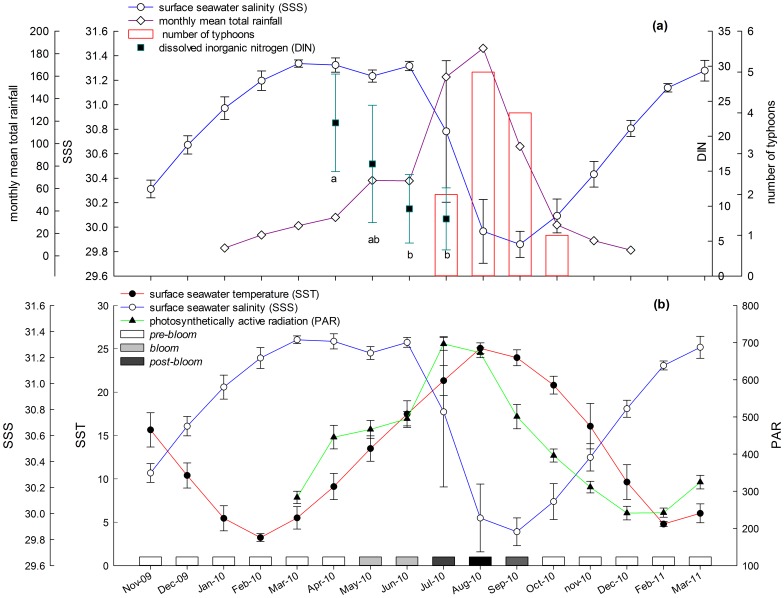
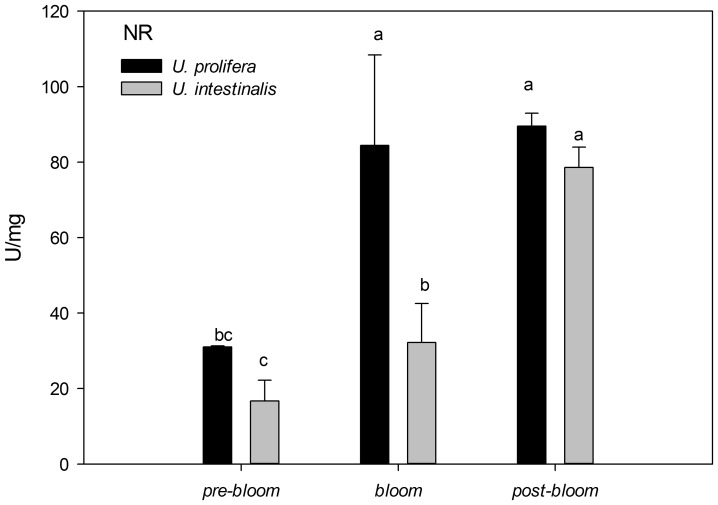
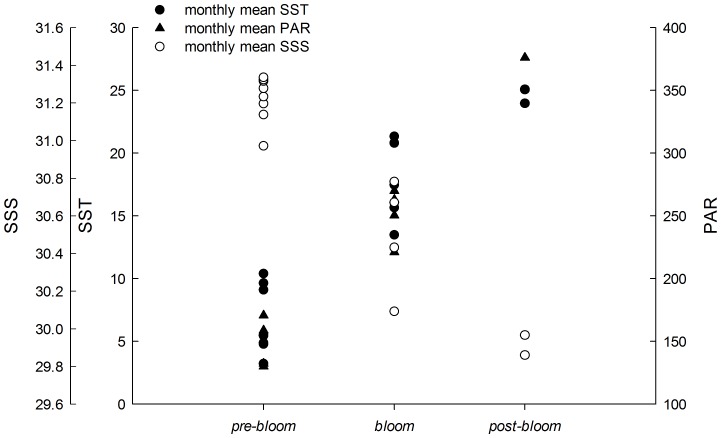
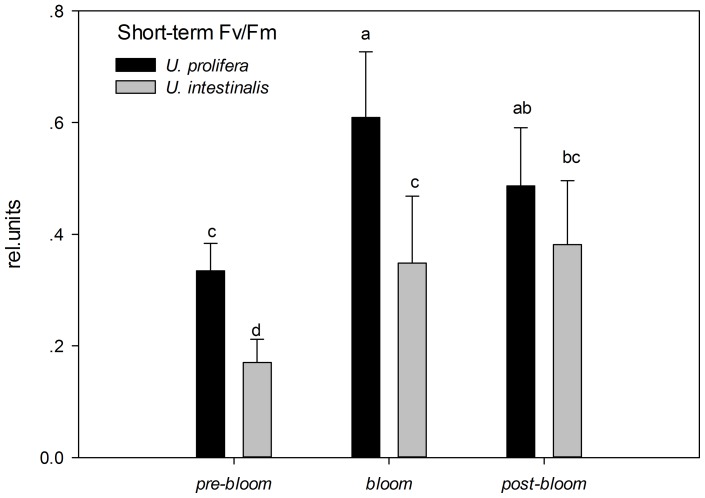
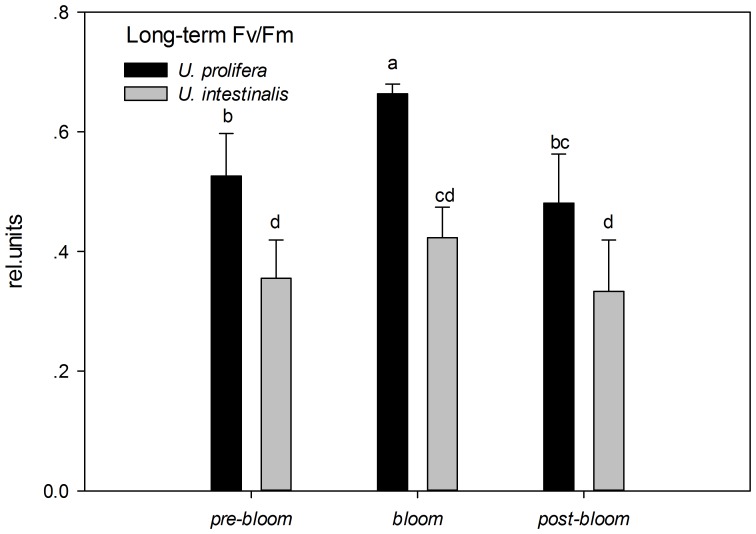
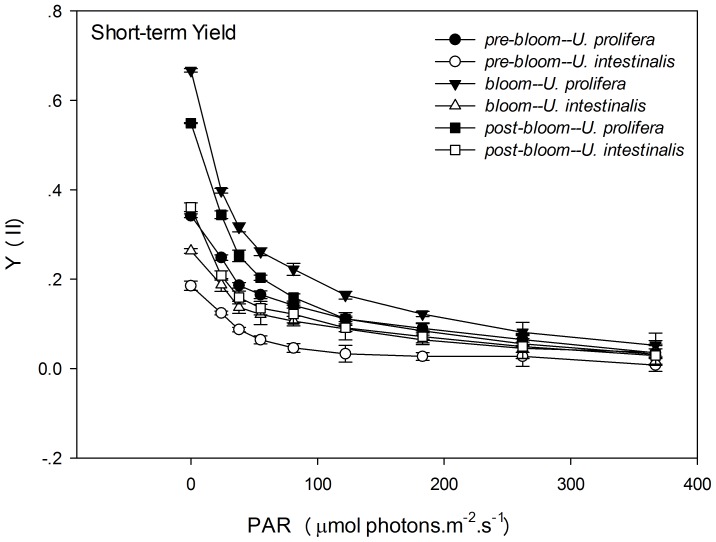
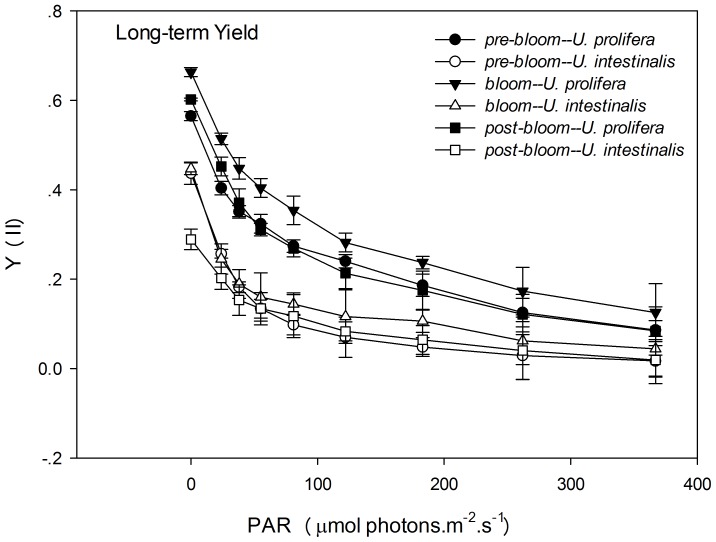
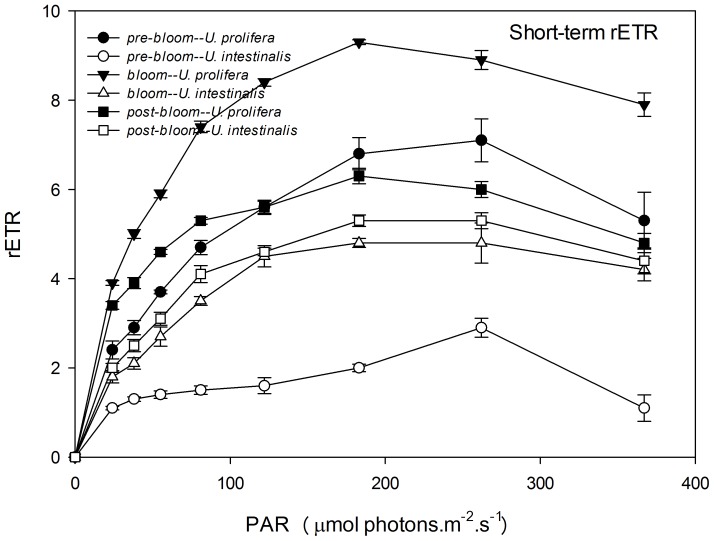
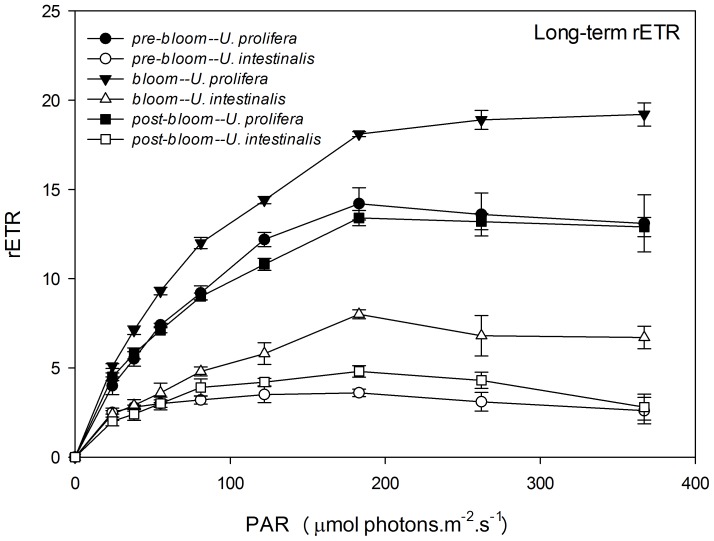
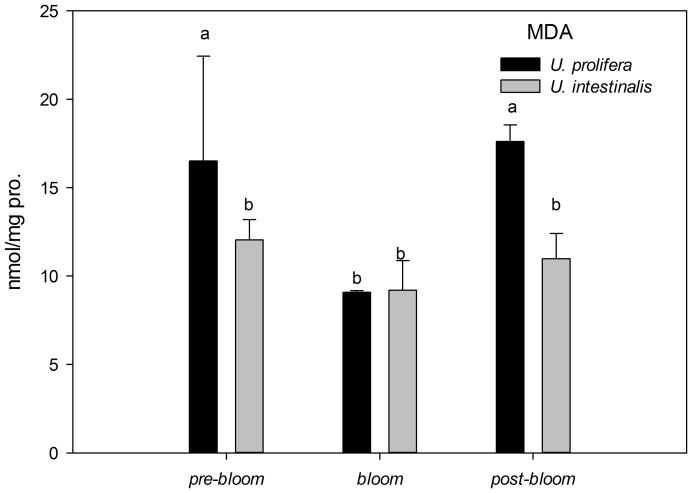
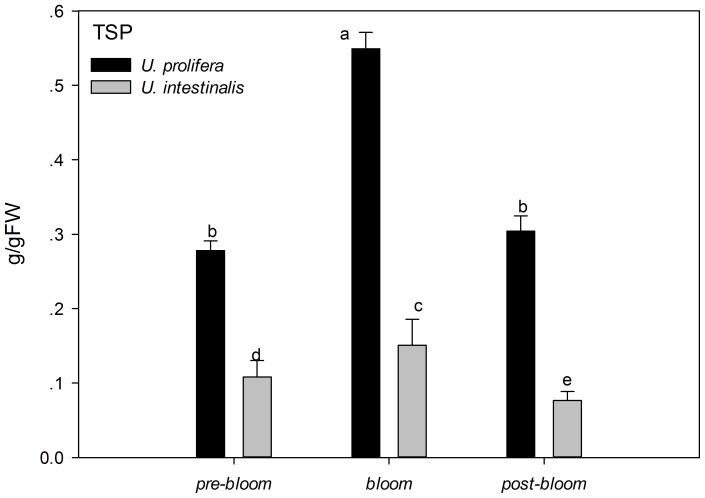
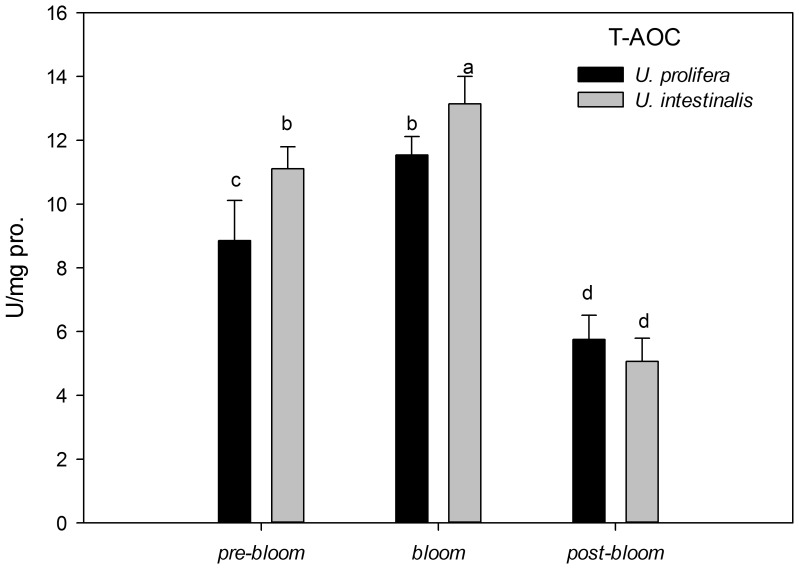
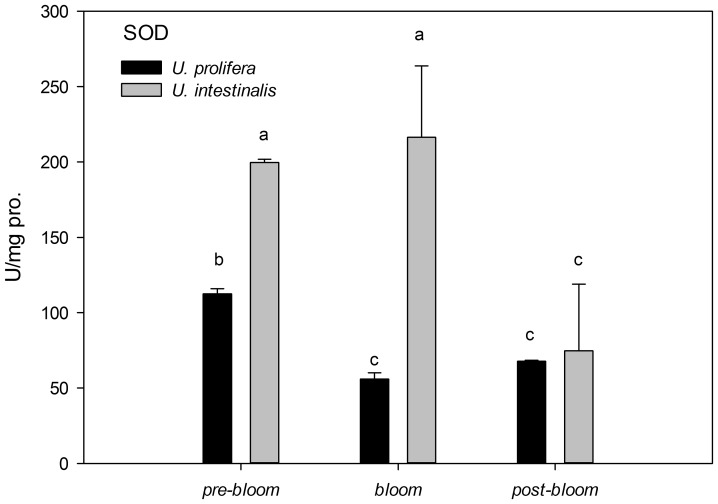
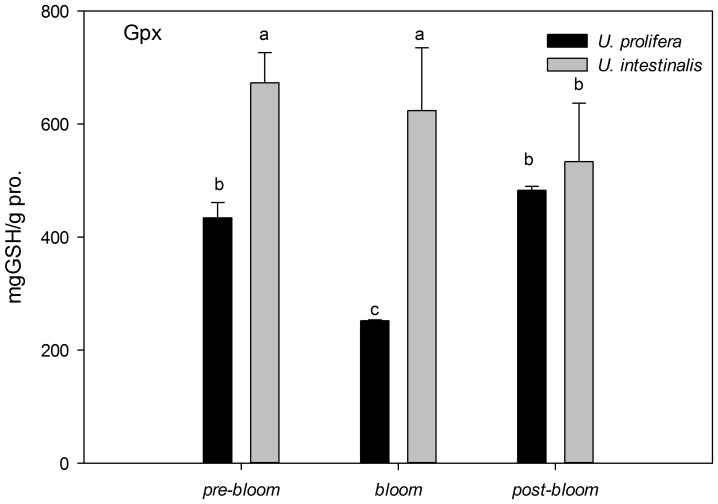
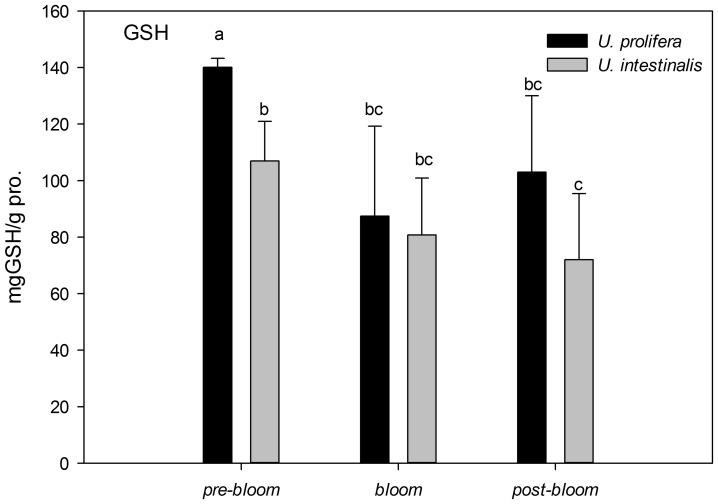
Yellow Sea green tides have occurred in coastal China almost every year from 2007 to 2011. Ulva prolifera (Müller) J. Agardh has been identified as the causative macroalgal species. U. intestinalis, however, has been observed in the bloom areas, co-occurring with U. prolifera, but it has not been found to be causative. The Yellow Sea green tide has shown consistent phases of development that match corresponding environmental changes. U. prolifera, not U. intestinalis, is dominant. Our experimental design was based on these observed phenomena, and the results of our field investigation indicated a close relationship between changes in principal environmental factors (irradiance, temperature, and salinity) and the development of each phase of the bloom. These main environmental factors were simulated to allow estimation and comparison of the physiological responses of U. prolifera and U. intestinalis. Ecophysiological differences were found between these two species. (1) More photosynthetic activity and plasticity were detected in U. prolifera. (2) U. prolifera was found to be more sensitive to dynamic environments, especially harsh and changing environmental conditions. U. intestinalis was found to be more stable, probably due to the higher stress tolerance given by its antioxidant system. (3) Markedly higher nutrient absorption activity was observed in U. prolifera. Comparisons of the ecophysiological traits of these two species in this present study may foster understanding of their natural ecological processes. Specifically, U. prolifera seemed to be more engaged with the ephemeral blooms, while U. intestinalis seemed to be directed toward persistence. This also suggests that the ecological success of U. prolifera may be inextricably linked to its higher capacity for photosynthesis, nutrient absorption, and nutrient assimilation.
黄海绿潮几乎每年都会在中国沿海发生,从 2007 年到 2011 年。已确定浒苔(Müller)J. Agardh 是造成这种现象的宏藻类物种。然而,在绿潮发生区也观察到肠浒苔,与浒苔共存,但未被发现是致病原因。黄海绿潮的发展阶段一直与相应的环境变化一致。浒苔占主导地位,而不是肠浒苔。我们的实验设计基于这些观察到的现象,现场调查结果表明,主要环境因素(光照、温度和盐度)的变化与绿潮各阶段的发展密切相关。这些主要环境因素的模拟允许对浒苔和肠浒苔的生理反应进行估计和比较。发现这两个物种之间存在生态生理差异。(1)浒苔表现出更高的光合作用活性和可塑性。(2)浒苔对动态环境更敏感,尤其是恶劣和多变的环境条件。肠浒苔表现出更高的稳定性,可能是由于其抗氧化系统赋予的更高的胁迫耐受能力。(3)浒苔表现出更高的营养吸收活性。本研究对这两个物种的生态生理特性进行比较,可能有助于了解它们的自然生态过程。具体而言,浒苔似乎更参与短暂的浮游生物爆发,而肠浒苔似乎更倾向于持久性。这也表明浒苔的生态成功与其更高的光合作用能力、营养吸收能力和营养同化能力密切相关。