Top Institute Food and Nutrition, Wageningen, The Netherlands.
PLoS One. 2012;7(8):e43260. doi: 10.1371/journal.pone.0043260. Epub 2012 Aug 14.
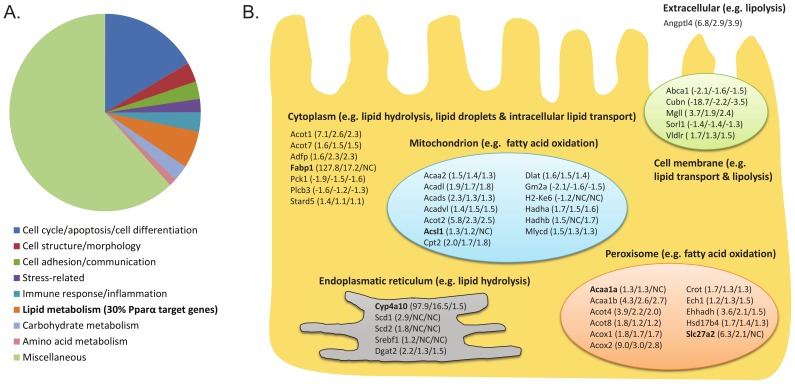
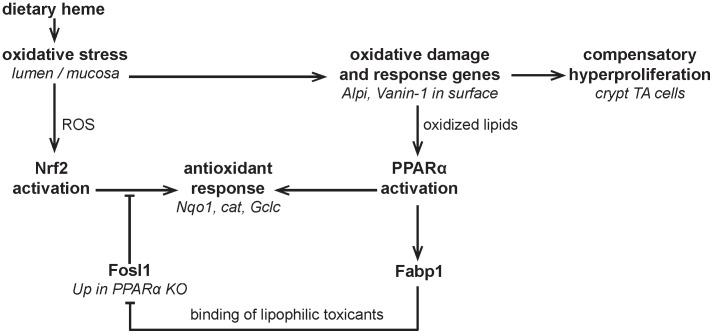
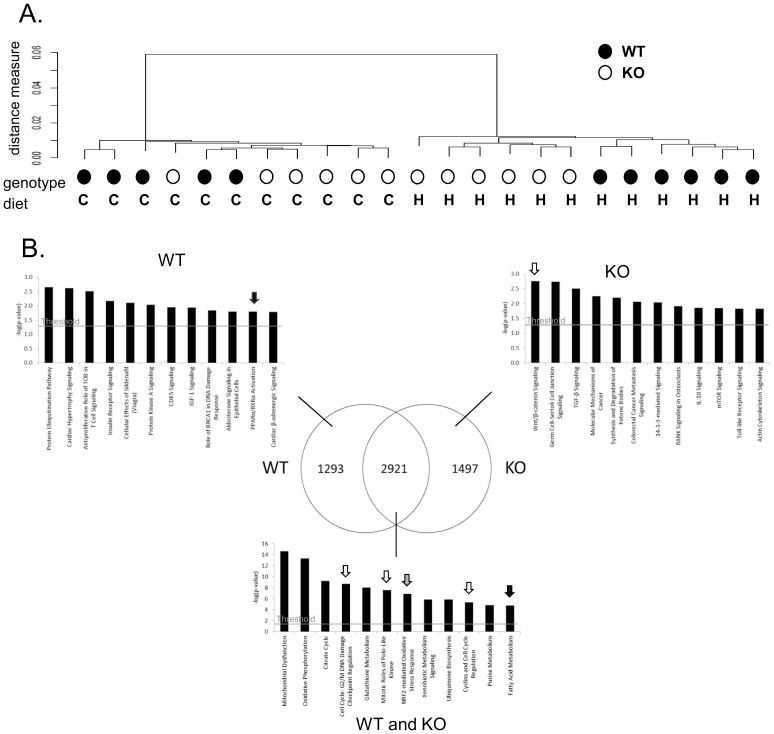
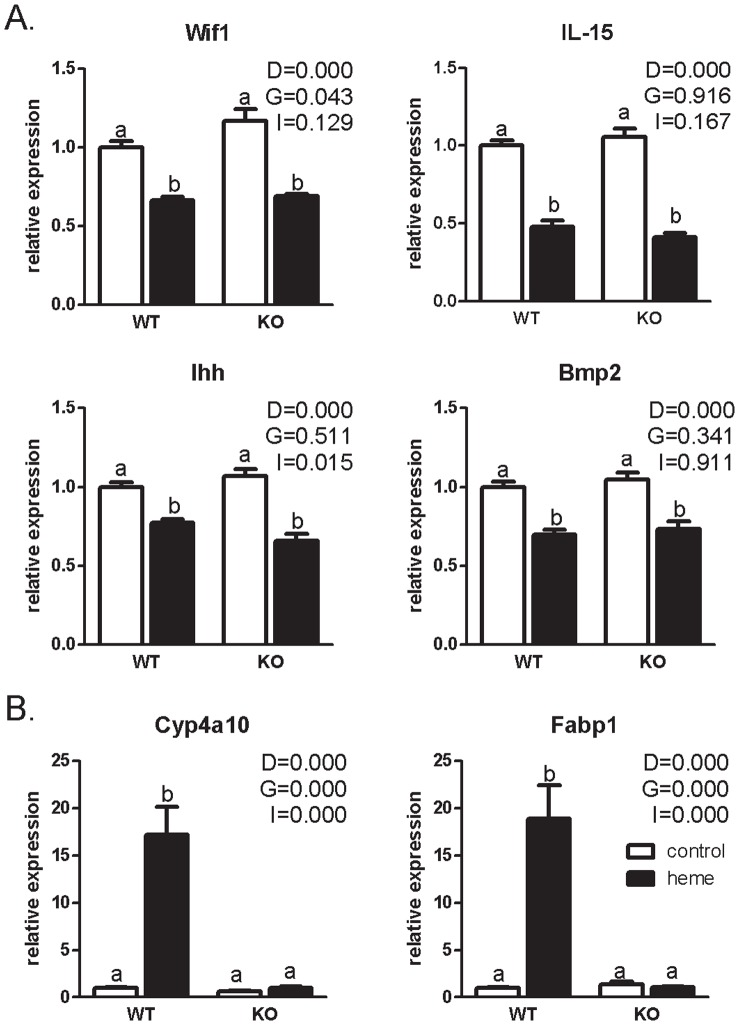
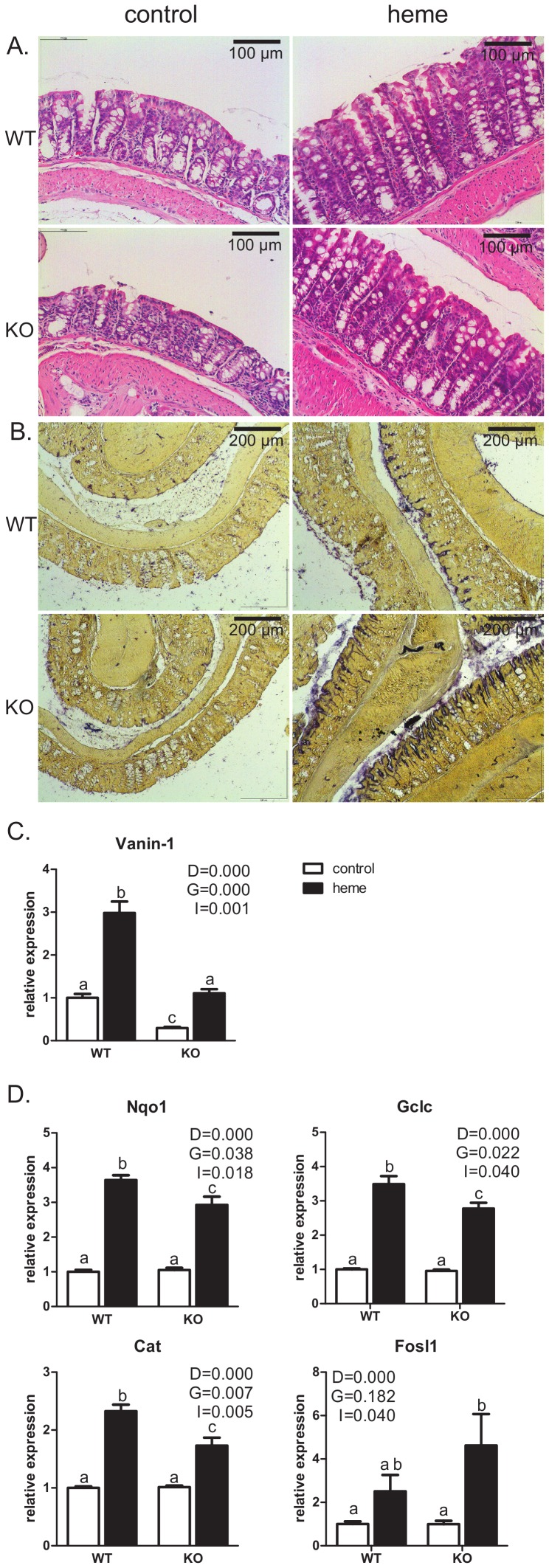
Red meat consumption is associated with an increased colon cancer risk. Heme, present in red meat, injures the colon surface epithelium by luminal cytotoxicity and reactive oxygen species. This surface injury is overcompensated by hyperproliferation and hyperplasia of crypt cells. Transcriptome analysis of mucosa of heme-fed mice showed, besides stress- and proliferation-related genes, many upregulated lipid metabolism-related PPARα target genes. The aim of this study was to investigate the role of PPARα in heme-induced hyperproliferation and hyperplasia. Male PPARα KO and WT mice received a purified diet with or without heme. As PPARα is proposed to protect against oxidative stress and lipid peroxidation, we hypothesized that the absence of PPARα leads to more surface injury and crypt hyperproliferation in the colon upon heme-feeding. Heme induced luminal cytotoxicity and lipid peroxidation and colonic hyperproliferation and hyperplasia to the same extent in WT and KO mice. Transcriptome analysis of colonic mucosa confirmed similar heme-induced hyperproliferation in WT and KO mice. Stainings for alkaline phosphatase activity and expression levels of Vanin-1 and Nrf2-targets indicated a compromised antioxidant defense in heme-fed KO mice. Our results suggest that the protective role of PPARα in antioxidant defense involves the Nrf2-inhibitor Fosl1, which is upregulated by heme in PPARα KO mice. We conclude that PPARα plays a protective role in colon against oxidative stress, but PPARα does not mediate heme-induced hyperproliferation. This implies that oxidative stress of surface cells is not the main determinant of heme-induced hyperproliferation and hyperplasia.
摄入红色肉类与结肠癌风险增加有关。血红素存在于红色肉类中,通过腔细胞毒性和活性氧损伤结肠表面上皮。这种表面损伤被隐窝细胞的过度增殖和增生所代偿。血红素喂养小鼠的黏膜转录组分析显示,除了应激和增殖相关基因外,许多上调的脂质代谢相关 PPARα 靶基因。本研究旨在探讨 PPARα 在血红素诱导的过度增殖和增生中的作用。雄性 PPARα KO 和 WT 小鼠接受含有或不含有血红素的纯化饮食。由于 PPARα 被认为可以抵抗氧化应激和脂质过氧化,我们假设在血红素喂养时,PPARα 的缺失会导致结肠表面损伤和隐窝过度增殖增加。血红素以相同的程度诱导 WT 和 KO 小鼠的腔细胞毒性和脂质过氧化以及结肠过度增殖和增生。结肠黏膜的转录组分析证实了 WT 和 KO 小鼠中相似的血红素诱导的过度增殖。碱性磷酸酶活性染色和 Vanin-1 和 Nrf2 靶基因的表达水平表明,血红素喂养的 KO 小鼠抗氧化防御能力受损。我们的结果表明,PPARα 在抗氧化防御中的保护作用涉及 Nrf2 抑制剂 Fosl1,血红素在 PPARα KO 小鼠中上调了该抑制剂。我们得出结论,PPARα 在结肠中发挥抗氧化应激的保护作用,但 PPARα 不介导血红素诱导的过度增殖。这意味着表面细胞的氧化应激不是血红素诱导的过度增殖和增生的主要决定因素。