Simcox Judith A, Mitchell Thomas Creighton, Gao Yan, Just Steven F, Cooksey Robert, Cox James, Ajioka Richard, Jones Deborah, Lee Soh-Hyun, King Daniel, Huang Jingyu, McClain Donald A
Department of Biochemistry, University of Utah, Salt Lake City, UT.
Department of Internal Medicine, University of Utah, Salt Lake City, UT.
Diabetes. 2015 Apr;64(4):1108-19. doi: 10.2337/db14-0646. Epub 2014 Oct 14.
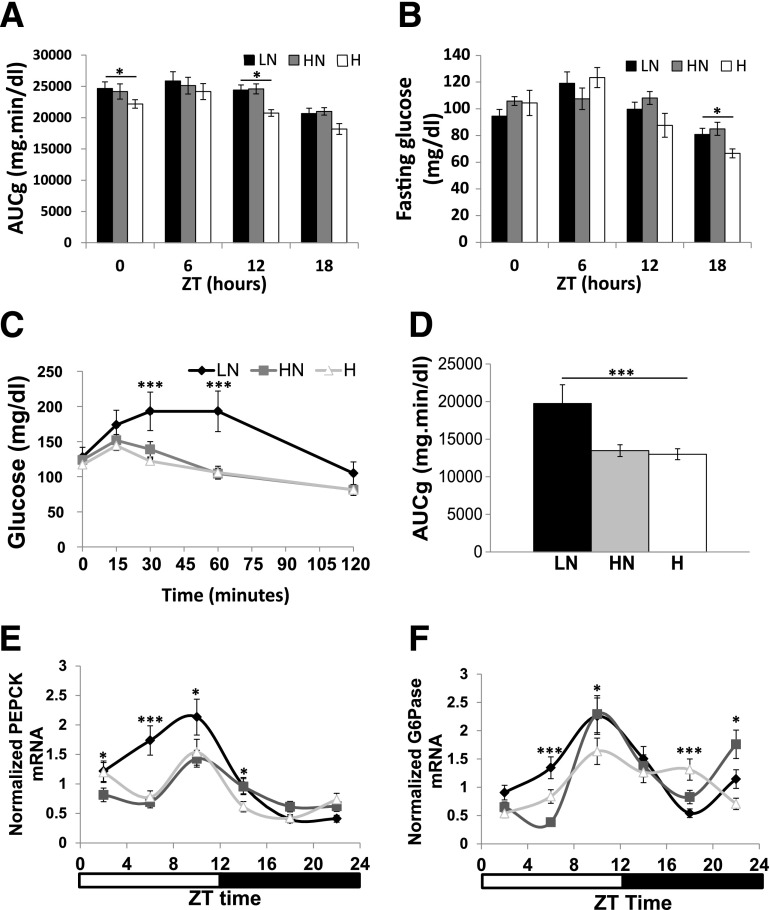
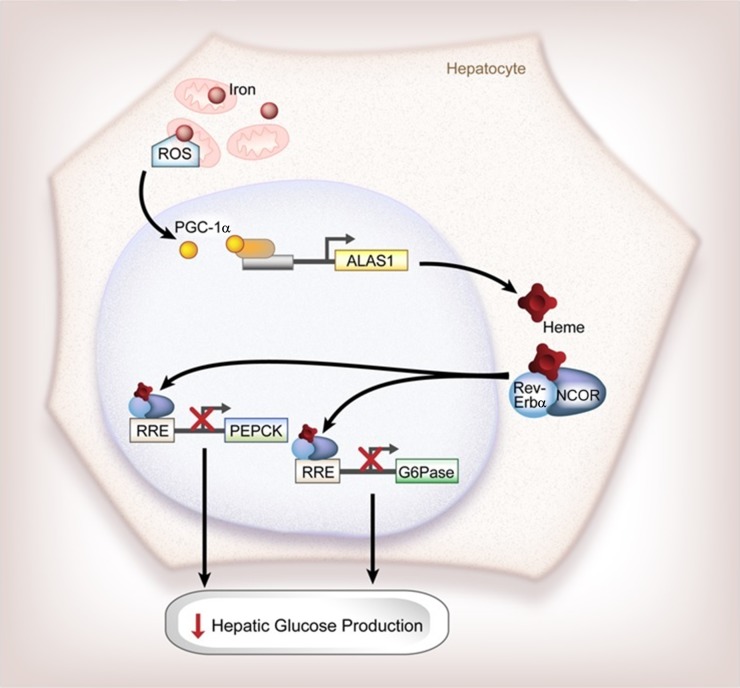
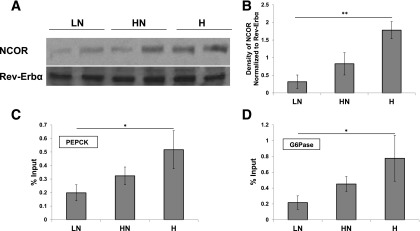
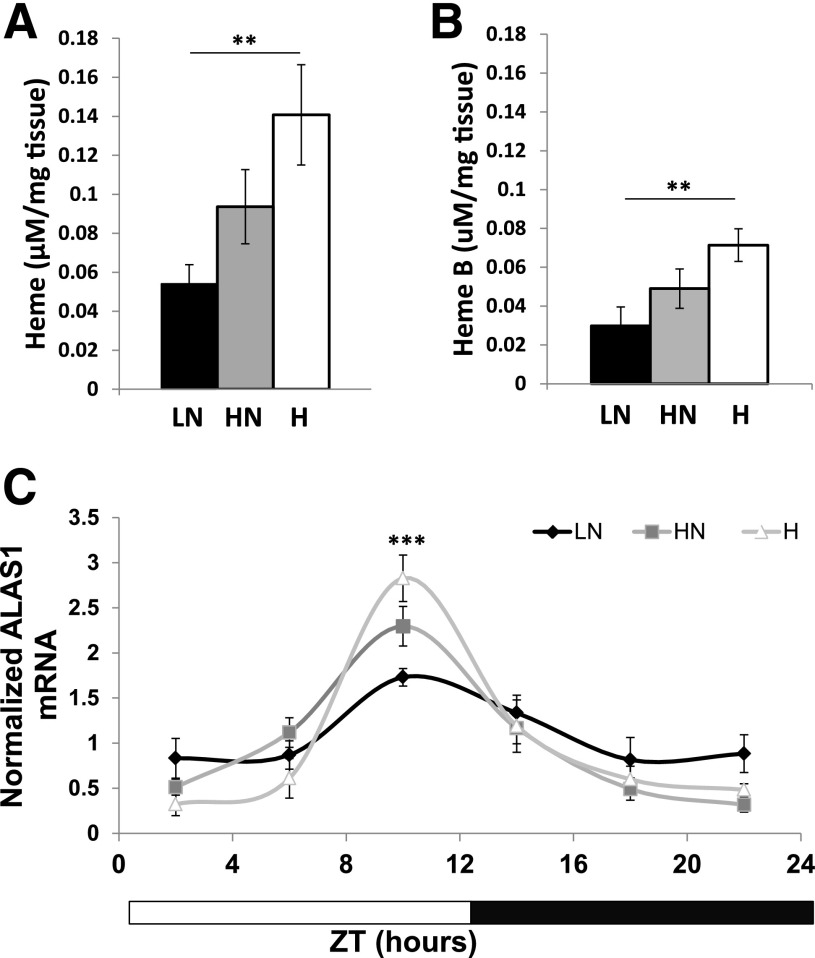
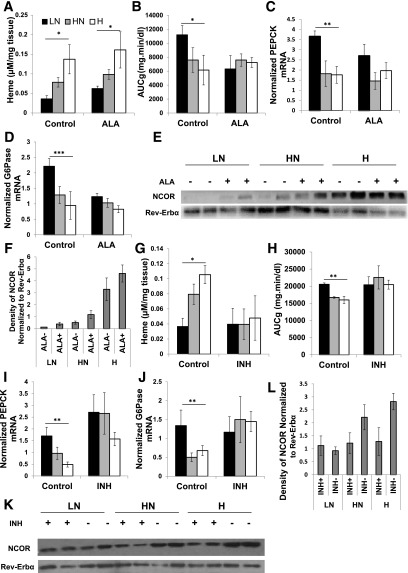
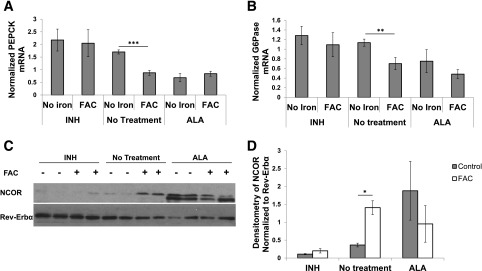
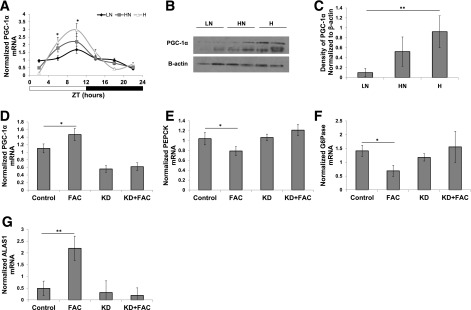
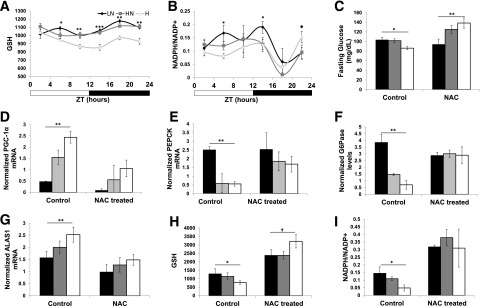
The circadian rhythm of the liver maintains glucose homeostasis, and disruption of this rhythm is associated with type 2 diabetes. Feeding is one factor that sets the circadian clock in peripheral tissues, but relatively little is known about the role of specific dietary components in that regard. We assessed the effects of dietary iron on circadian gluconeogenesis. Dietary iron affects circadian glucose metabolism through heme-mediated regulation of the interaction of nuclear receptor subfamily 1 group d member 1 (Rev-Erbα) with its cosuppressor nuclear receptor corepressor 1 (NCOR). Loss of regulated heme synthesis was achieved by aminolevulinic acid (ALA) treatment of mice or cultured cells to bypass the rate-limiting enzyme in hepatic heme synthesis, ALA synthase 1 (ALAS1). ALA treatment abolishes differences in hepatic glucose production and in the expression of gluconeogenic enzymes seen with variation of dietary iron. The differences among diets are also lost with inhibition of heme synthesis with isonicotinylhydrazine. Dietary iron modulates levels of peroxisome proliferator-activated receptor γ coactivator 1α (PGC-1α), a transcriptional activator of ALAS1, to affect hepatic heme. Treatment of mice with the antioxidant N-acetylcysteine diminishes PGC-1α variation observed among the iron diets, suggesting that iron is acting through reactive oxygen species signaling.
肝脏的昼夜节律维持着葡萄糖稳态,而这种节律的紊乱与2型糖尿病有关。进食是设定外周组织生物钟的一个因素,但对于特定饮食成分在这方面的作用知之甚少。我们评估了膳食铁对昼夜糖异生的影响。膳食铁通过血红素介导的核受体亚家族1d组成员1(Rev-Erbα)与其共抑制因子核受体辅阻遏物1(NCOR)相互作用的调节来影响昼夜葡萄糖代谢。通过用氨基乙酰丙酸(ALA)处理小鼠或培养细胞以绕过肝脏血红素合成中的限速酶——ALA合酶1(ALAS1),实现了血红素合成的调节缺失。ALA处理消除了因膳食铁变化而导致的肝脏葡萄糖生成及糖异生酶表达的差异。用异烟肼抑制血红素合成也消除了不同饮食之间的差异。膳食铁调节过氧化物酶体增殖物激活受体γ共激活因子1α(PGC-1α)的水平,PGC-1α是ALAS1的转录激活因子,从而影响肝脏血红素。用抗氧化剂N-乙酰半胱氨酸处理小鼠可减少在不同铁含量饮食中观察到的PGC-1α变化,这表明铁是通过活性氧信号起作用的。