Haiech Jacques, Kilhoffer Marie-Claude
School of Biotechnology, University of Strasbourg, Strasbourg, France.
Croat Med J. 2012 Aug;53(4):298-300. doi: 10.3325/cmj.2012.53.298.
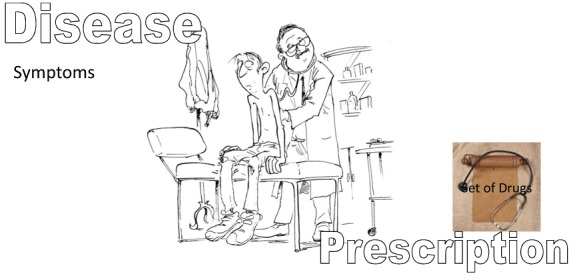
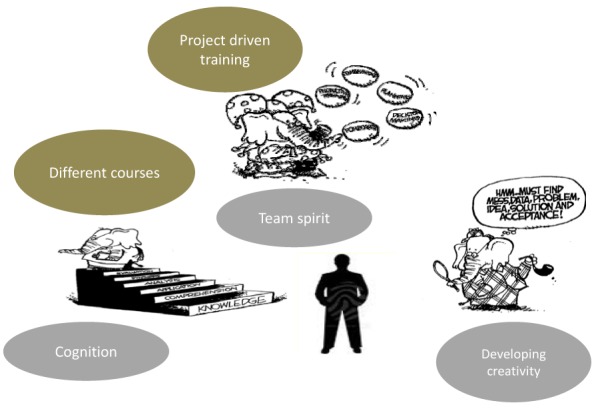
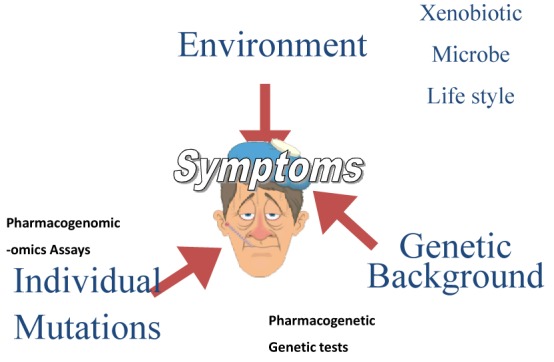
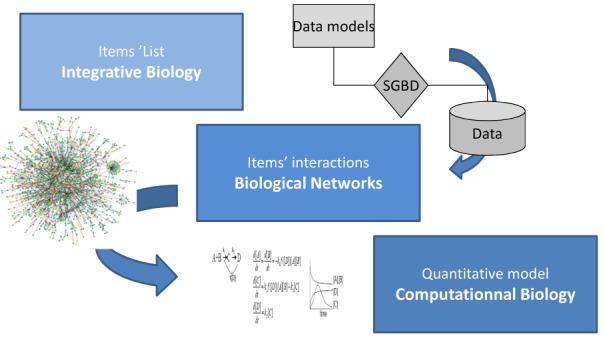
Although personalized medicine appears to be a truism, medical doctors are still generally trained in an old-fashioned manner with a focus on reactive treatment. The aim of this paper is to emphasize the evolution of life sciences into a more predictive science, where the development of quantitative models is starting to take place. Personalized medicine is a consequence of such paradigm shift. To keep up with the change, the various actors within the health system must be trained in a completely different manner, focusing on the ability to work as part of a multidisciplinary team that includes medical doctors, nurses, engineers in medical imaging, and others who collect information from patients. In addition, these teams should include modelers that are able to integrate the flood of data into predictive and quantitative models. The challenge of implementing new training methods in line with the shift is a major bottleneck to the emergence and success of personalized medicine in our societies.
尽管个性化医疗似乎是不言而喻的,但医生们通常仍以一种老式的方式接受培训,重点是反应性治疗。本文的目的是强调生命科学向更具预测性的科学的演变,定量模型的开发已开始在此过程中进行。个性化医疗是这种范式转变的结果。为了跟上这种变化,卫生系统中的各类从业者必须以一种截然不同的方式接受培训,重点是作为多学科团队一员开展工作的能力,该团队包括医生、护士、医学影像工程师以及其他从患者那里收集信息的人员。此外,这些团队应包括能够将大量数据整合到预测性和定量模型中的建模人员。按照这种转变实施新培训方法所面临的挑战,是我们社会中个性化医疗出现并取得成功的一个主要瓶颈。