Tulane Cancer Center, Department of Epidemiology, Tulane University, New Orleans, Louisiana, United States of America.
PLoS Genet. 2012;8(8):e1002842. doi: 10.1371/journal.pgen.1002842. Epub 2012 Aug 9.
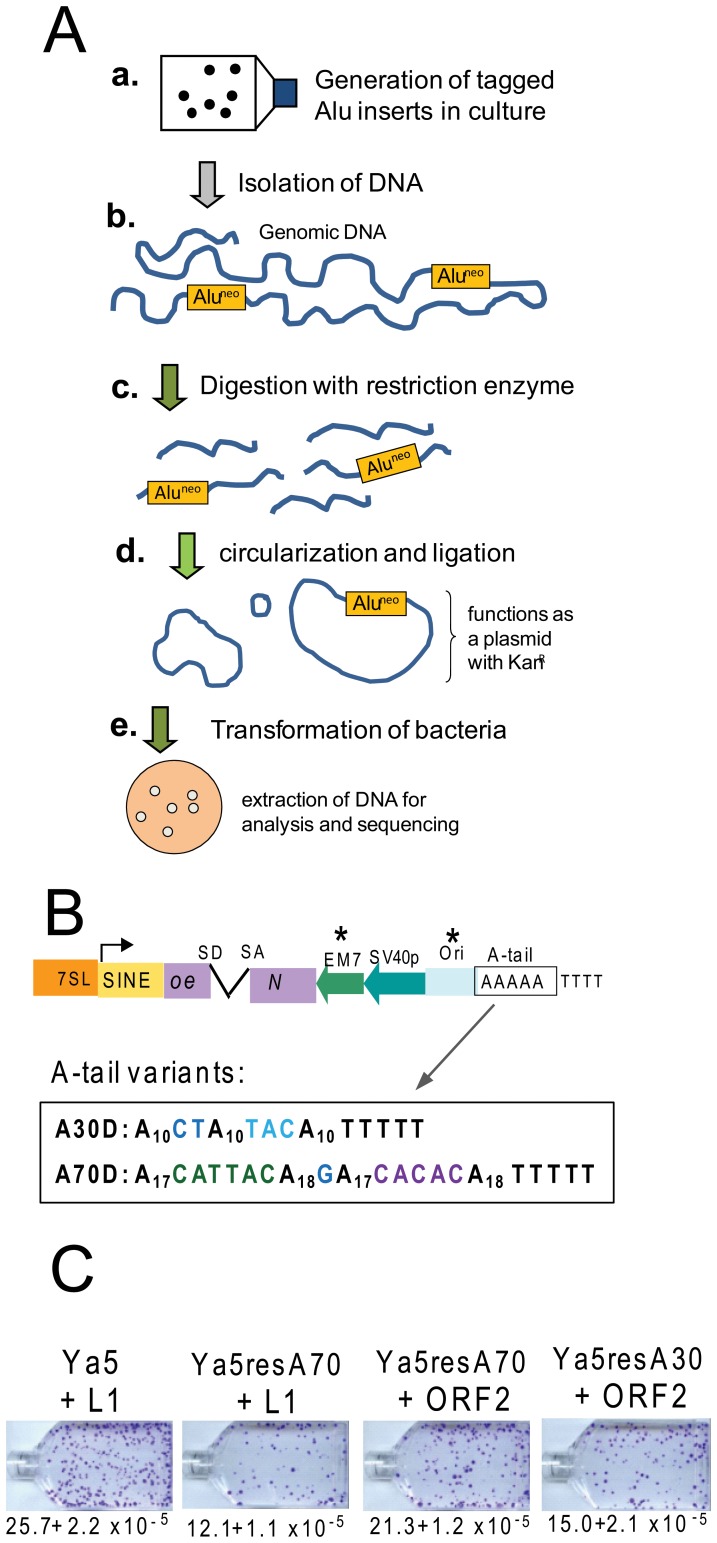
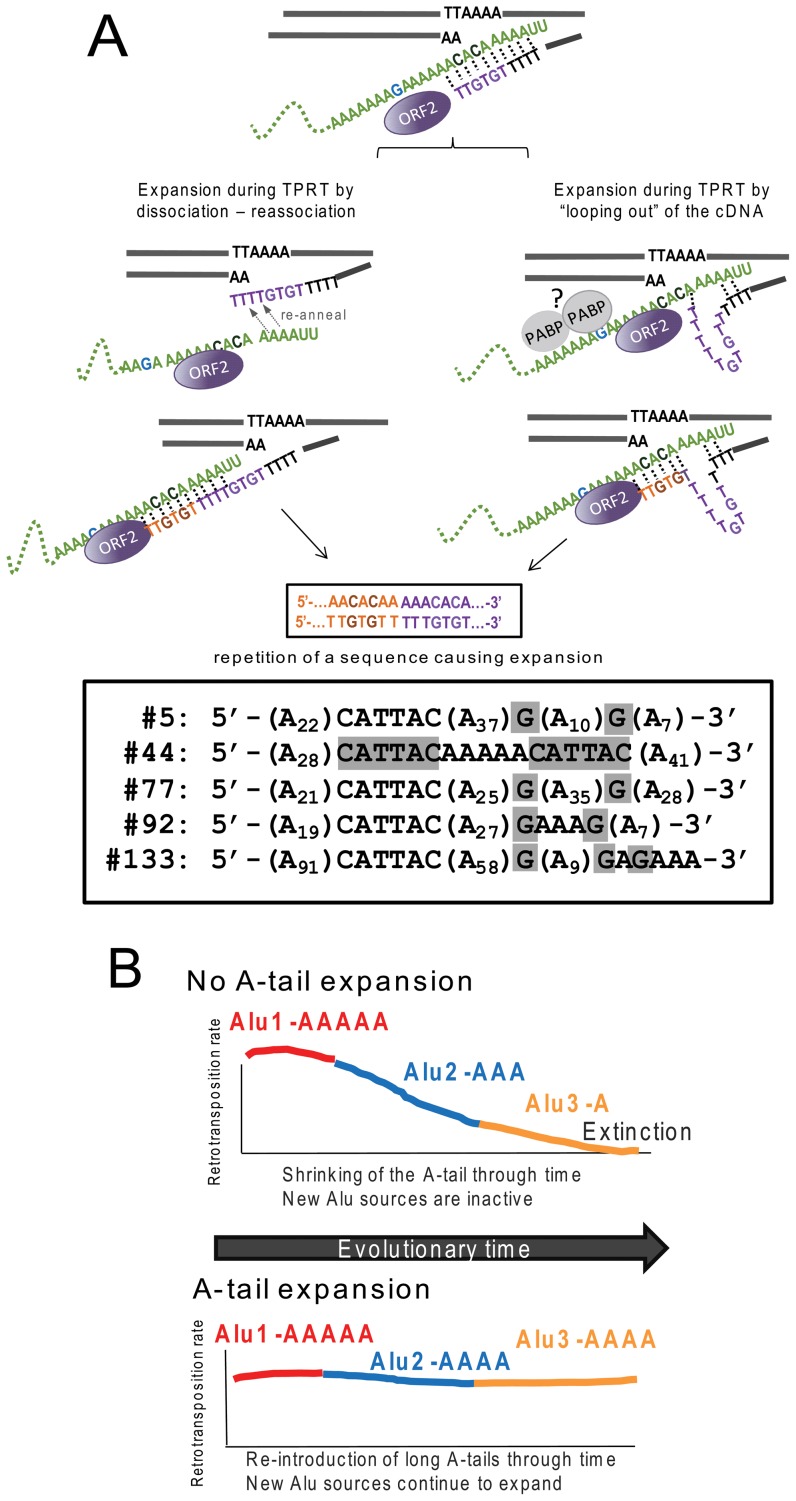
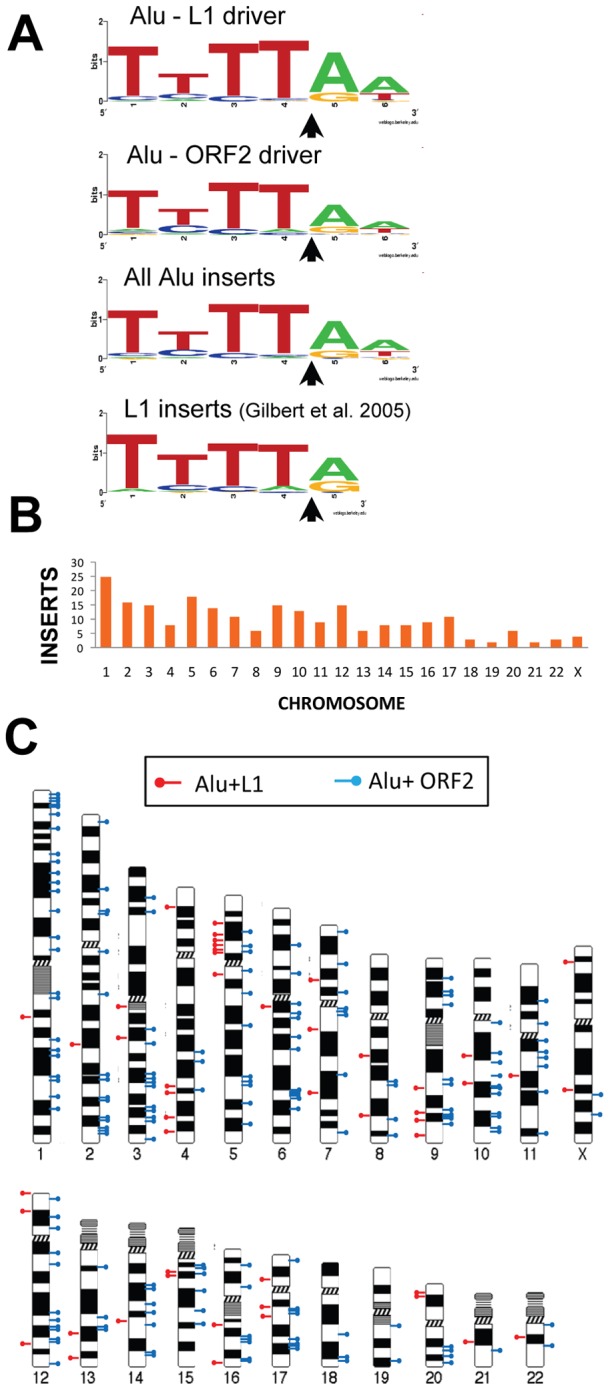
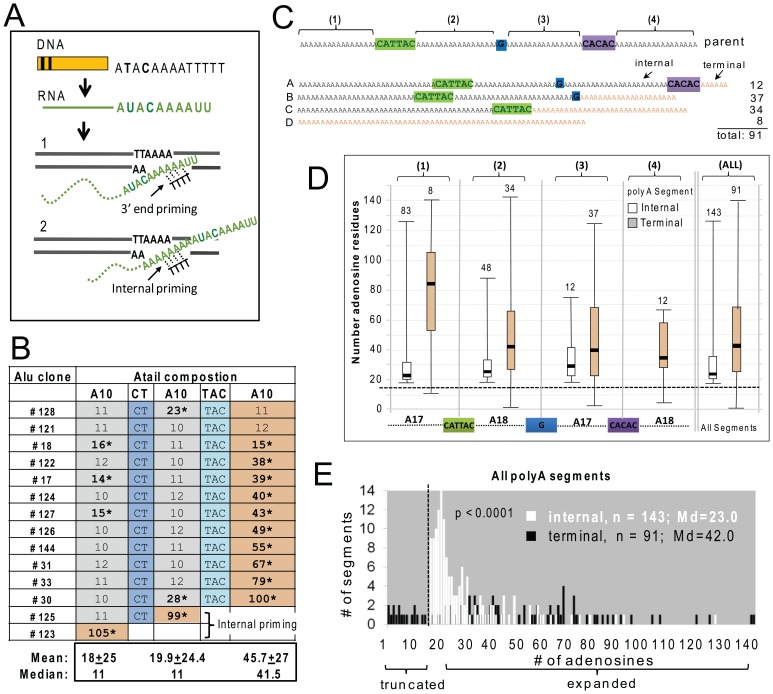
Alu elements are trans-mobilized by the autonomous non-LTR retroelement, LINE-1 (L1). Alu-induced insertion mutagenesis contributes to about 0.1% human genetic disease and is responsible for the majority of the documented instances of human retroelement insertion-induced disease. Here we introduce a SINE recovery method that provides a complementary approach for comprehensive analysis of the impact and biological mechanisms of Alu retrotransposition. Using this approach, we recovered 226 de novo tagged Alu inserts in HeLa cells. Our analysis reveals that in human cells marked Alu inserts driven by either exogenously supplied full length L1 or ORF2 protein are indistinguishable. Four percent of de novo Alu inserts were associated with genomic deletions and rearrangements and lacked the hallmarks of retrotransposition. In contrast to L1 inserts, 5' truncations of Alu inserts are rare, as most of the recovered inserts (96.5%) are full length. De novo Alus show a random pattern of insertion across chromosomes, but further characterization revealed an Alu insertion bias exists favoring insertion near other SINEs, highly conserved elements, with almost 60% landing within genes. De novo Alu inserts show no evidence of RNA editing. Priming for reverse transcription rarely occurred within the first 20 bp (most 5') of the A-tail. The A-tails of recovered inserts show significant expansion, with many at least doubling in length. Sequence manipulation of the construct led to the demonstration that the A-tail expansion likely occurs during insertion due to slippage by the L1 ORF2 protein. We postulate that the A-tail expansion directly impacts Alu evolution by reintroducing new active source elements to counteract the natural loss of active Alus and minimizing Alu extinction.
Alu 元件可被自主的非 LTR 反转录元件 LINE-1(L1)转位。Alu 诱导的插入突变导致约 0.1%的人类遗传疾病,并且是大多数已记录的人类反转录元件插入诱导疾病的原因。在这里,我们介绍了一种 SINE 回收方法,该方法为全面分析 Alu 反转录转位的影响和生物学机制提供了一种补充方法。使用这种方法,我们在 HeLa 细胞中回收了 226 个新标记的 Alu 插入。我们的分析表明,在人类细胞中,由外源性提供全长 L1 或 ORF2 蛋白驱动的标记 Alu 插入在没有区别。4%的新 Alu 插入与基因组缺失和重排有关,并且缺乏反转录转位的特征。与 L1 插入不同,Alu 插入的 5' 截断很少见,因为大多数回收的插入(96.5%)是全长的。新的 Alu 呈随机模式插入染色体,但进一步的特征分析显示存在 Alu 插入偏好,即靠近其他 SINE、高度保守元件的插入偏好,近 60%的插入落在基因内。新的 Alu 插入没有 RNA 编辑的证据。逆转录的引发很少发生在 A 尾的前 20 个碱基(大多数在 5')内。回收插入物的 A 尾显示出明显的扩张,许多至少增加了一倍的长度。对构建体的序列操作导致证明 A 尾扩张很可能是由于 L1 ORF2 蛋白的滑动而在插入过程中发生的。我们推测,A 尾扩张通过将新的活性源元件重新引入来对抗活性 Alu 的自然丧失,从而直接影响 Alu 的进化,并最小化 Alu 的灭绝。