Department of Genetics, Biology and Biochemistry, University of Torino, Torino, Italy.
PLoS One. 2012;7(8):e43649. doi: 10.1371/journal.pone.0043649. Epub 2012 Aug 20.
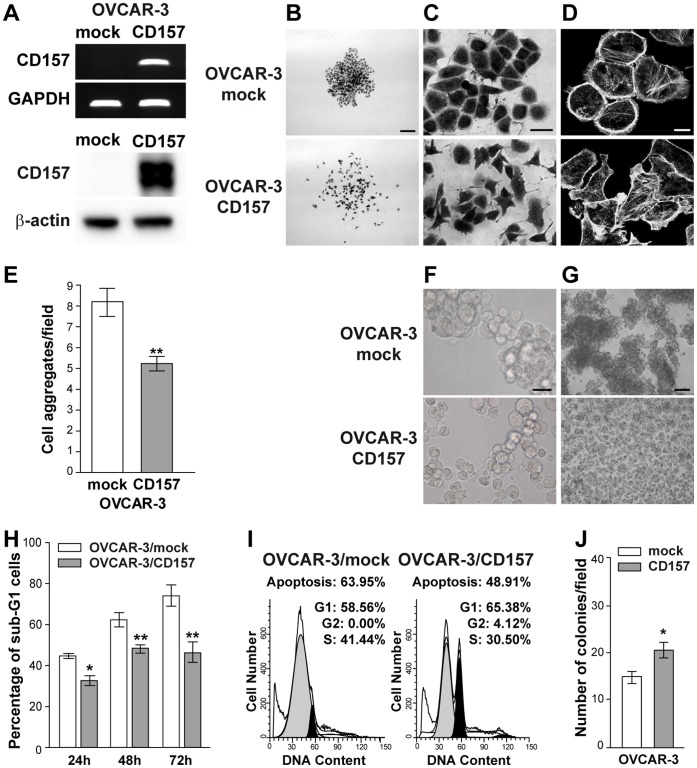
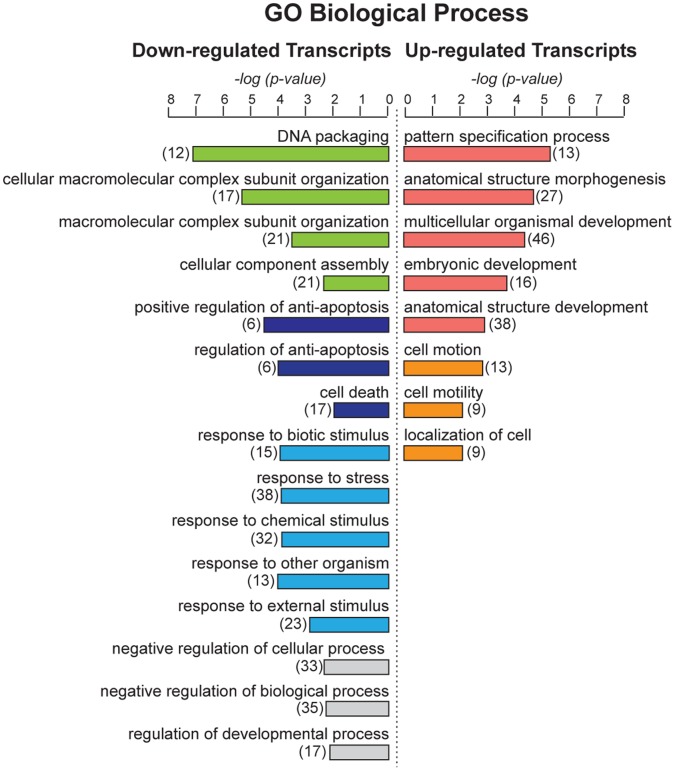
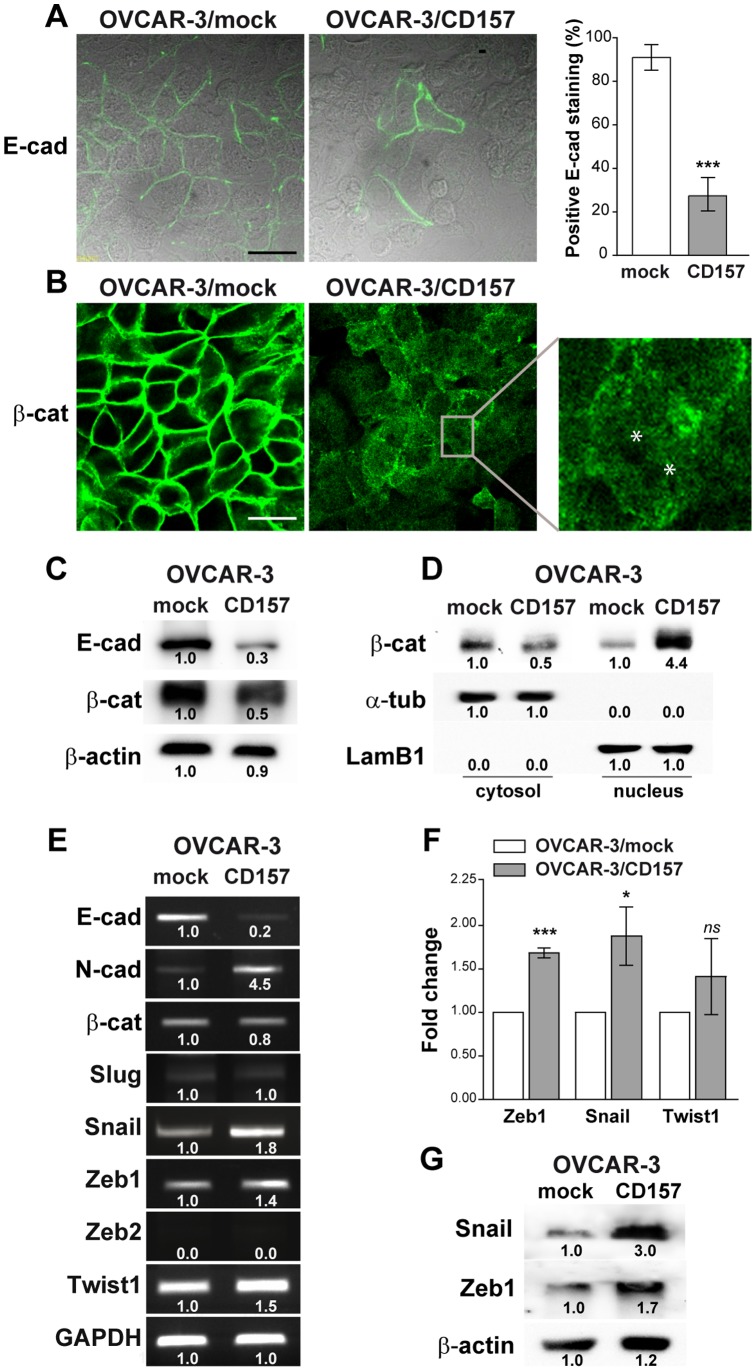
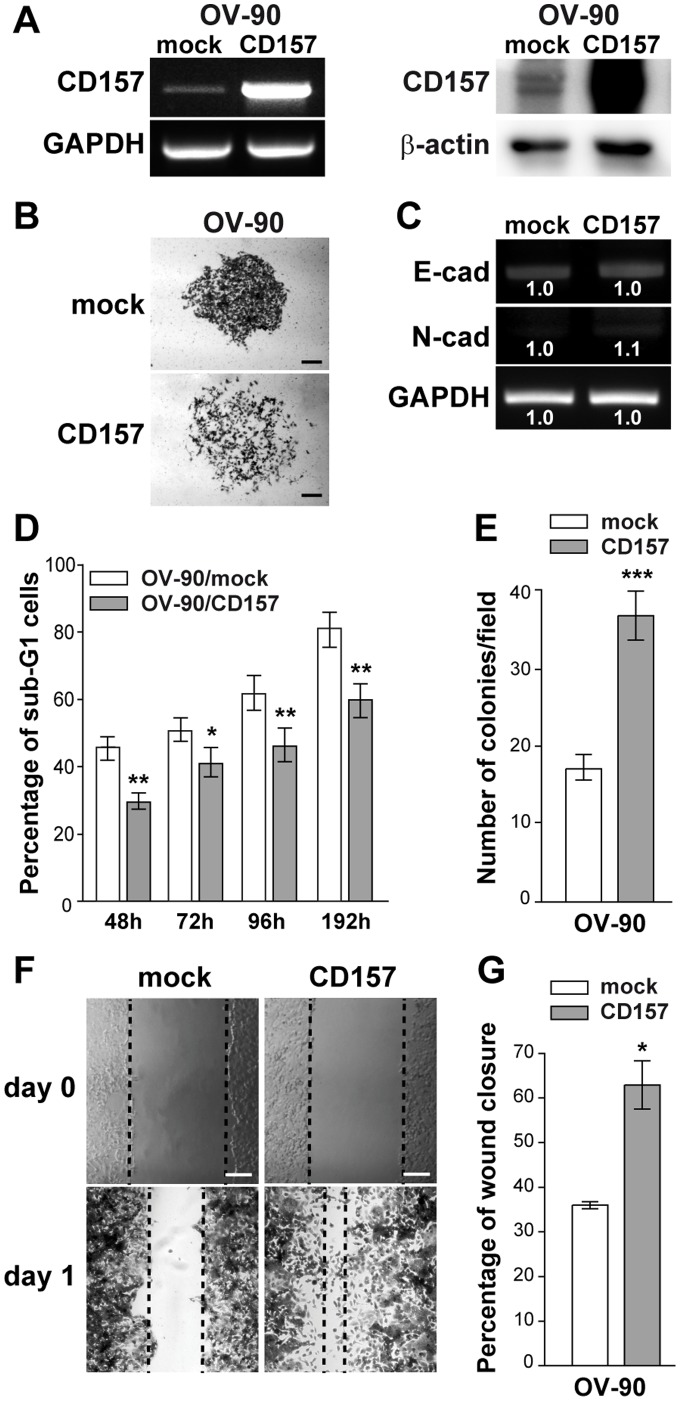
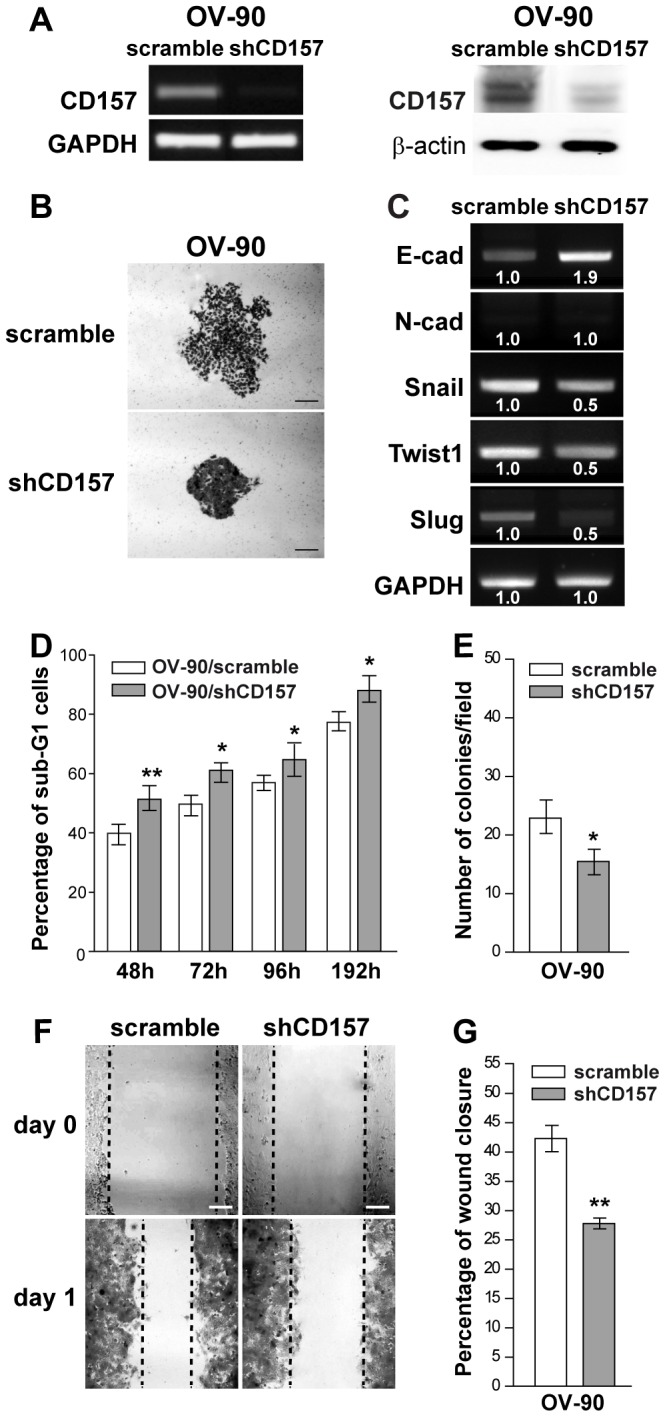
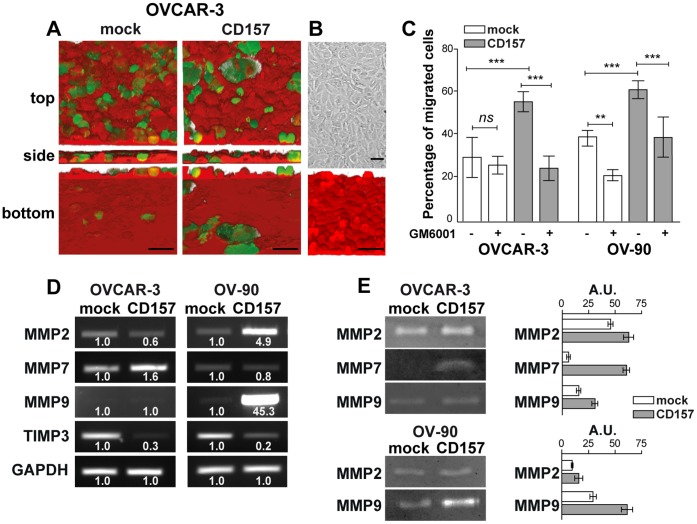
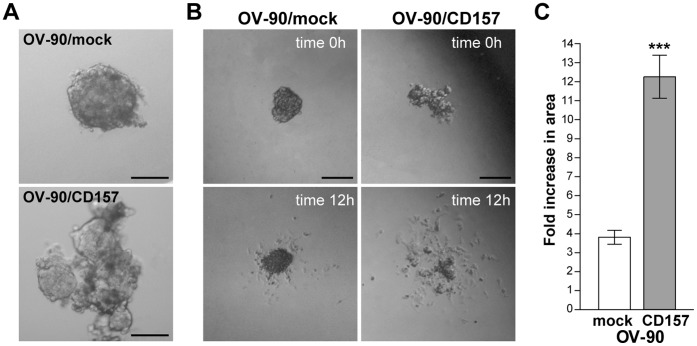
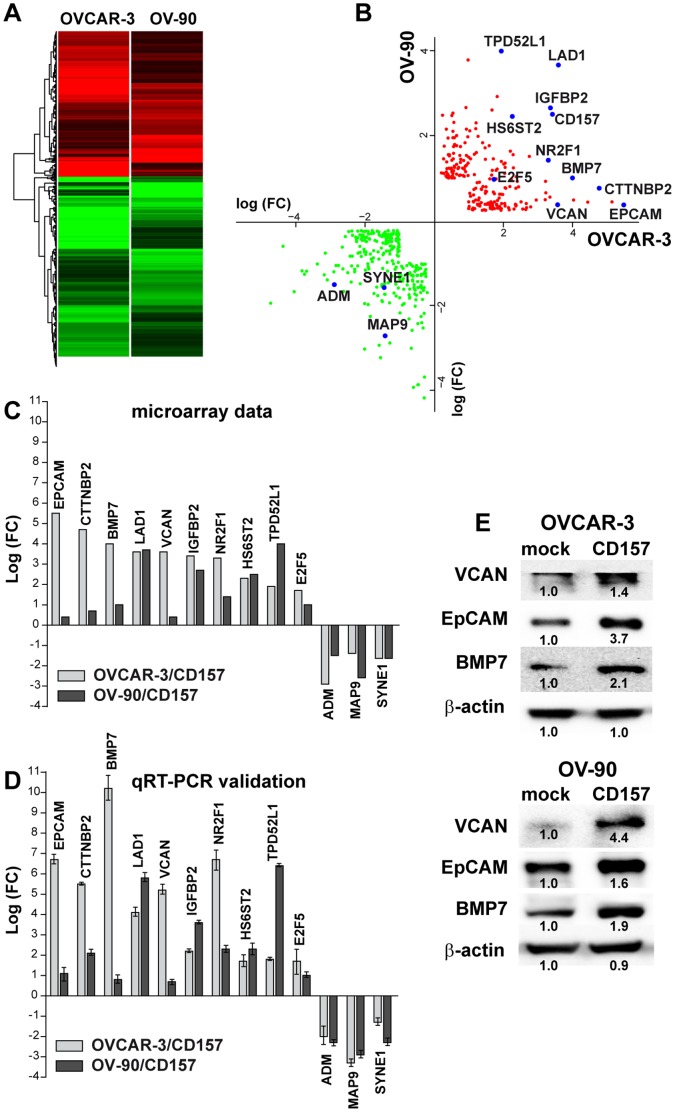
Epithelial ovarian carcinoma (EOC) is an aggressive tumor often diagnosed at an advanced stage, when there is little or no prospect of cure. Despite advances in surgical and chemotherapeutic strategies, only marginal improvements in patient outcome have been obtained. Hence, unraveling the biological mechanisms underpinning EOC progression is critical for improving patients' survival. Recently, we reported that CD157 (an ectoenzyme regulating leukocyte diapedesis) is expressed in EOC and that high expression of the molecule is negatively correlated with the disease outcome in patients. Here, we demonstrate that forced overexpression of CD157 in OVCAR-3, TOV-21G, A2780 and OV-90 ovarian cancer cell lines promotes morphological and phenotypic changes characterized by disruption of intercellular junctions, downregulation of epithelial markers and upregulation of mesenchymal ones. These changes in cell shape and phenotype bring to reduced sensitivity to anoikis, increased anchorage-independent growth, cell motility and mesothelial invasion. Conversely, knockdown of CD157 in OV-90 and OC314 cells reverts the mesenchymal phenotype and reduces the cells' migratory potential. Transcriptome profiling analysis highlighted 378 significantly differentially expressed genes, representing the signature of CD157-overexpressing OVCAR-3 and OV-90 cells. The modulation of selected genes translates into alteration of protein expression that give cells a highly malignant phenotype. The overall picture deduced from the analysis of the modulated transcripts is that high expression of CD157 strengthens a number of biological processes favoring tumor progression (including development and cell motility), and weakens several biological processes hindering tumor progression (such as apoptosis, cell death and response to stress). Together, these findings implicate CD157 in the progression of EOC to metastatic disease and suggest that CD157 may represent a valuable therapeutic target.
上皮性卵巢癌(EOC)是一种侵袭性肿瘤,通常在晚期诊断,此时治愈的机会很小或没有。尽管在手术和化疗策略方面取得了进展,但患者的预后仅略有改善。因此,揭示支持 EOC 进展的生物学机制对于提高患者的生存率至关重要。最近,我们报道 CD157(一种调节白细胞渗出的外酶)在上皮性卵巢癌中表达,并且该分子的高表达与患者的疾病结局呈负相关。在这里,我们证明在 OVCAR-3、TOV-21G、A2780 和 OV-90 卵巢癌细胞系中强制过表达 CD157 可促进形态和表型变化,其特征为细胞间连接中断、上皮标志物下调和间充质标志物上调。这些细胞形状和表型的变化导致对失巢凋亡的敏感性降低、锚定非依赖性生长、细胞迁移和间皮浸润增加。相反,在 OV-90 和 OC314 细胞中敲低 CD157 可恢复间充质表型并降低细胞的迁移潜力。转录组谱分析突出了 378 个显著差异表达的基因,代表了过表达 CD157 的 OVCAR-3 和 OV-90 细胞的特征。选定基因的调节转化为蛋白质表达的改变,赋予细胞高度恶性的表型。从分析调节转录本得出的总体情况是,CD157 的高表达增强了有利于肿瘤进展的许多生物学过程(包括发育和细胞迁移),并削弱了几个阻碍肿瘤进展的生物学过程(如细胞凋亡、细胞死亡和应激反应)。总之,这些发现表明 CD157 参与了上皮性卵巢癌向转移性疾病的进展,并表明 CD157 可能代表一个有价值的治疗靶点。