Institut für Biochemie und Molekularbiologie, Zentrum für Biochemie und Molekulare Zellforschung, 79104 Freiburg, Germany.
Mol Biol Cell. 2012 Oct;23(20):3957-69. doi: 10.1091/mbc.E12-05-0358. Epub 2012 Aug 23.
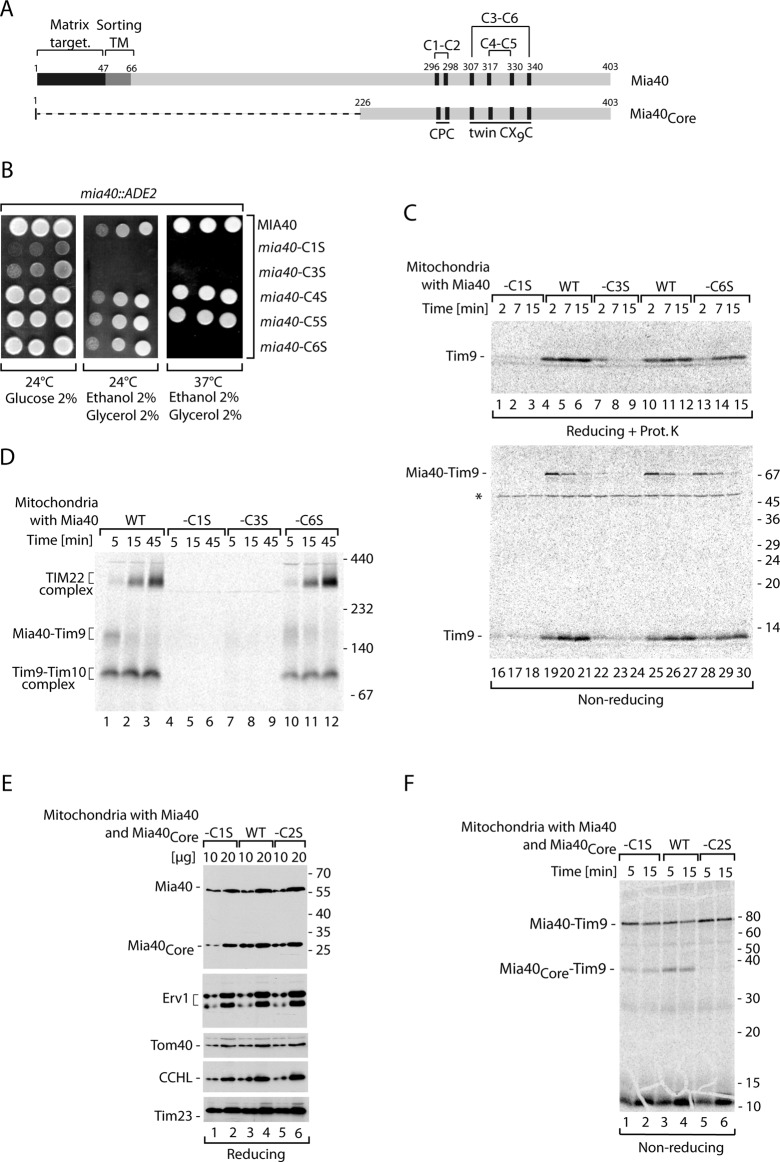
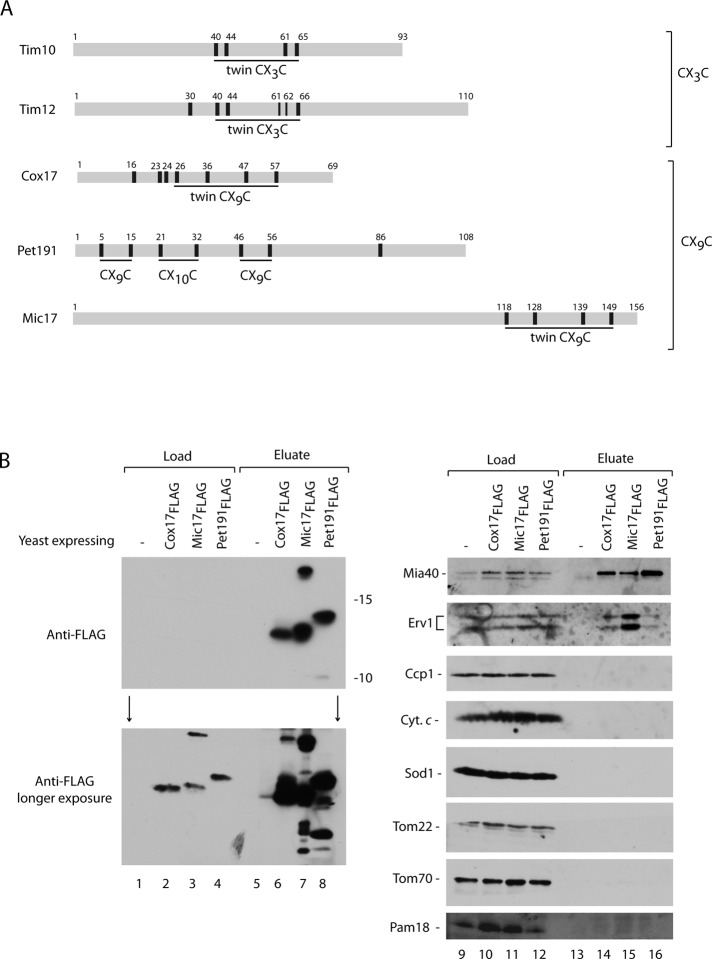
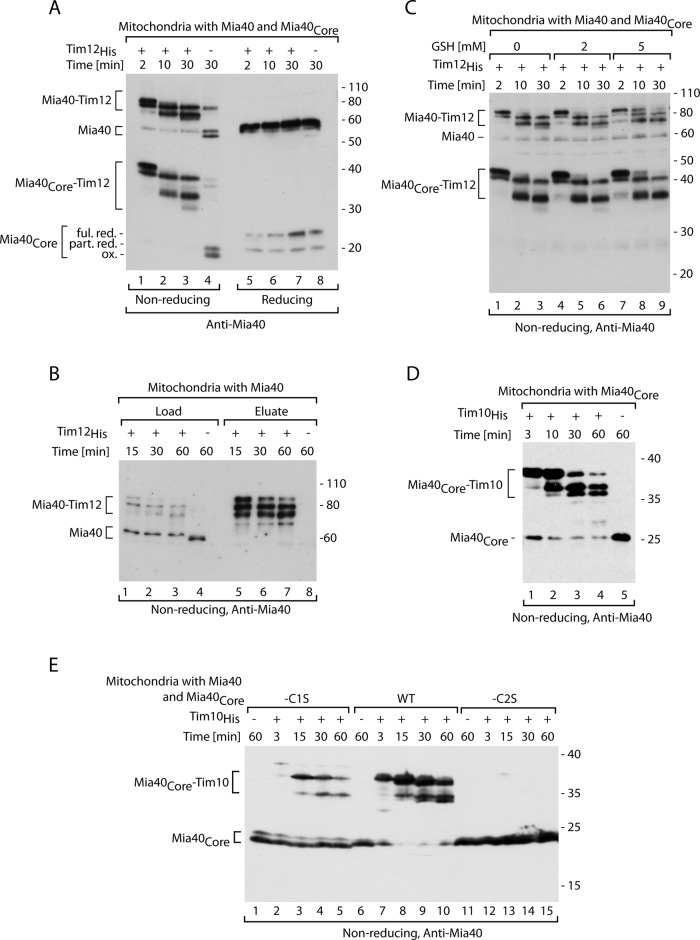
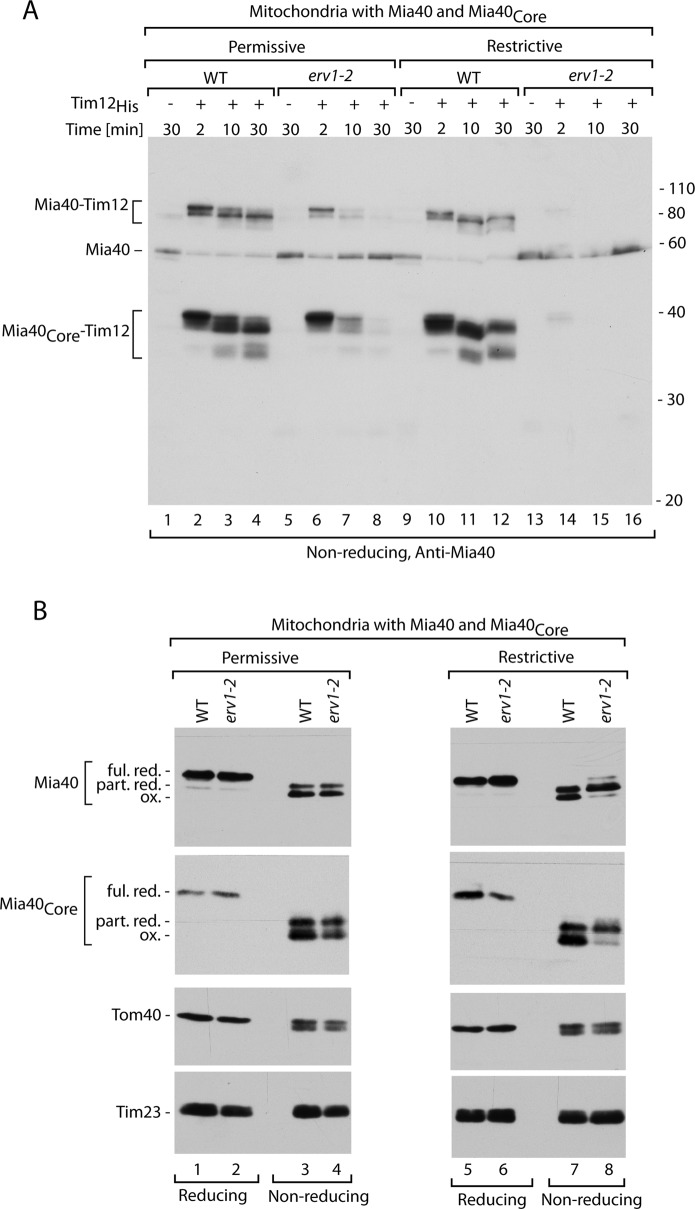
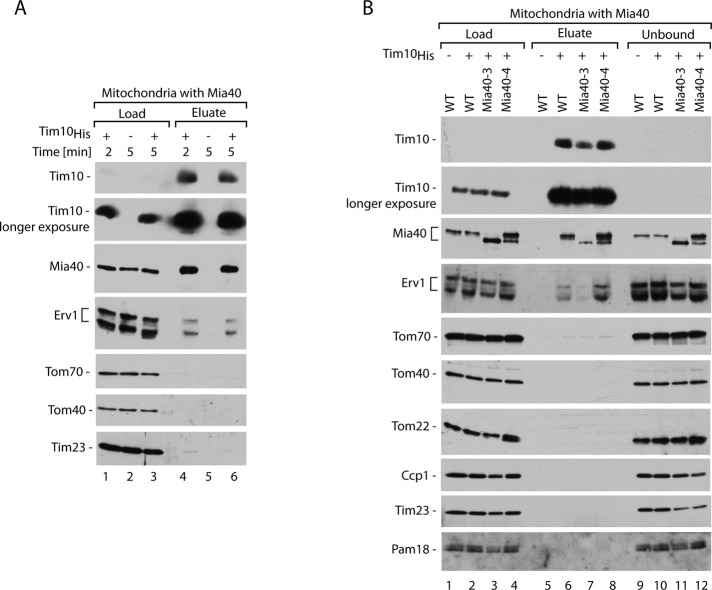
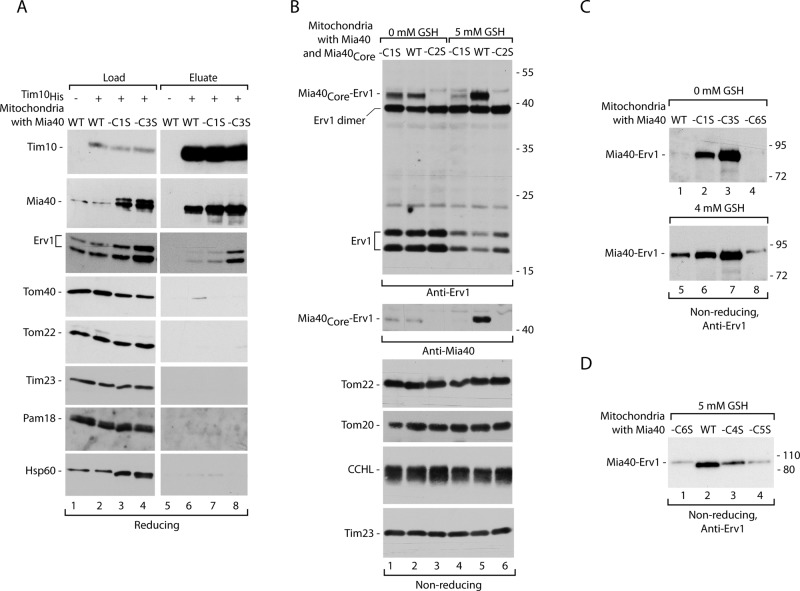
The intermembrane space of mitochondria accommodates the essential mitochondrial intermembrane space assembly (MIA) machinery that catalyzes oxidative folding of proteins. The disulfide bond formation pathway is based on a relay of reactions involving disulfide transfer from the sulfhydryl oxidase Erv1 to Mia40 and from Mia40 to substrate proteins. However, the substrates of the MIA typically contain two disulfide bonds. It was unclear what the mechanisms are that ensure that proteins are released from Mia40 in a fully oxidized form. In this work, we dissect the stage of the oxidative folding relay, in which Mia40 binds to its substrate. We identify dynamics of the Mia40-substrate intermediate complex. Our experiments performed in a native environment, both in organello and in vivo, show that Erv1 directly participates in Mia40-substrate complex dynamics by forming a ternary complex. Thus Mia40 in cooperation with Erv1 promotes the formation of two disulfide bonds in the substrate protein, ensuring the efficiency of oxidative folding in the intermembrane space of mitochondria.
线粒体的膜间隙容纳了必需的线粒体膜间隙组装(MIA)机制,该机制催化蛋白质的氧化折叠。二硫键形成途径基于涉及从硫氧还蛋白 Erv1 到 Mia40 以及从 Mia40 到底物蛋白的二硫键转移的反应接力。然而,MIA 的底物通常含有两个二硫键。目前尚不清楚确保蛋白质以完全氧化形式从 Mia40 释放的机制是什么。在这项工作中,我们剖析了氧化折叠接力的阶段,即 Mia40 与底物结合的阶段。我们确定了 Mia40-底物中间复合物的动态。我们在原生环境中进行的实验,无论是在细胞器内还是在体内,都表明 Erv1 通过形成三元复合物直接参与 Mia40-底物复合物的动力学。因此,Mia40 与 Erv1 合作促进底物蛋白中二硫键的形成,确保线粒体膜间隙中氧化折叠的效率。