Department of Immunology, Central Tuberculosis Research Institute, Moscow, Russia.
PLoS One. 2012;7(8):e43733. doi: 10.1371/journal.pone.0043733. Epub 2012 Aug 24.
Effector CD4 T cells represent a key component of the host's anti-tuberculosis immune defense. Successful differentiation and functioning of effector lymphocytes protects the host against severe M. tuberculosis (Mtb) infection. On the other hand, effector T cell differentiation depends on disease severity/activity, as T cell responses are driven by antigenic and inflammatory stimuli released during infection. Thus, tuberculosis (TB) progression and the degree of effector CD4 T cell differentiation are interrelated, but the relationships are complex and not well understood. We have analyzed an association between the degree of Mtb-specific CD4 T cell differentiation and severity/activity of pulmonary TB infection.
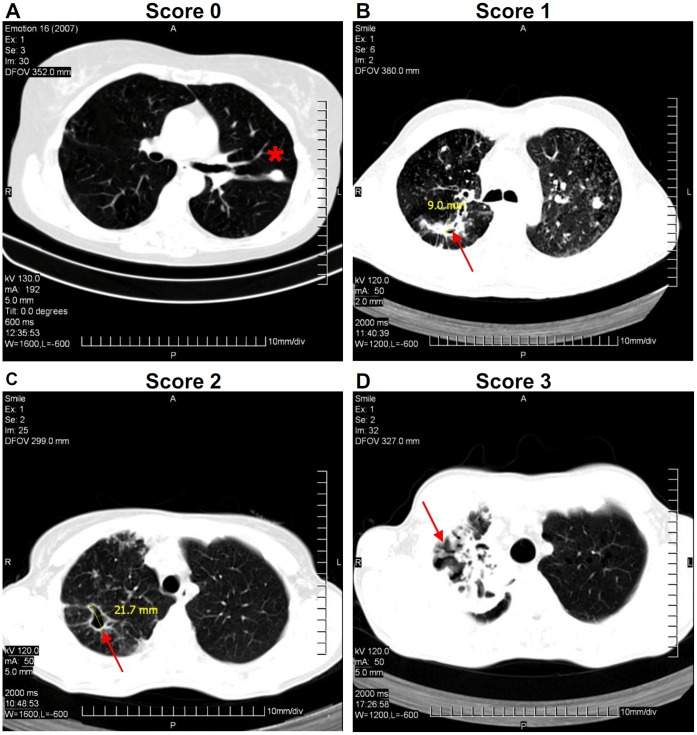
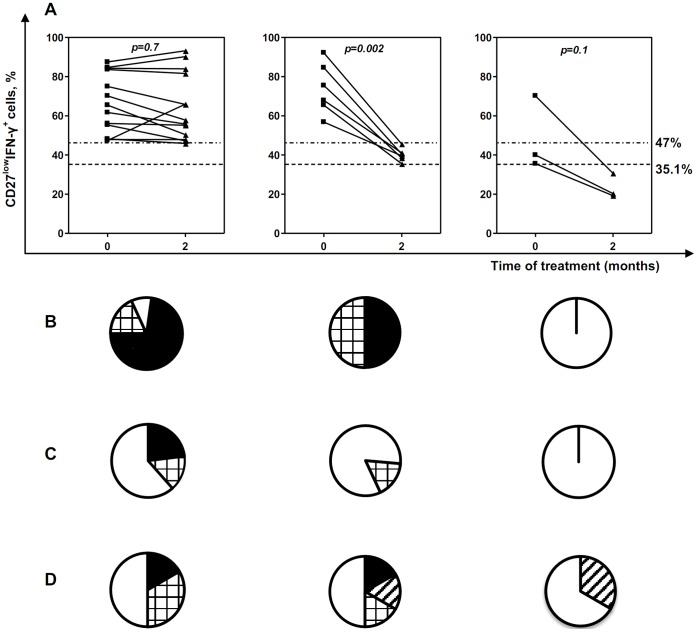
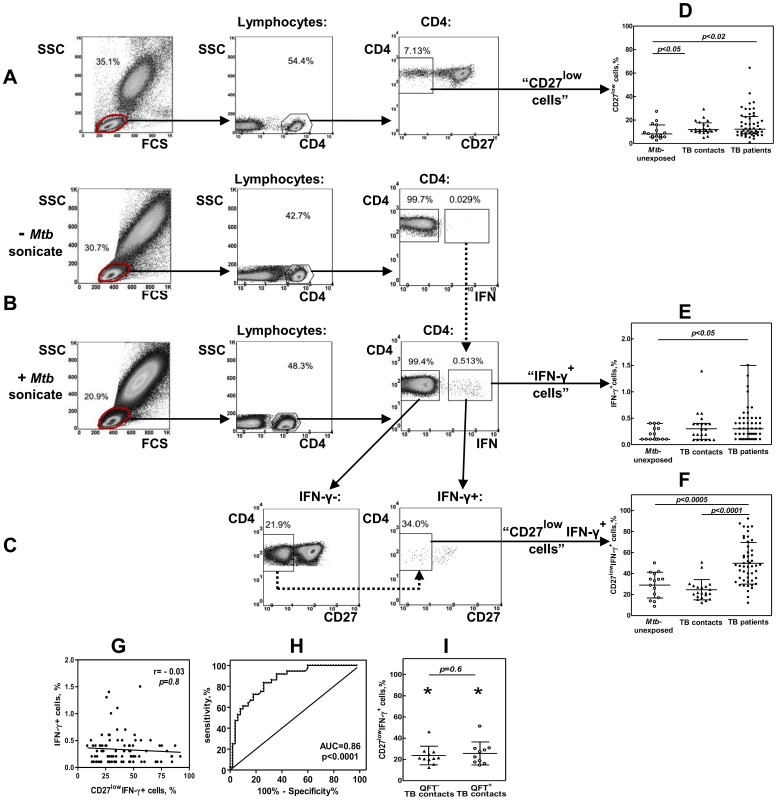
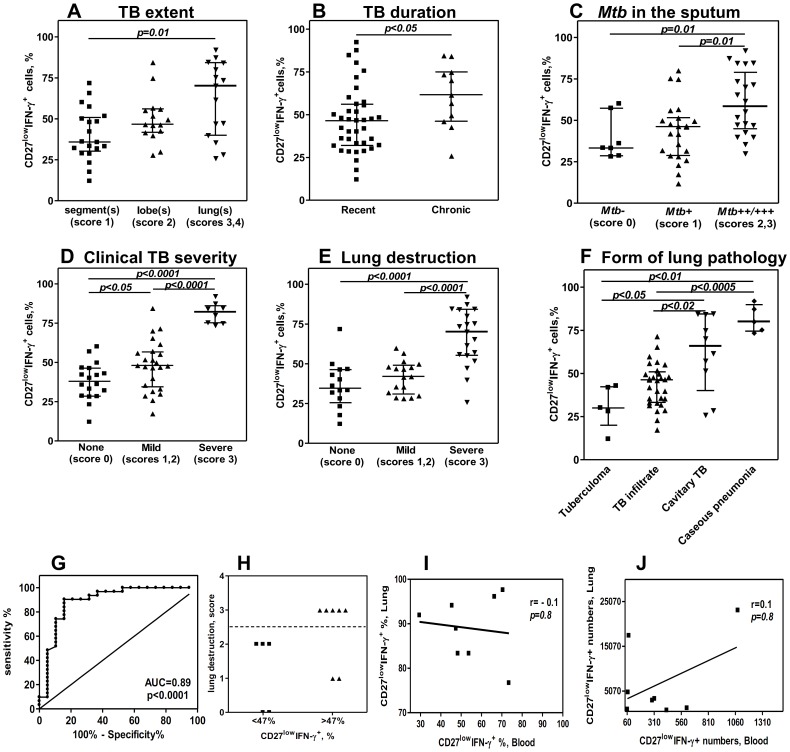
METHODOLOGY/PRINCIPAL FINDINGS: The degree of CD4 T cell differentiation was assessed by measuring the percentages of highly differentiated CD27(low) cells within a population of Mtb- specific CD4 T lymphocytes ("CD27(low)IFN-γ(+)" cells). The percentages of CD27(low)IFN-γ+ cells were low in healthy donors (median, 33.1%) and TB contacts (21.8%) but increased in TB patients (47.3%, p<0.0005). Within the group of patients, the percentages of CD27(low)IFN-γ(+) cells were uniformly high in the lungs (>76%), but varied in blood (12-92%). The major correlate for the accumulation of CD27(low)IFN-γ(+) cells in blood was lung destruction (r = 0.65, p = 2.7 × 10(-7)). A cutoff of 47% of CD27(low)IFN-γ(+) cells discriminated patients with high and low degree of lung destruction (sensitivity 89%, specificity 74%); a decline in CD27(low)IFN-γ(+)cells following TB therapy correlated with repair and/or reduction of lung destruction (p<0.01).
Highly differentiated CD27(low) Mtb-specific (CD27(low)IFN-γ(+)) CD4 T cells accumulate in the lungs and circulate in the blood of patients with active pulmonary TB. Accumulation of CD27(low)IFN-γ(+) cells in the blood is associated with lung destruction. The findings indicate that there is no deficiency in CD4 T cell differentiation during TB; evaluation of CD27(low)IFN-γ(+) cells provides a valuable means to assess TB activity, lung destruction, and tissue repair following TB therapy.
效应 CD4 T 细胞是宿主抗结核免疫防御的关键组成部分。效应淋巴细胞的成功分化和功能发挥可保护宿主免受严重的结核分枝杆菌(Mtb)感染。另一方面,效应 T 细胞的分化取决于疾病的严重程度/活性,因为 T 细胞反应是由感染期间释放的抗原和炎症刺激驱动的。因此,结核病(TB)的进展和效应 CD4 T 细胞分化的程度是相互关联的,但这些关系很复杂,目前还不太清楚。我们分析了 Mtb 特异性 CD4 T 细胞分化的程度与肺部 TB 感染的严重程度/活性之间的关联。
方法/主要发现:通过测量 Mtb 特异性 CD4 T 淋巴细胞群体中高度分化的 CD27(low)细胞的百分比(“CD27(low)IFN-γ(+)”细胞)来评估 CD4 T 细胞的分化程度。健康供体(中位数 33.1%)和 TB 接触者(21.8%)的 CD27(low)IFN-γ+细胞百分比较低,但 TB 患者的百分比增加(47.3%,p<0.0005)。在患者组中,CD27(low)IFN-γ(+)细胞在肺部的百分比均很高(>76%),但在血液中的百分比差异较大(12-92%)。CD27(low)IFN-γ(+)细胞在血液中的积累主要与肺部破坏相关(r = 0.65,p = 2.7×10(-7))。CD27(low)IFN-γ(+)细胞的 47%为界可区分高、低程度肺部破坏的患者(灵敏度 89%,特异性 74%);TB 治疗后 CD27(low)IFN-γ(+)细胞的下降与肺部破坏的修复和/或减少相关(p<0.01)。
高度分化的 CD27(low)Mtb 特异性(CD27(low)IFN-γ(+))CD4 T 细胞在活动性肺结核患者的肺部积聚并在血液中循环。血液中 CD27(low)IFN-γ(+)细胞的积累与肺部破坏有关。这些发现表明,在结核病期间,CD4 T 细胞的分化并没有缺陷;评估 CD27(low)IFN-γ(+)细胞可提供一种有价值的方法来评估结核病的活动、肺部破坏和 TB 治疗后的组织修复。