Division of Molecular and Genetic Medicine, Department of Genetic Medicine and Regenerative Therapeutics, Graduate School of Medicine, Tottori University, Yonago, Tottori, Japan.
PLoS One. 2012;7(8):e43800. doi: 10.1371/journal.pone.0043800. Epub 2012 Aug 24.
BACKGOROUND: MicroRNAs (miRNAs), which regulate biological processes by annealing to the 3'-untranslated region (3'-UTR) of mRNAs to reduce protein synthesis, have been the subject of recent attention as a key regulatory factor in cell differentiation. The effects of some miRNAs during osteoblastic differentiation have been investigated in mesenchymal stem cells, however they still remains to be determined in pluripotent stem cells.
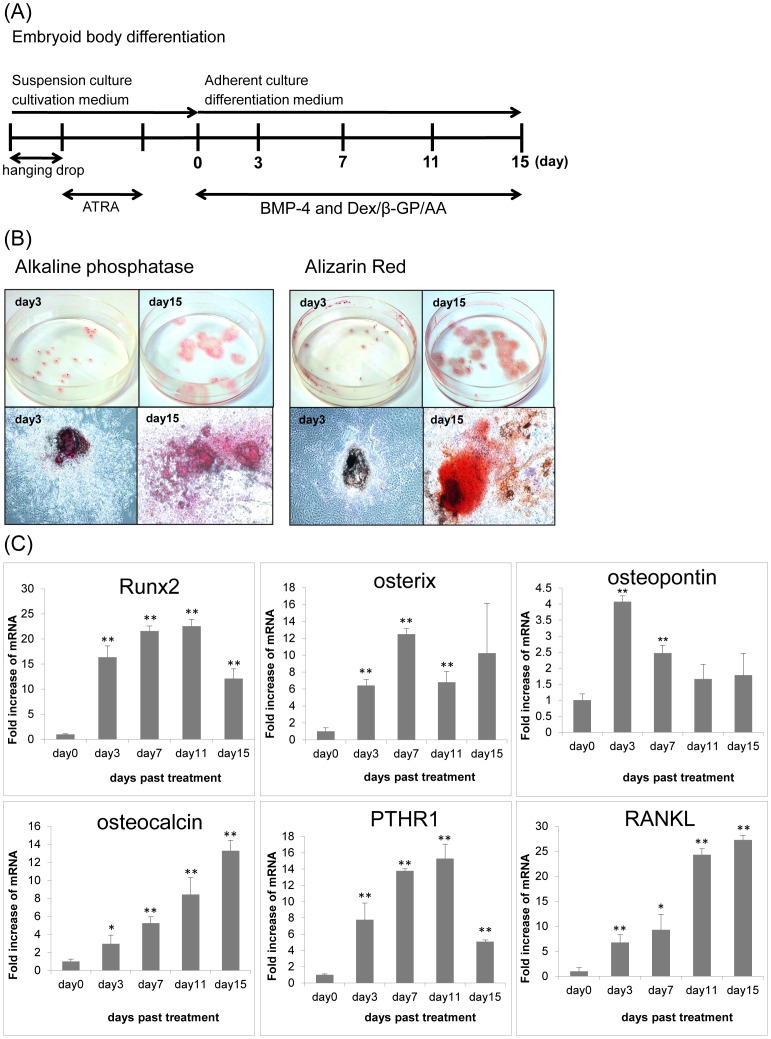
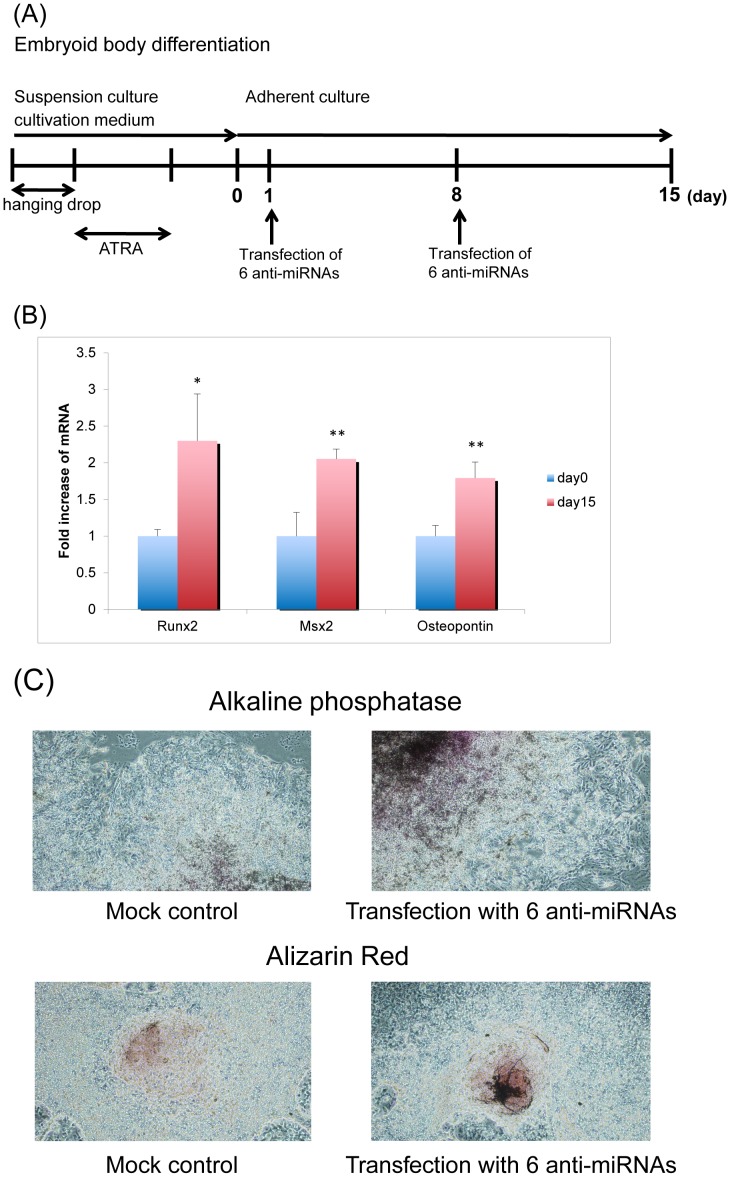
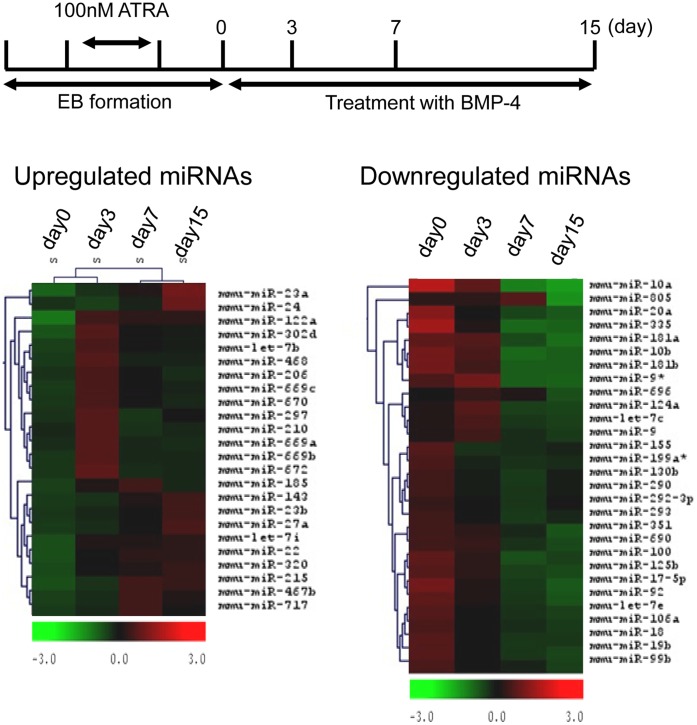
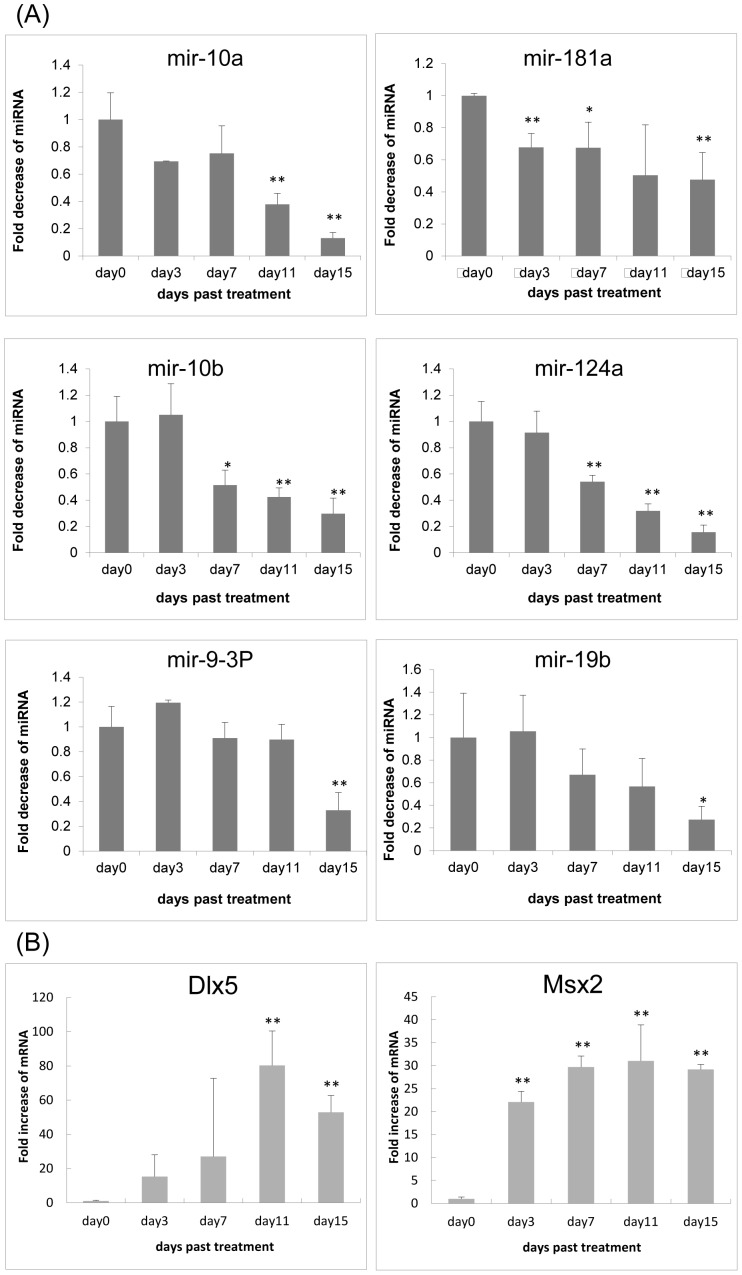
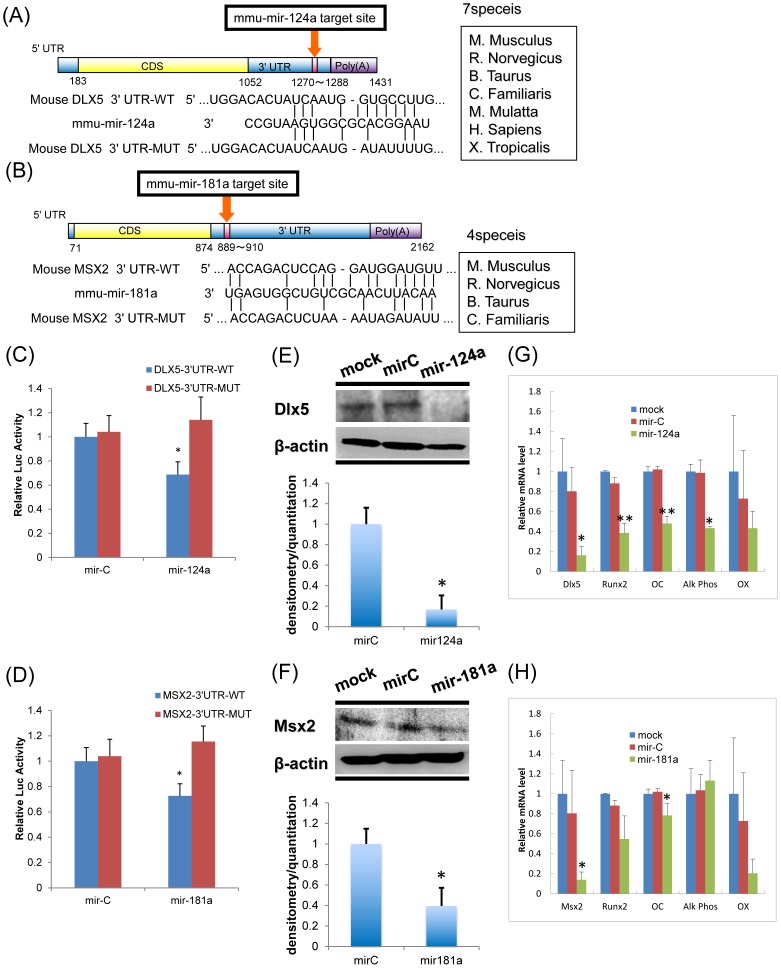
METHODOLOGY/PRINCIPAL FINDINGS: Bone morphogenic proteins (BMPs) are potent activators of osteoblastic differentiation. In the present study, we profiled miRNAs during osteoblastic differentiation of mouse induced pluripotent stem (iPS) cells by BMP-4, in which expression of important osteoblastic markers such as Rux2, osterix, osteopontin, osteocalcin, PTHR1 and RANKL were significantly increased. A miRNA array analysis revealed that six miRNAs including miR-10a, miR-10b, miR-19b, miR-9-3p, miR-124a and miR-181a were significantly downregulated. Interestingly, miR-124a and miR-181a directly target the transcription factors Dlx5 and Msx2, both of which were increased by about 80-and 30-fold, respectively. In addition, transfection of miR-124a and miR-181a into mouse osteo-progenitor MC3T3-E1 cells significantly reduced expression of Dlx5, Runx2, osteocalcin and ALP, and Msx2 and osteocalcin, respectively. Finally, transfection of the anti-miRNAs of these six miRNAs, which are predicted to target Dlx5 and Msx2, into mouse iPS cells resulted in a significant increase in several osteoblastic differentiation markers such as Rux2, Msx2 and osteopontin.
CONCLUSIONS/SIGNIFICANCE: In the present study, we demonstrate that six miRNAs including miR-10a, miR-10b, miR-19b, miR-9-3p, miR-124a and miR-181a miRNAs, especially miR-124a and miR-181a, are important regulatory factors in osteoblastic differentiation of mouse iPS cells.
背景:微小 RNA(miRNAs)通过与 mRNAs 的 3'非翻译区(3'UTR)退火来减少蛋白质合成,从而调节生物过程,最近已成为细胞分化中关键调节因子的研究热点。在间充质干细胞中已经研究了一些 miRNA 在成骨细胞分化过程中的作用,但它们在多能干细胞中的作用仍有待确定。
方法/主要发现:骨形态发生蛋白(BMPs)是成骨细胞分化的有效激活剂。在本研究中,我们通过 BMP-4 对小鼠诱导多能干细胞(iPS)细胞的成骨细胞分化过程中的 miRNA 进行了分析,其中重要的成骨细胞标志物如 Rux2、osterix、骨桥蛋白、骨钙素、甲状旁腺素受体 1 和 RANKL 的表达显著增加。miRNA 芯片分析显示,包括 miR-10a、miR-10b、miR-19b、miR-9-3p、miR-124a 和 miR-181a 在内的 6 种 miRNA 显著下调。有趣的是,miR-124a 和 miR-181a 直接靶向转录因子 Dlx5 和 Msx2,这两种因子的表达分别增加了约 80 倍和 30 倍。此外,将 miR-124a 和 miR-181a 转染到小鼠成骨前体细胞 MC3T3-E1 细胞中,可显著降低 Dlx5、Runx2、骨钙素和 ALP 的表达,以及 Msx2 和骨钙素的表达。最后,将这 6 种 miRNA 的反义 miRNA 转染到小鼠 iPS 细胞中,这些 miRNA 预测可以靶向 Dlx5 和 Msx2,导致 Rux2、Msx2 和骨桥蛋白等几种成骨细胞分化标志物的显著增加。
结论/意义:在本研究中,我们证明了包括 miR-10a、miR-10b、miR-19b、miR-9-3p、miR-124a 和 miR-181a 在内的 6 种 miRNA,尤其是 miR-124a 和 miR-181a,是小鼠 iPS 细胞成骨分化的重要调节因子。