Division on Substance Abuse, New York State Psychiatric Institute and Department of Psychiatry, College of Physicians and Surgeons of Columbia University, New York, NY 10032, USA.
Biol Psychiatry. 2013 Feb 1;73(3):242-8. doi: 10.1016/j.biopsych.2012.07.028. Epub 2012 Aug 29.
Few marijuana smokers in treatment achieve sustained abstinence, yet factors contributing to high relapse rates are unknown.
Study 1: data from five inpatient laboratory studies assessing marijuana intoxication, withdrawal, and relapse were combined to assess factors predicting the likelihood and severity of relapse. Daily, nontreatment-seeking marijuana smokers (n = 51; 10 ± 5 marijuana cigarettes/day) were enrolled. Study 2: to isolate the effects of cigarette smoking, marijuana intoxication, withdrawal, and relapse were assessed in daily marijuana and cigarette smokers (n = 15) under two within-subject, counter-balanced conditions: while smoking tobacco cigarettes as usual (SAU), and after at least 5 days without cigarettes (Quit).
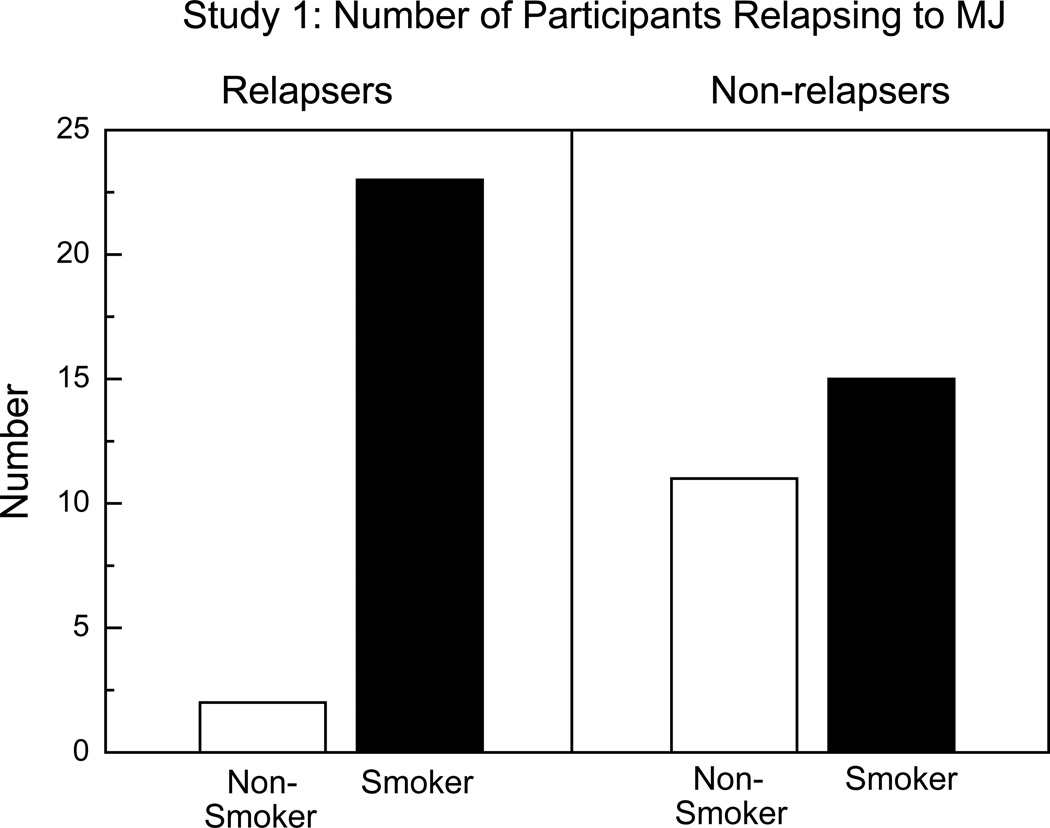
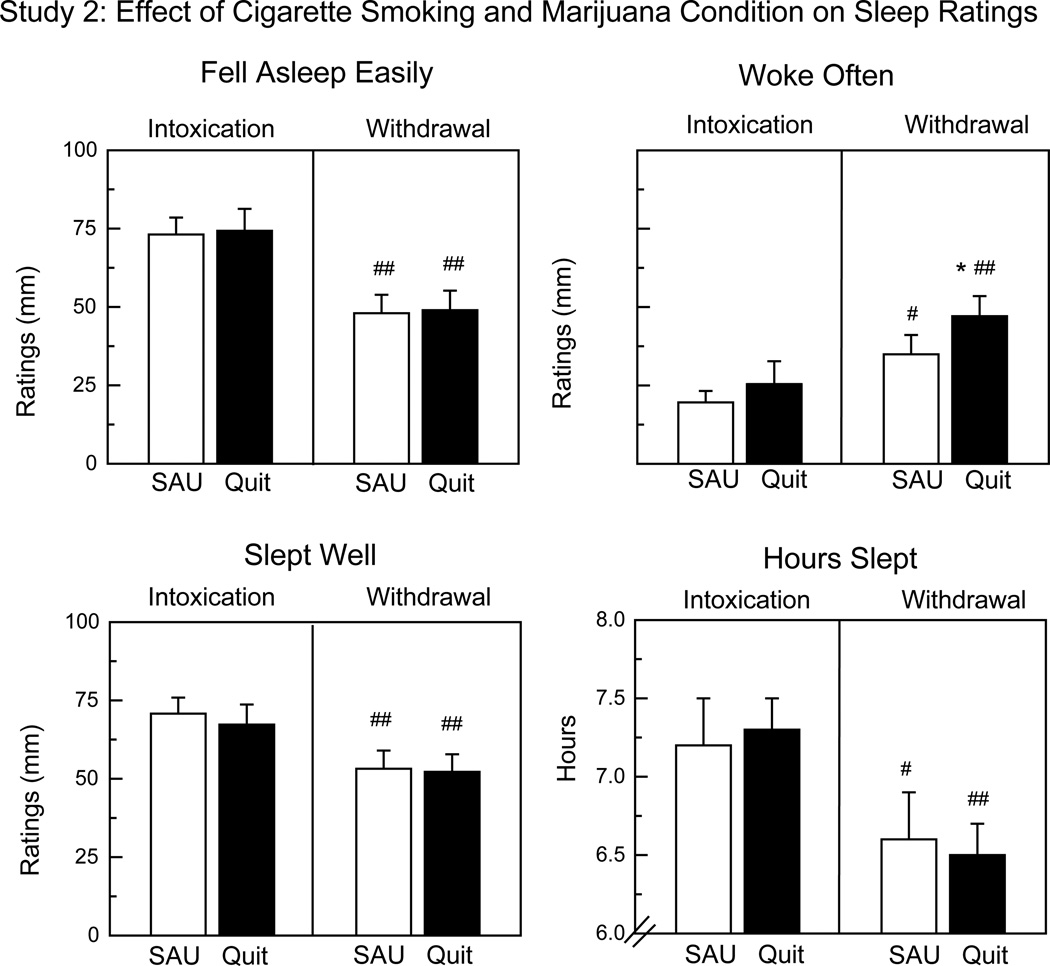
Study 1: 49% of participants relapsed the first day active marijuana became available. Tobacco cigarette smokers (75%), who were not abstaining from cigarettes, were far more likely to relapse than non-cigarette smokers (odds ratio: 19, p < .01). Individuals experiencing more positive subjective effects (i.e., feeling "high") after marijuana administration and those with more negative affect and sleep disruption during marijuana withdrawal were more likely to have severe relapse episodes (p < .05). Study 2: most participants (>87%) relapsed to marijuana whether in the SAU or Quit phase. Tobacco cigarette smoking did not significantly influence relapse, nor did it affect marijuana intoxication or most symptoms of withdrawal relative to tobacco cessation.
Daily marijuana smokers who also smoke cigarettes have high rates of marijuana relapse, and cigarette smoking versus recent abstinence does not directly influence this association. These data indicate that current cigarette smoking is a clinically important marker for increased risk of marijuana relapse.
接受治疗的大麻吸食者很少能实现持续戒断,但导致高复吸率的因素尚不清楚。
研究 1:综合评估大麻致醉、戒断和复吸的五项住院实验室研究的数据,评估预测复吸可能性和严重程度的因素。共纳入 51 名每日非治疗性吸食大麻的参与者(10±5 支大麻卷烟/天)。研究 2:为了分离吸烟的影响,在每日吸食大麻和香烟的参与者(n=15)中,在两种个体内、平衡对照的条件下评估大麻致醉、戒断和复吸:正常吸食烟草香烟(SAU),以及至少 5 天不吸烟(戒烟)。
研究 1:49%的参与者在可获得活性大麻的第一天就复发。不戒烟草香烟的吸烟者(75%)比非吸烟者(优势比:19,p<.01)更有可能复吸。大麻给药后主观体验(即“嗨”感)更积极、戒断期间负性情绪和睡眠障碍更严重的个体,更有可能出现严重的复吸发作(p<.05)。研究 2:大多数参与者(>87%)在 SAU 或戒烟阶段都复发吸食大麻。与戒烟相比,吸烟并不显著影响复吸,也不影响大麻致醉或大多数戒断症状。
同时吸食大麻和香烟的每日吸食大麻者复吸率很高,而吸烟与近期戒断并不会直接影响这种关联。这些数据表明,当前吸烟是增加大麻复吸风险的一个重要临床标志物。