Crop Protection Research Centre, Department of Advanced Zoology and Biotechnology, St. Xavier's College (Autonomous), Palayamkottai - 627 002, Tamil Nadu, India.
J Insect Sci. 2012;12:19. doi: 10.1673/031.012.1901.
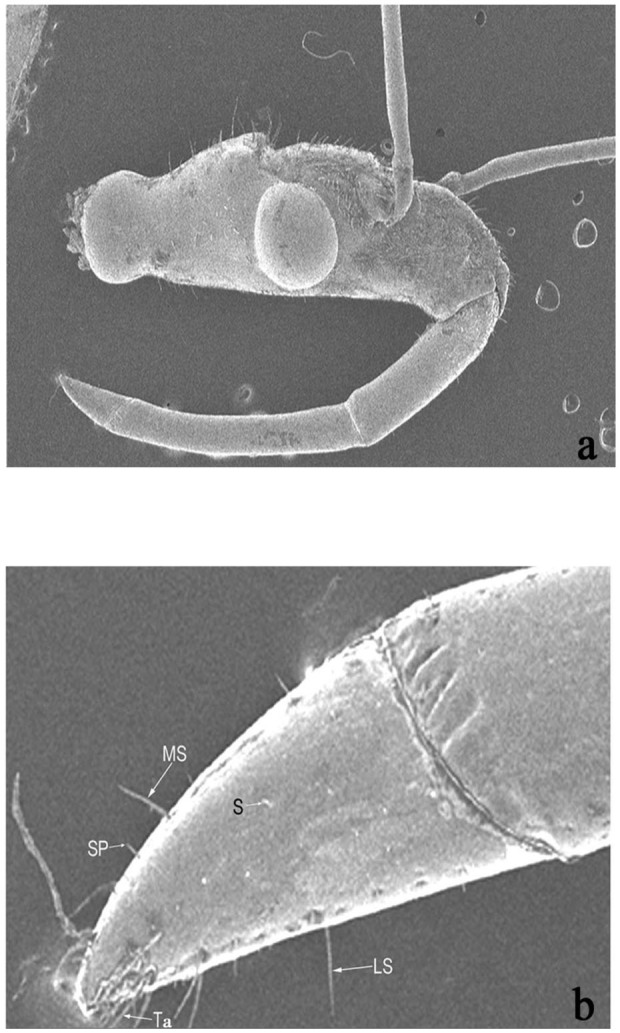
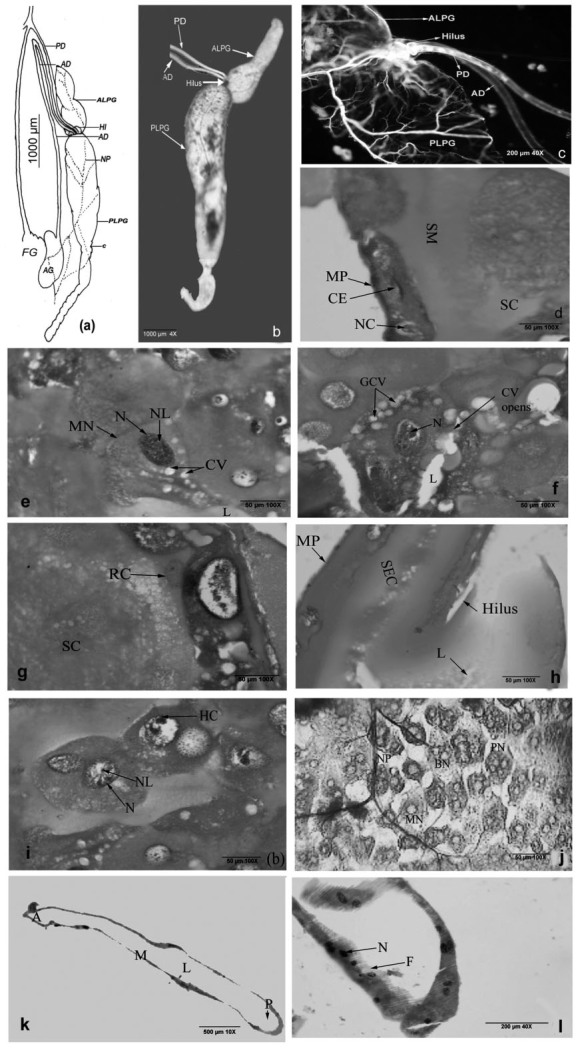
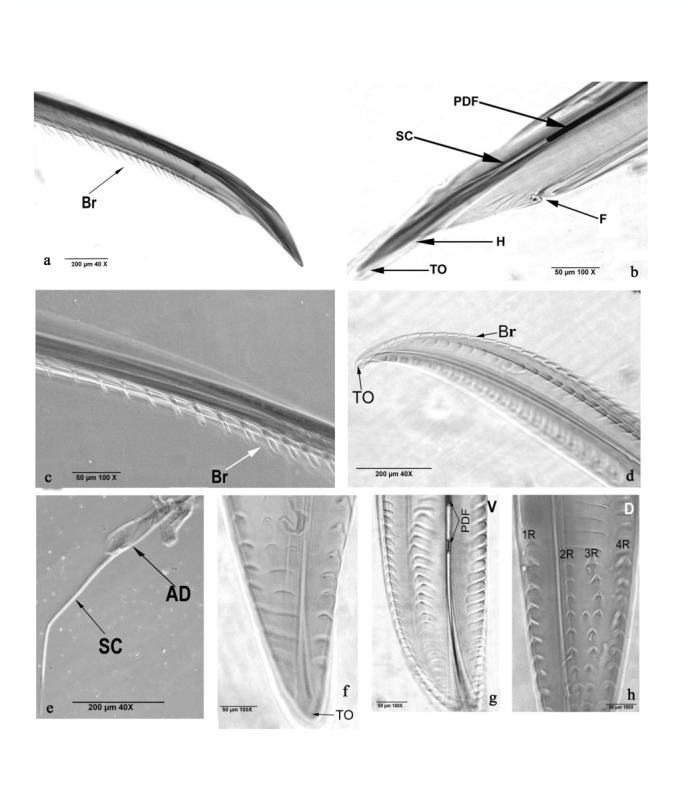
Rhynocoris marginatus Fabricius (Hemiptera: Reduviidae) is an important biological control agent against more than 25 insect pests in India. For a better understanding of the feeding adaptation of this bug, the gross morphology and histology of its head and salivary apparatus were studied using both a light microscope and scanning electron microscope. The head is more or less elongate, mobile, and immersed into the eyes. R. marginatus has a three-segmented curved rostrum; the middle segment is longer than the other two segments. The terminal rostral segment bears spines and trichobothria externally. Stylet bundles bear two pairs of maxillary and mandible stylets in the curved rostrum with serrations. The stylets help to penetrate into the tissue and directly pump the toxic venomous saliva deep into the prey. The principal gland is bi-lobed (anterior lobe and posterior lobe), whereas the accessory gland is uni-lobed, exhibiting distinct functional and histological differences. These glands receive tracheal and nerve supply. Mononucleated, binucleated, trinucleated and polynucleated cells are distributed both in anterior and posterior lobes of the principal gland. The cytoplasm has collecting vacuoles with secretions. Therefore, this predator is highly equipped with well-developed mouthparts that are attached to the salivary apparatus.
横纹红蝽(Hemiptera: Reduviidae)是印度超过 25 种害虫的重要生物防治剂。为了更好地了解这种臭虫的取食适应能力,使用光学显微镜和扫描电子显微镜研究了其头部和唾液腺的大体形态和组织学。头部或多或少呈长形,可移动,并浸入眼睛中。横纹红蝽的喙分为三个弯曲的节段;中间节段比其他两个节段长。末端喙节段外部带有刺和刚毛。在弯曲的喙中,刺吸式口器束带有两对上颌和下颌刺,具有锯齿。这些刺有助于穿透组织,并直接将有毒的毒液唾液深吸进猎物体内。主腺分为两叶(前叶和后叶),而附腺为一叶,表现出明显的功能和组织学差异。这些腺体接收气管和神经供应。单核、双核、三核和多核细胞分布在前叶和后叶的主腺中。细胞质具有带有分泌物的收集泡。因此,这种捕食者具有高度发达的附器,与唾液腺相连。