Research Laboratory of EuroClone S,p,A at Molecular Biotechnology Centre (MBC), University of Turin, Turin, Italy.
Environ Health. 2012 Sep 4;11:59. doi: 10.1186/1476-069X-11-59.
Formaldehyde (HCHO) is a gas (available as a 37% concentrated solution, stabilized with methanol). The 10% dilution (approximately 4% formaldehyde) has been used as a fixative since the end of the 19th century. Alternative fixatives are also commercially available or may be prepared in-house in laboratories. Statements by the IARC, along with other USA agencies (CalEPA, RoC/NTP) on the carcinogenicity of formaldehyde for humans renders its substitution in Pathology Departments necessary since the annual use of formalin may exceed 3,500 liters for a medium-large laboratory. To achieve a "formalin-free laboratory" we tested straightforward-to-make fixatives along with registered reagents offered as formalin substitutes.
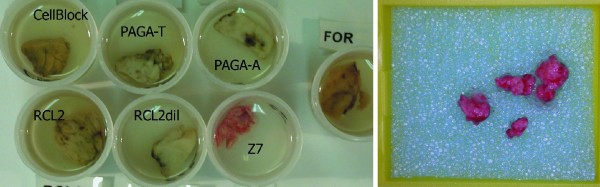
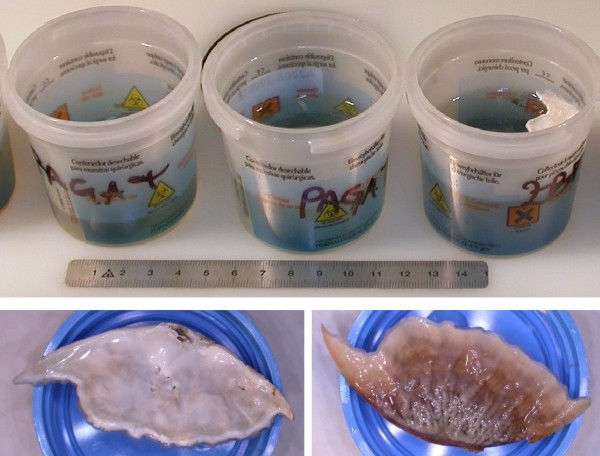
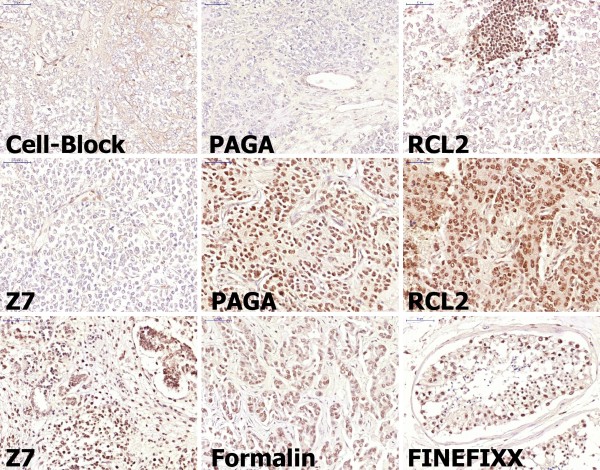
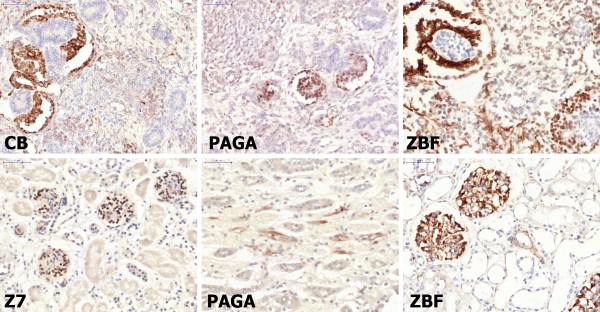
More than two hundreds specimens were fixed in parallel with in-laboratory made fixatives PAGA (Polyethylenglycol, ethyl Alcohol, Glycerol, Acetic acid), two zinc-based fixatives (ZBF, Z7), and commercially-available alternatives (RCL2 and CellBlock). Tissue micro arrays were used for morphological and immunohistochemical comparison. Extraction of RNA was carried out to evaluate preservation of nucleic acids.
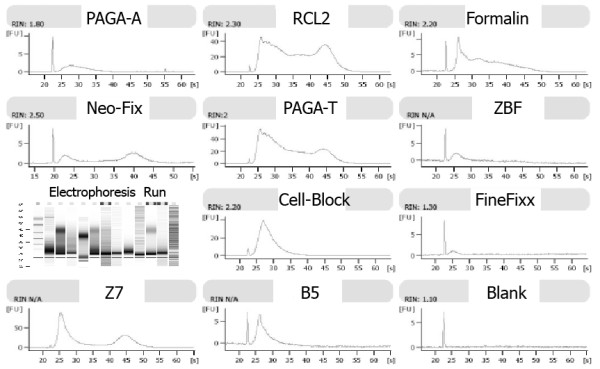
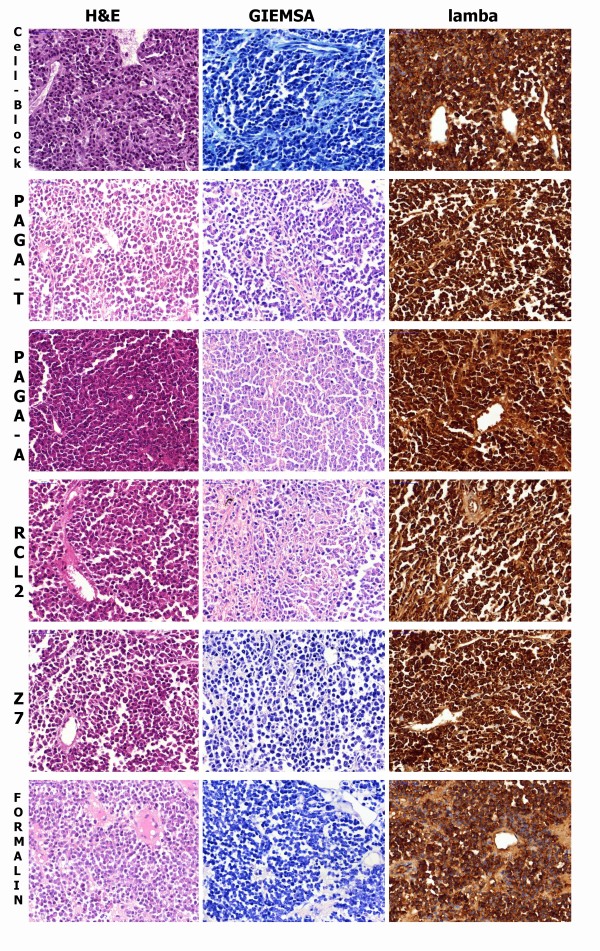
Differences compared to formalin fixation were evident in alcohol-based fixatives, mainly restricted to higher stain affinity and considerable tissue shrinkage. Conversely, nuclear detail was superior with these alcohol-based formulas compared to formalin or glyoxale-based recipes. RNA extraction was superior for Z7, PAGA and RCL2 with regard to concentration but relatively comparable regarding quality.
Abolition of the human carcinogen formaldehyde from pathology laboratories is possible even in contexts whereby commercial alternatives to formalin are unavailable or are too expensive for routine use, and aspiration devices are lacking or not adequately serviced. The use of known formulations, possibly with simple and not-noxious ("alimentary grade") constituents, comparable with registered proprietary products, may expand the search for the ideal fixative combining satisfactory morphology with improved preservation of nucleic acids and proteins as well as being easy and safe to dispose of.
甲醛(HCHO)是一种气体(以 37%浓度的甲醇稳定溶液形式存在)。自 19 世纪末以来,10%的稀释液(约 4%甲醛)一直被用作固定剂。也有其他商业上可用的固定剂,或者实验室可以自行制备。国际癌症研究机构(IARC)以及美国其他机构(CalEPA、RoC/NTP)关于甲醛对人类致癌性的声明,使得病理科必须用其他固定剂替代甲醛,因为一个中等规模实验室每年使用的福尔马林可能超过 3500 升。为了实现“无甲醛实验室”,我们测试了一些简单易用的固定剂,以及作为福尔马林替代品的注册试剂。
两百多个标本被同时用实验室自制的 PAGA(聚乙二醇、乙醇、甘油、乙酸)、两种锌基固定剂(ZBF、Z7)和市售替代品(RCL2 和 CellBlock)固定。组织微阵列用于形态学和免疫组织化学比较。提取 RNA 以评估核酸的保存情况。
与福尔马林固定相比,酒精基固定剂有明显差异,主要表现为更高的染色亲和力和相当大的组织收缩。相反,与福尔马林或乙二醛基配方相比,这些酒精基配方的核细节更好。就浓度而言,Z7、PAGA 和 RCL2 用于 RNA 提取效果更好,但就质量而言则相当可比。
即使在没有商业替代品或替代品过于昂贵而无法常规使用、缺乏吸引装置或吸引装置未得到充分维护的情况下,也有可能从病理实验室中完全去除人类致癌物甲醛。使用已知的配方,可能使用简单且无毒的(“食品级”)成分,与注册的专利产品相媲美,可能会扩大对理想固定剂的搜索,这种固定剂既能获得满意的形态,又能更好地保存核酸和蛋白质,而且易于处理和安全。