Department of Experimental Oncology, European Institute of Oncology, Milan, Italy.
Stem Cells. 2012 Nov;30(11):2423-36. doi: 10.1002/stem.1217.
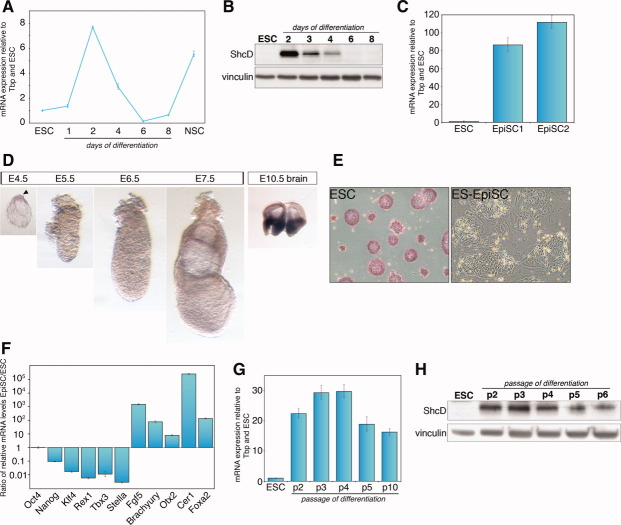
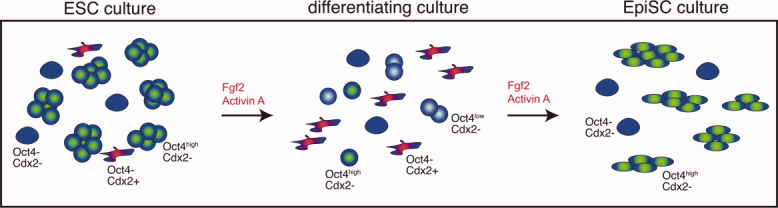
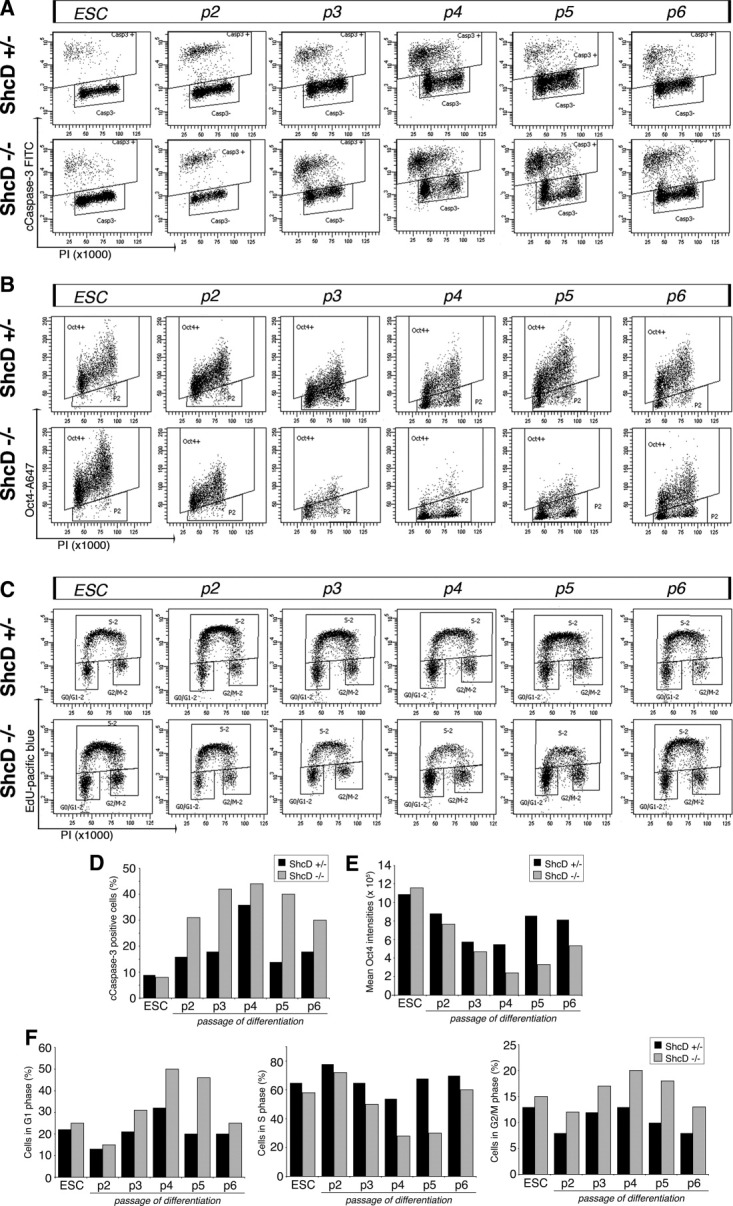
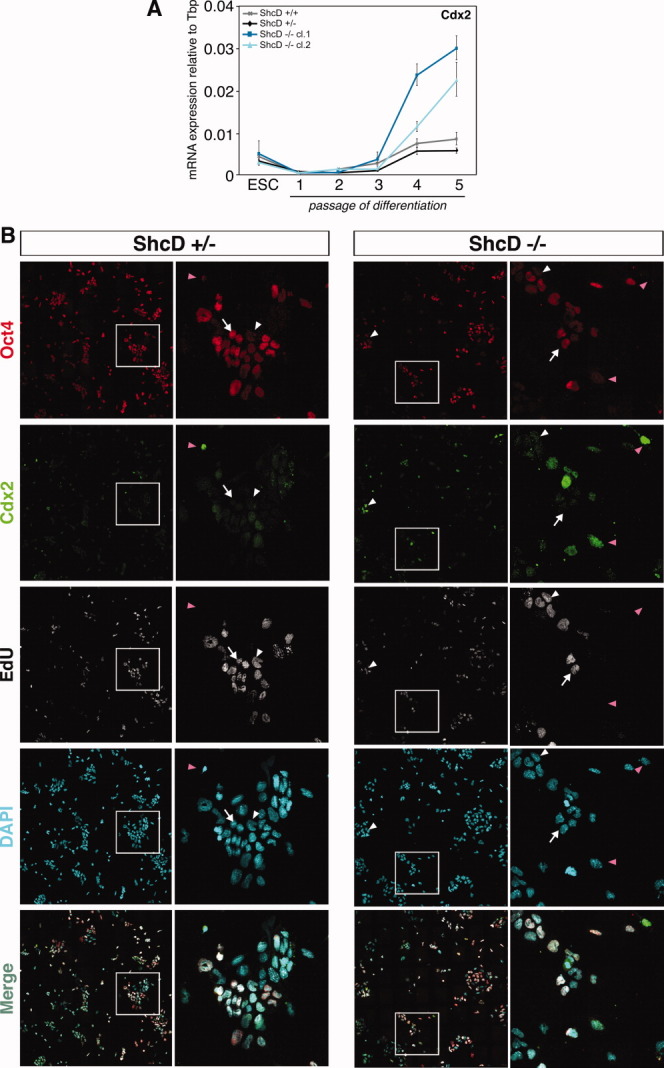
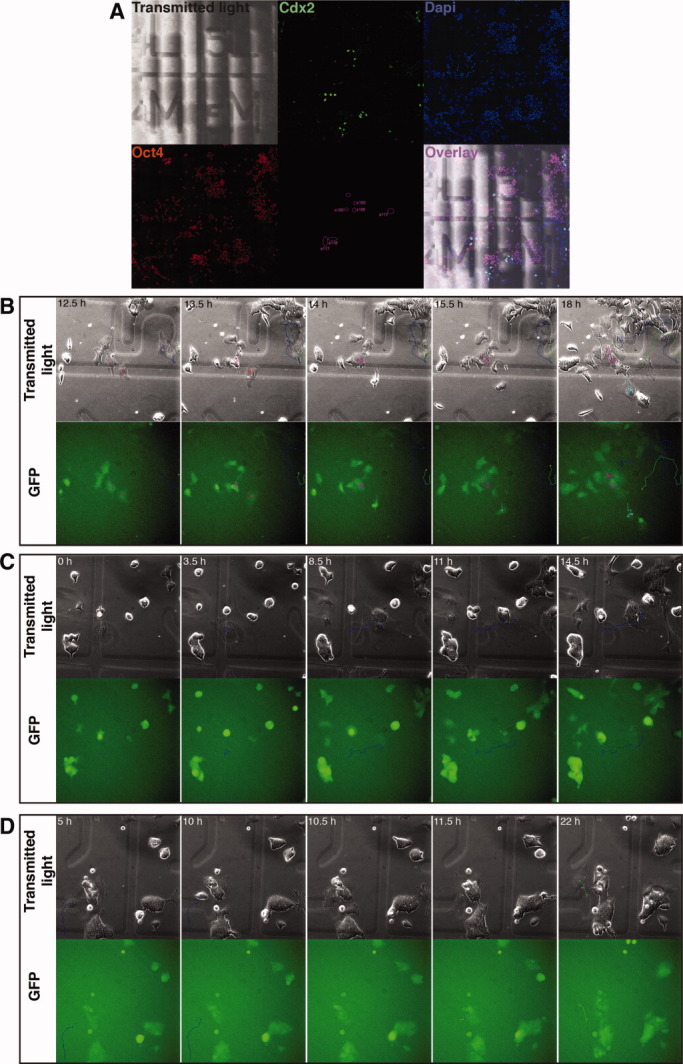
The Shc family of adaptor proteins are crucial mediators of a plethora of receptors such as the tyrosine kinase receptors, cytokine receptors, and integrins that drive signaling pathways governing proliferation, differentiation, and migration. Here, we report the role of the newly identified family member, ShcD/RaLP, whose expression in vitro and in vivo suggests a function in embryonic stem cell (ESC) to epiblast stem cells (EpiSCs) transition. The transition from the naïve (ESC) to the primed (EpiSC) pluripotent state is the initial important step for ESCs to commit to differentiation and the mechanisms underlying this process are still largely unknown. Using a novel approach to simultaneously assess pluripotency, apoptosis, and proliferation by multiparameter flow cytometry, we show that ESC to EpiSC transition is a process involving a tight coordination between the modulation of the Oct4 expression, cell cycle progression, and cell death. We also describe, by high-content immunofluorescence analysis and time-lapse microscopy, the emergence of cells expressing caudal-related homeobox 2 (Cdx2) transcription factor during ESC to EpiSC transition. The use of the ShcD knockout ESCs allowed the unmasking of this process as they presented deregulated Oct4 modulation and an enrichment in Oct4-negative Cdx2-positive cells with increased MAPK/extracellular-regulated kinases 1/2 activation, within the differentiating population. Collectively, our data reveal ShcD as an important modulator in the switch of key pathway(s) involved in determining EpiSC identity.
Shc 家族衔接蛋白是多种受体(如酪氨酸激酶受体、细胞因子受体和整合素)信号通路的关键介质,这些受体信号通路调控细胞的增殖、分化和迁移。在这里,我们报告了新鉴定的 ShcD/RaLP 家族成员的作用,其在体外和体内的表达表明它在胚胎干细胞(ESC)向胚胎外胚层干细胞(EpiSC)的过渡中具有功能。从原始(ESC)到初始(EpiSC)多能状态的转变是 ESC 向分化方向分化的初始重要步骤,而这一过程的机制在很大程度上仍然未知。我们采用一种新的方法,通过多参数流式细胞术同时评估多能性、细胞凋亡和增殖,结果表明 ESC 向 EpiSC 的过渡是一个涉及 Oct4 表达、细胞周期进程和细胞死亡之间紧密协调的过程。我们还通过高内涵免疫荧光分析和延时显微镜观察描述了在 ESC 向 EpiSC 的过渡过程中,出现表达尾相关同源盒 2(Cdx2)转录因子的细胞。使用 ShcD 敲除 ESC 可以揭示这个过程,因为它们表现出 Oct4 调节失调,并在分化群体中富集 Oct4 阴性 Cdx2 阳性细胞,同时伴有 MAPK/细胞外调节激酶 1/2 的激活增加。总之,我们的数据揭示了 ShcD 作为决定 EpiSC 特性的关键途径(s)转换的重要调节剂。