Department of Agricultural Biotechnology, Animal Biotechnology Major, and Research Institute for Agriculture and Life Science, Seoul National University, Seoul, Republic of Korea.
PLoS One. 2013;8(1):e52481. doi: 10.1371/journal.pone.0052481. Epub 2013 Jan 11.
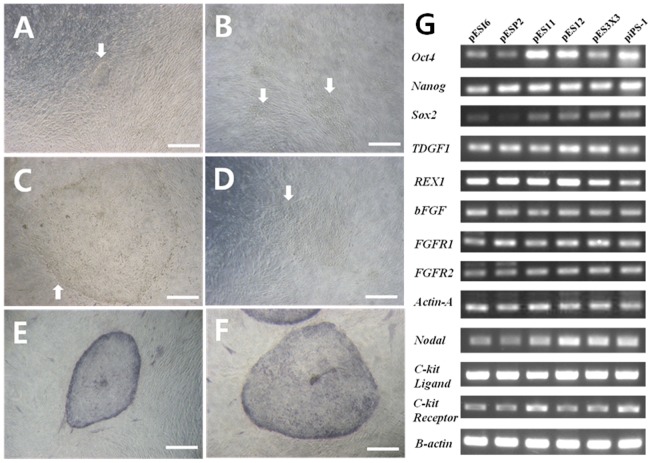
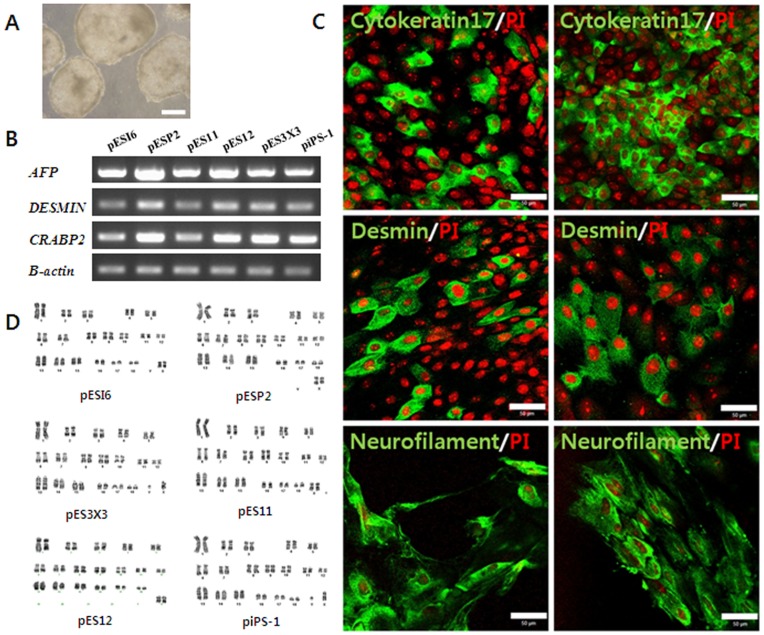
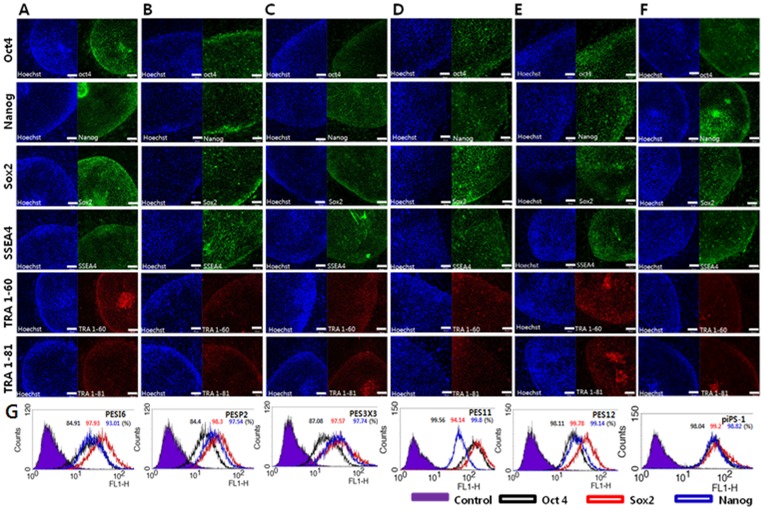
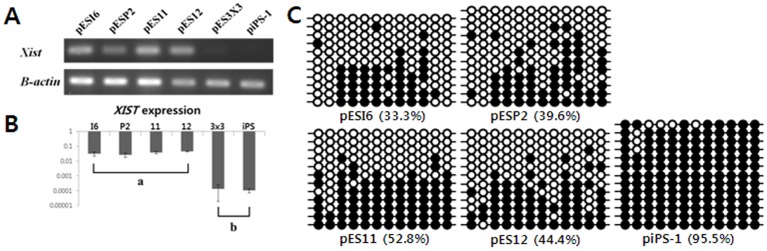
Since pluripotent embryonic stem cell (ESC) lines were first derived from the mouse, tremendous efforts have been made to establish ESC lines in several domestic species including the pig; however, authentic porcine ESCs have not yet been established. It has proven difficult to maintain an ESC-like state in pluripotent porcine cell lines due to the frequent occurrence of spontaneous differentiation into an epiblast stem cell (EpiSC)-like state during culture. We have been able to derive EpiSC-like porcine ESC (pESC) lines from blastocyst stage porcine embryos of various origins, including in vitro fertilized (IVF), in vivo derived, IVF aggregated, and parthenogenetic embryos. In addition, we have generated induced pluripotent stem cells (piPSCs) via plasmid transfection of reprogramming factors (Oct4, Sox2, Klf4, and c-Myc) into porcine fibroblast cells. In this study, we analyzed characteristics such as marker expression, pluripotency and the X chromosome inactivation status in female of our EpiSC-like pESC lines along with our piPSC line. Our results show that these cell lines demonstrate the expression of genes associated with the Activin/Nodal and FGF2 pathways along with the expression of pluripotent markers Oct4, Sox2, Nanog, SSEA4, TRA 1-60 and TRA 1-81. Furthermore all of these cell lines showed in vitro differentiation potential, the X chromosome inactivation in female and a normal karyotype. Here we suggest that the porcine species undergoes reprogramming into a primed state during the establishment of pluripotent stem cell lines.
自从首例多能胚胎干细胞(ESC)系从鼠中被成功分离以来,研究人员在包括猪在内的多种家畜中投入了巨大的努力去建立 ESC 系;然而,目前仍未能成功建立真正的猪 ESC 系。由于在培养过程中多能猪细胞系经常自发分化为类上胚层干细胞(EpiSC)状态,因此很难维持 ESC 样状态。我们已经能够从各种来源的猪囊胚期胚胎中分离出类 EpiSC 的猪 ESC(pESC)系,这些胚胎来源包括体外受精(IVF)、体内获得、IVF 聚集和孤雌胚胎。此外,我们还通过将重编程因子(Oct4、Sox2、Klf4 和 c-Myc)的质粒转染到猪成纤维细胞中生成诱导多能干细胞(piPSC)。在这项研究中,我们分析了我们的类 EpiSC pESC 系和 piPSC 系的标记物表达、多能性和雌性 X 染色体失活状态等特征。我们的结果表明,这些细胞系表达与 Activin/Nodal 和 FGF2 途径相关的基因以及多能性标记物 Oct4、Sox2、Nanog、SSEA4、TRA 1-60 和 TRA 1-81。此外,所有这些细胞系均显示出体外分化潜能、雌性的 X 染色体失活和正常核型。在这里,我们提出猪在建立多能干细胞系的过程中经历了重编程为初始状态。