Department of Information and Communication Technologies, Center for Brain and Cognition, Universitat Pompeu Fabra, Barcelona, Spain.
PLoS One. 2012;7(8):e42719. doi: 10.1371/journal.pone.0042719. Epub 2012 Aug 29.
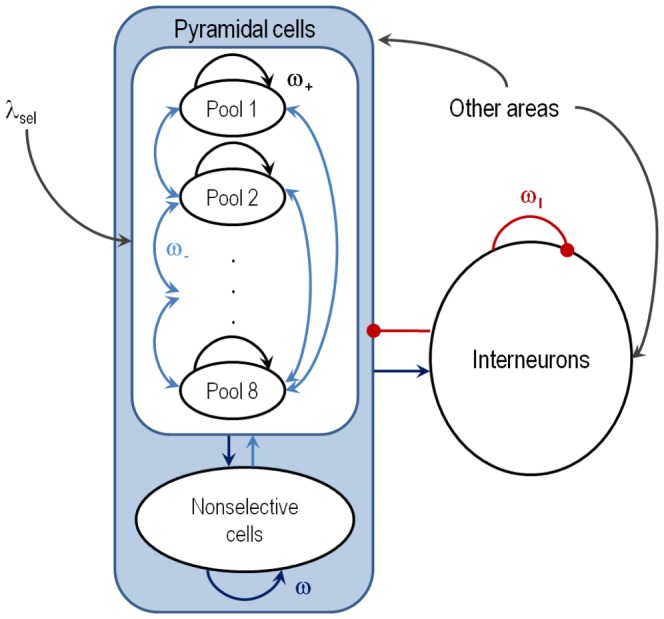
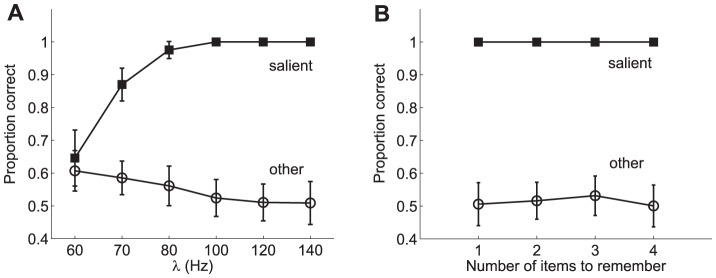
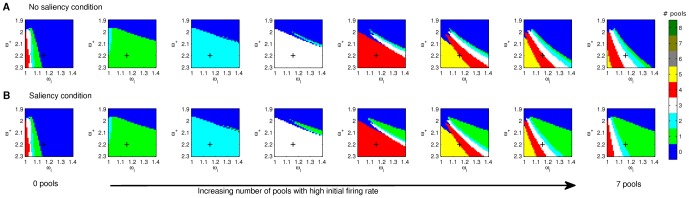
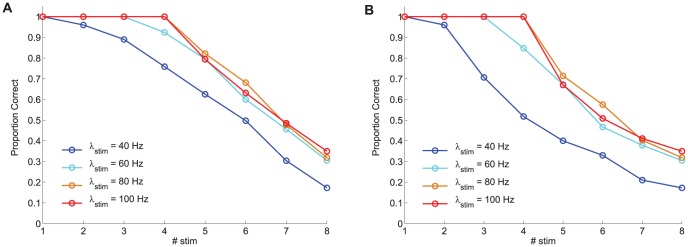
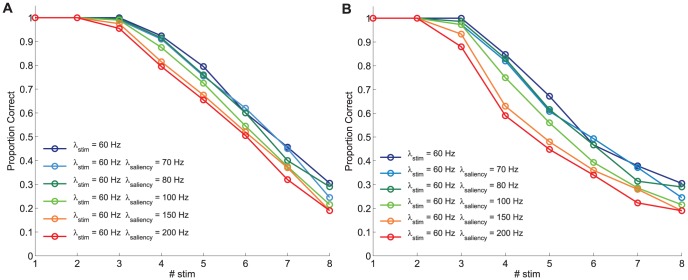
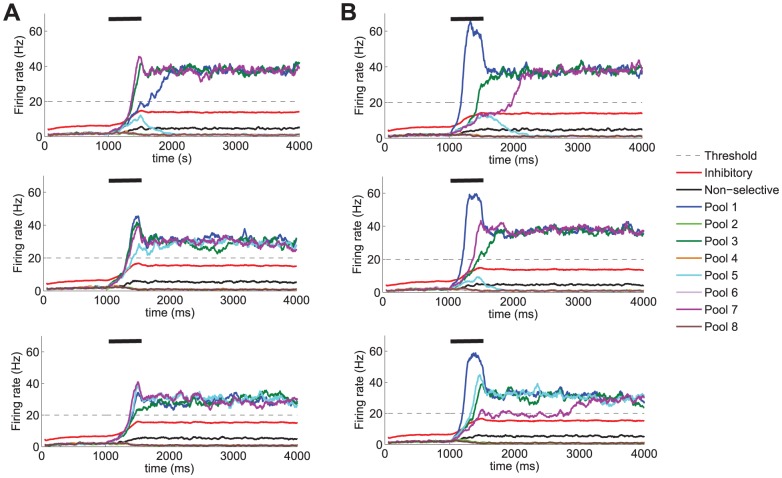
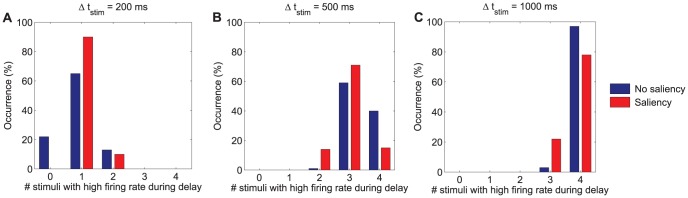
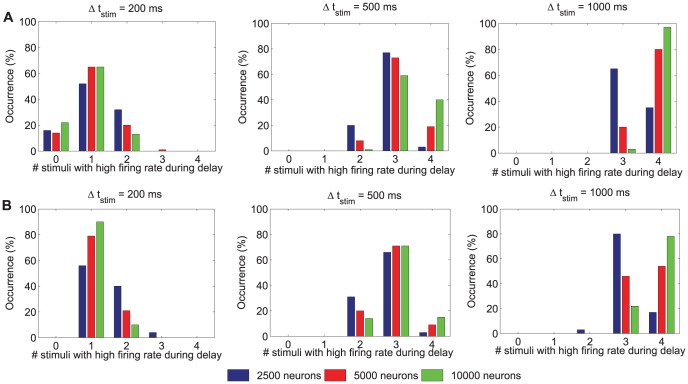
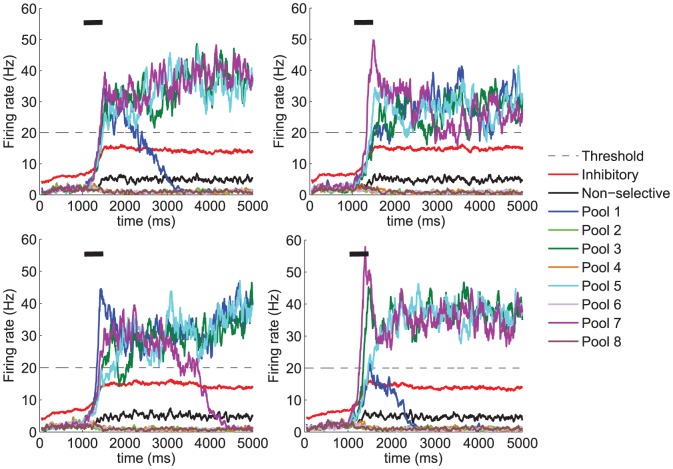
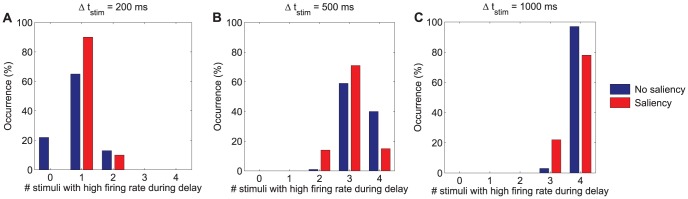
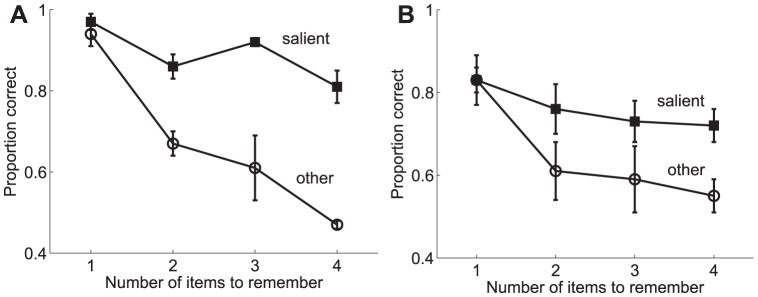
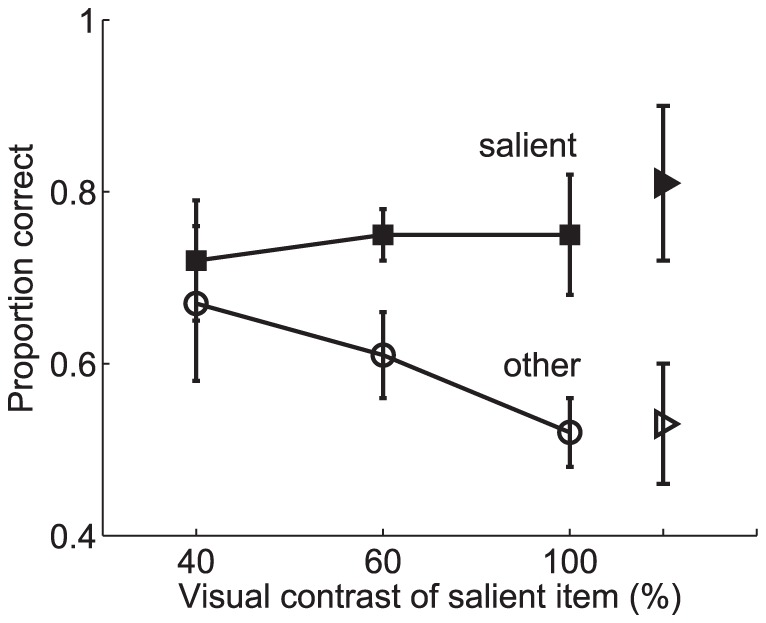
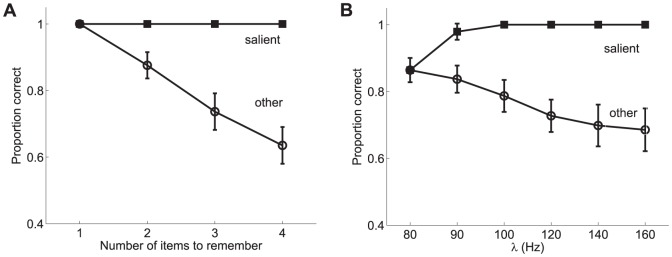
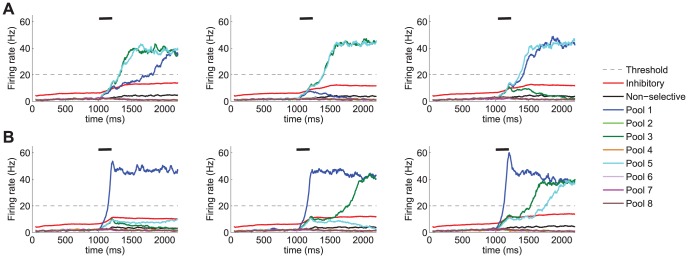
The study of working memory capacity is of outmost importance in cognitive psychology as working memory is at the basis of general cognitive function. Although the working memory capacity limit has been thoroughly studied, its origin still remains a matter of strong debate. Only recently has the role of visual saliency in modulating working memory storage capacity been assessed experimentally and proved to provide valuable insights into working memory function. In the computational arena, attractor networks have successfully accounted for psychophysical and neurophysiological data in numerous working memory tasks given their ability to produce a sustained elevated firing rate during a delay period. Here we investigate the mechanisms underlying working memory capacity by means of a biophysically-realistic attractor network with spiking neurons while accounting for two recent experimental observations: 1) the presence of a visually salient item reduces the number of items that can be held in working memory, and 2) visually salient items are commonly kept in memory at the cost of not keeping as many non-salient items. Our model suggests that working memory capacity is determined by two fundamental processes: encoding of visual items into working memory and maintenance of the encoded items upon their removal from the visual display. While maintenance critically depends on the constraints that lateral inhibition imposes to the mnemonic activity, encoding is limited by the ability of the stimulated neural assemblies to reach a sufficiently high level of excitation, a process governed by the dynamics of competition and cooperation among neuronal pools. Encoding is therefore contingent upon the visual working memory task and has led us to introduce the concept of effective working memory capacity (eWMC) in contrast to the maximal upper capacity limit only reached under ideal conditions.
工作记忆容量的研究在认知心理学中至关重要,因为工作记忆是一般认知功能的基础。尽管工作记忆容量的限制已经得到了深入研究,但它的起源仍然是一个激烈争论的问题。直到最近,视觉突显在调节工作记忆存储容量方面的作用才在实验中得到评估,并被证明为工作记忆功能提供了有价值的见解。在计算领域,吸引子网络由于能够在延迟期间产生持续的高发射率,因此成功地解释了许多工作记忆任务的心理物理和神经生理数据。在这里,我们通过具有尖峰神经元的生物物理现实吸引子网络来研究工作记忆容量的机制,同时考虑到两个最近的实验观察结果:1)存在视觉突出项会减少可以在工作记忆中保持的项目数量,以及 2)视觉突出项通常以不保持那么多非突出项为代价保留在记忆中。我们的模型表明,工作记忆容量取决于两个基本过程:将视觉项目编码到工作记忆中,以及在从视觉显示器中移除这些项目后保持编码项目。虽然维护过程严格依赖于侧抑制对记忆活动施加的限制,但编码受到刺激神经集合达到足够高的兴奋水平的能力的限制,这个过程受神经元池之间竞争和合作的动态控制。因此,编码取决于视觉工作记忆任务,这使我们引入了有效工作记忆容量(eWMC)的概念,与仅在理想条件下达到的最大上限容量限制形成对比。