Department of Electrical and Computer Engineering, Florida International University, Miami, Florida 33174, USA.
Sci Rep. 2012;2:624. doi: 10.1038/srep00624. Epub 2012 Sep 3.
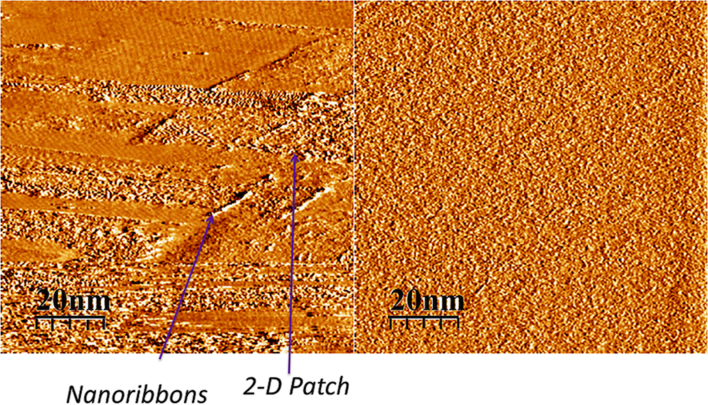
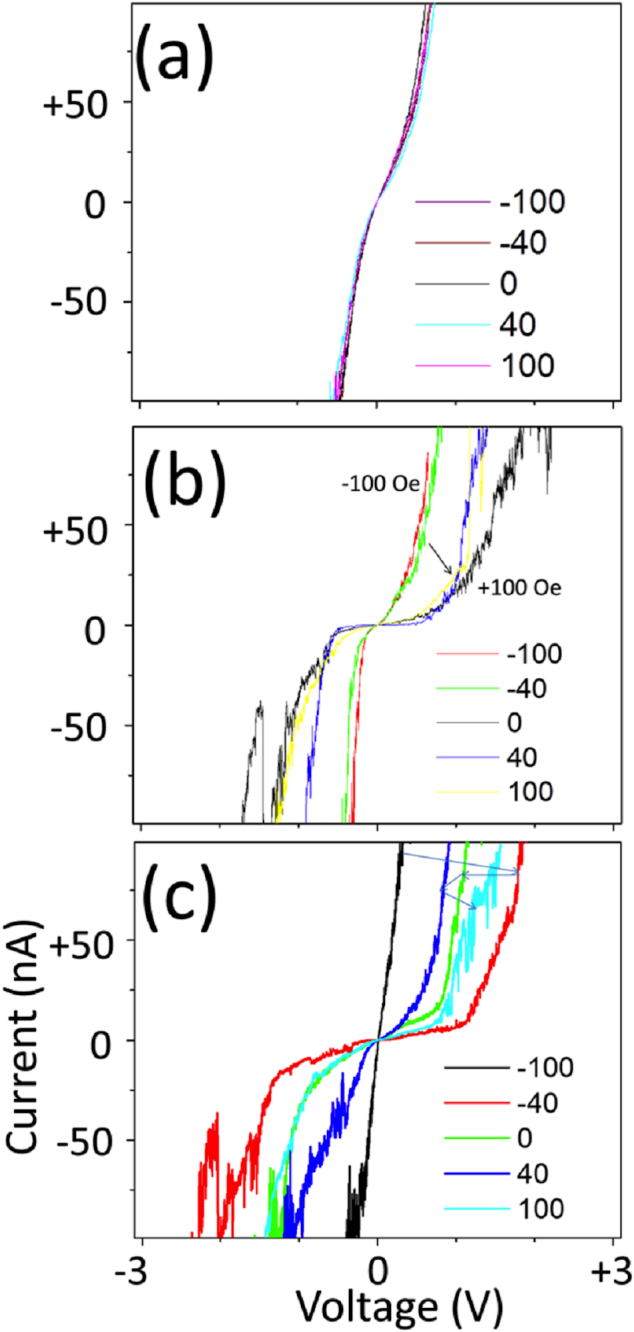
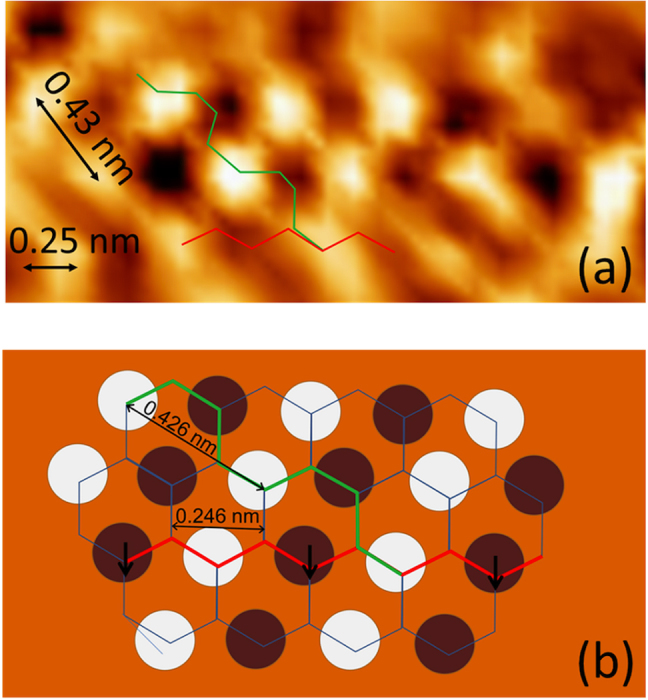
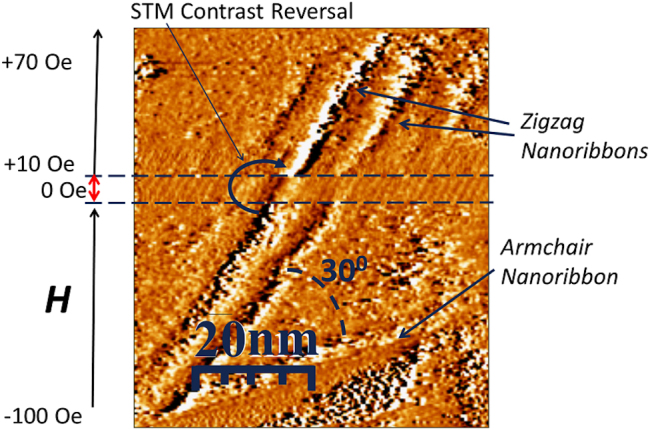
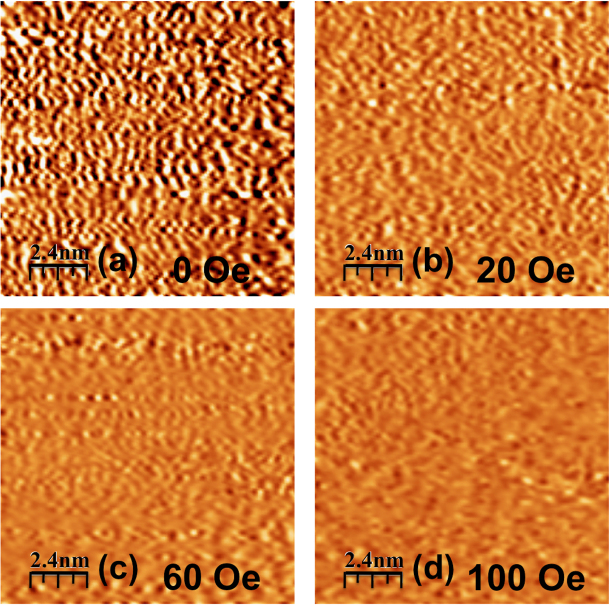
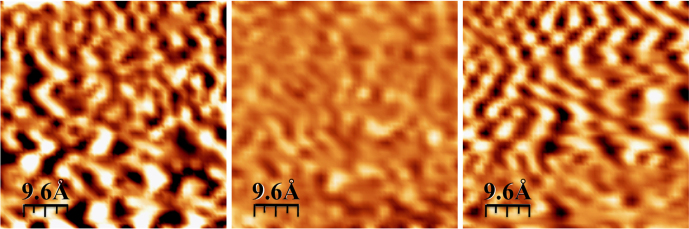
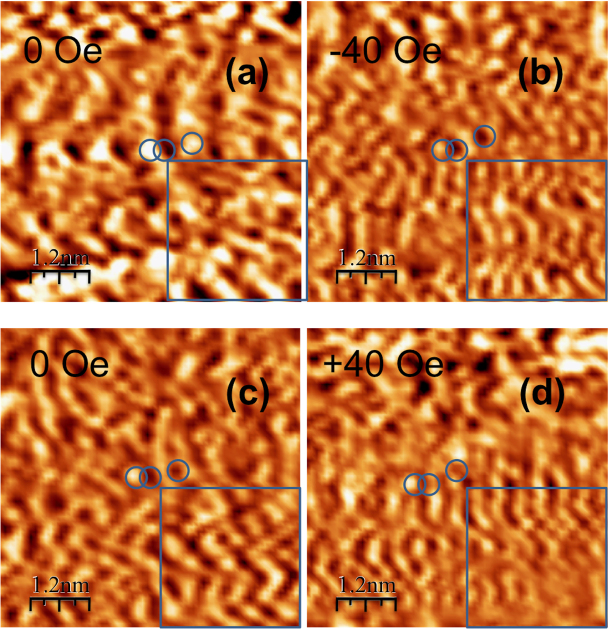
Despite theoretical predictions, the question of room-temperature magnetic order in graphene must be conclusively resolved before graphene can fully achieve its potential as a spintronic medium. Through scanning tunneling microscopy (STM) and point I-V measurements, the current study reveals that unlike pristine samples, graphene nanostructures, when functionalized with aryl radicals, can sustain magnetic order. STM images show 1-D and 2-D periodic super-lattices originating from the functionalization of a single sub-lattice of the bipartite graphene structure. Field-dependent super-lattices in 3-nm wide "zigzag" nanoribbons indicate local moments with parallel and anti-parallel ordering along and across the edges, respectively. Anti-parallel ordering is observed in 2-D segments with sizes of over 20 nm. The field dependence of STM images and point I-V curves indicates a spin polarized local density of states (LDOS), an out-of-plane anisotropy field of less than 10 Oe, and an exchange coupling field of 100 Oe at room temperature.
尽管存在理论预测,但在石墨烯充分发挥其作为自旋电子介质的潜力之前,必须明确解决其在室温下的磁有序问题。通过扫描隧道显微镜(STM)和点 I-V 测量,本研究表明,与原始样品不同,当石墨烯纳米结构被芳基自由基官能化时,它们可以维持磁有序。STM 图像显示了源自双原子层石墨烯结构的单个子晶格官能化的一维和二维周期性超晶格。3nm 宽“锯齿”纳米带中的场依赖超晶格表明,在边缘的平行和反平行方向上存在局部磁矩。在超过 20nm 的二维段中观察到反平行排列。STM 图像和点 I-V 曲线的场依赖性表明具有自旋极化的局域态密度(LDOS),小于 10Oe 的面外各向异性场以及室温下的 100Oe 交换耦合场。