
绿茶提取物对链脲佐菌素诱导糖尿病大鼠肝组织损伤的保护作用。
Protective Effects of Green Tea Extract against Hepatic Tissue Injury in Streptozotocin-Induced Diabetic Rats.
机构信息
Department of Biological Science, Ahar Branch, Islamic Azad University, Ahar, Iran.
出版信息
Evid Based Complement Alternat Med. 2012;2012:740671. doi: 10.1155/2012/740671. Epub 2012 Feb 27.
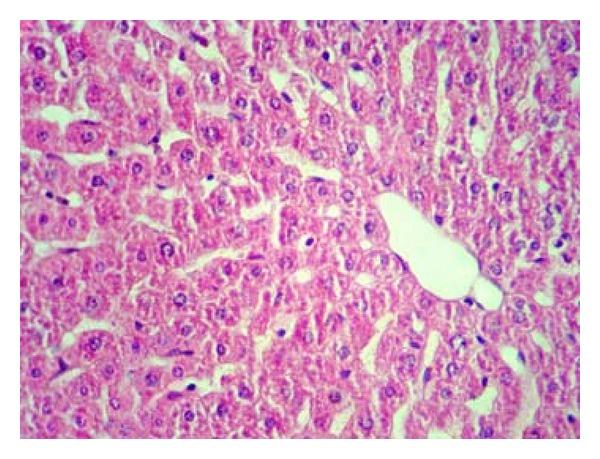
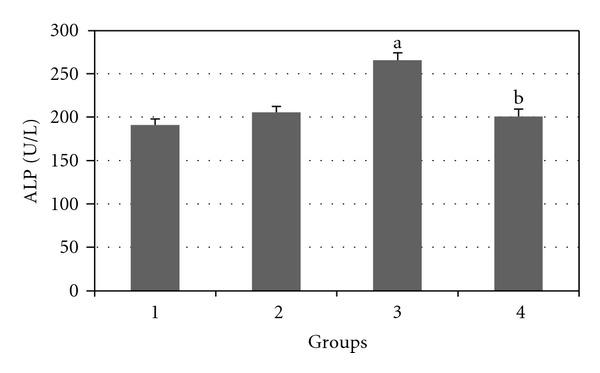
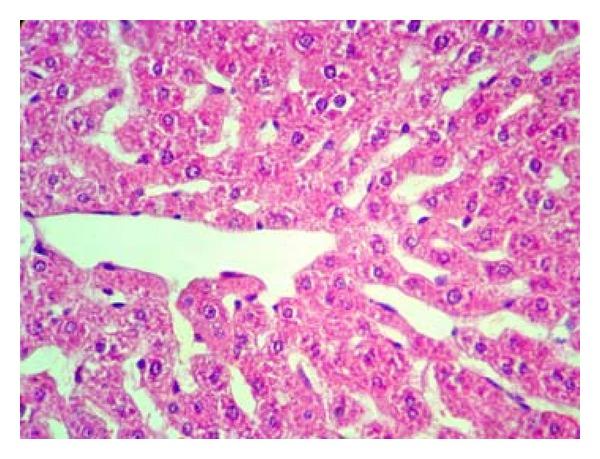
Although diabetic hepatopathy is potentially less common, it may be appropriate for addition to the list of target organ conditions related to diabetes. This study was designed to evaluate the hepatoprotective properties of green tea extract (GTE) in STZ-induced diabetes in rats. Wistar rats were made diabetic through single injection of STZ (75 mg/kg i.p.). The rats were randomly divided into four groups of 10 animals each: Group 1, healthy control; Group 2, nondiabetics treated with GTE administered orally (1.5%, w/v); Group 3, diabetics; Group 4, diabetics treated with GTE (1.5%, w/v) for 8 weeks. Serum biomarkers were assessed to determine hepatic injury. Malondialdehyde (MDA) and reduced glutathione (GSH) contents were measured to assess free radical activity in the liver tissue. Hepatic antioxidant activities of glutathione peroxidase (GSH-Px), superoxide dismutase (SOD), and catalase (CAT) were also determined. The biochemical findings were matched with histopathological verifications. Liver MDA content and serum levels of ALT, AST, ALP, and bilirubin in Group 3 significantly increased compared to Group 1 (P < 0.05) and significantly decreased in Group 4 compared to Group 3 (P < 0.05). Serum albumin level and GSH, SOD, CAT, and GSH-Px contents of the liver in Group 3 were significantly decreased compared to Group 1 (P < 0.05) and were significantly increased in Group 4 compared to Group 3 (P < 0.05). Histopathologically, the changes were in the same direction with biochemical findings. This study proved the hepatoprotective activity of GTE in experimentally induced diabetic rats.
尽管糖尿病性肝病变的发病率可能较低,但将其添加到与糖尿病相关的靶器官疾病列表中可能是合适的。本研究旨在评估绿茶提取物(GTE)对链脲佐菌素(STZ)诱导的糖尿病大鼠的肝保护作用。Wistar 大鼠通过单次注射 STZ(75mg/kg 腹腔注射)制成糖尿病。大鼠随机分为四组,每组 10 只:第 1 组,健康对照组;第 2 组,未患糖尿病的大鼠给予口服 GTE(1.5%,w/v);第 3 组,糖尿病大鼠;第 4 组,糖尿病大鼠给予 GTE(1.5%,w/v)治疗 8 周。评估血清生物标志物以确定肝损伤。测量丙二醛(MDA)和还原型谷胱甘肽(GSH)含量以评估肝组织中的自由基活性。还测定了肝组织中谷胱甘肽过氧化物酶(GSH-Px)、超氧化物歧化酶(SOD)和过氧化氢酶(CAT)的抗氧化活性。生化发现与组织病理学验证相匹配。与第 1 组相比,第 3 组肝 MDA 含量和血清 ALT、AST、ALP 和胆红素水平显著升高(P<0.05),第 4 组与第 3 组相比显著降低(P<0.05)。与第 1 组相比,第 3 组血清白蛋白水平和肝 GSH、SOD、CAT 和 GSH-Px 含量显著降低(P<0.05),第 4 组与第 3 组相比显著升高(P<0.05)。组织病理学变化与生化发现一致。本研究证明了 GTE 对实验性诱导的糖尿病大鼠的肝保护作用。





 Zotero 插件