
抗抑郁治疗可使重度抑郁症患者的脑白质体积正常化。
Antidepressant treatment normalizes white matter volume in patients with major depression.
机构信息
College of Mechatronics and Automation, National University of Defense Technology, Changsha, Hunan, People's Republic of China.
出版信息
PLoS One. 2012;7(8):e44248. doi: 10.1371/journal.pone.0044248. Epub 2012 Aug 30.
OBJECTIVE
To investigate white matter volume abnormalities in patients with major depression and the effects of antidepressant treatment on white matter volume.
METHOD
Magnetic resonance imaging (MRI) was performed on 32 treatment-naïve depressed patients, 17 recovered patients who had received antidepressant treatment and subsequently achieved clinical recovery and 34 matched controls.
RESULTS
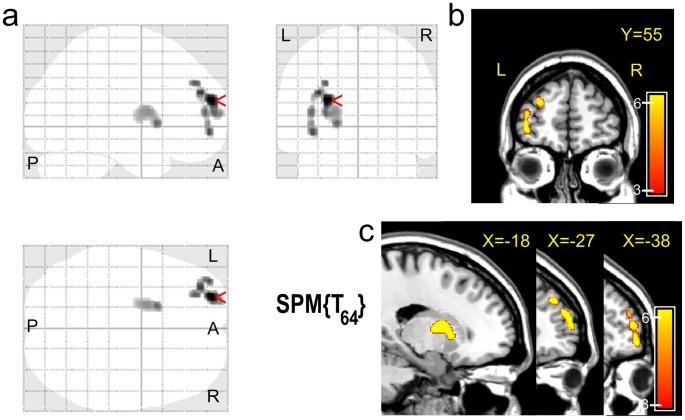
Relative to the healthy controls, the treatment-naïve depressed patients showed increased white matter volumes in the left dorsolateral prefrontal cortex (DLPFC) and left putamen and reduced white matter volumes in the left cerebellum posterior lobe and left inferior parietal lobule. For the treatment-naïve patients, the length in months of the current depressive episode was positively correlated with the white matter volumes in both the left DLPFC and left putamen. In the recovered patients, the differences in white matter volume were no longer statistically significant relative to healthy controls. No significant difference was found in the total white matter volume among the three groups.
CONCLUSIONS
This study demonstrates that there were alterations in the white matter volumes of depressed patients, which might disrupt the neural circuits that are involved in emotional and cognitive function and thus contribute to the pathophysiology of depression. The finding of the significant correlations between refractoriness and the white matter volumes in the left DLPFC and left putamen combined with the finding that antidepressant treatment normalized the white matter volume of recovered patients, suggests that a quantitative, structural MRI measurement could act as a potential biomarker in depression therapy for individual subjects.
目的
探讨重度抑郁症患者的脑白质体积异常及其抗抑郁治疗对脑白质体积的影响。
方法
对 32 例未经治疗的抑郁患者、17 例经抗抑郁治疗后临床缓解的患者和 34 名匹配的健康对照者进行磁共振成像(MRI)检查。
结果
与健康对照组相比,未经治疗的抑郁患者左侧背外侧前额叶皮质(DLPFC)和左侧壳核的脑白质体积增加,左侧小脑后叶和左侧顶下小叶的脑白质体积减少。对于未经治疗的患者,当前抑郁发作的持续时间与左侧 DLPFC 和左侧壳核的脑白质体积呈正相关。在缓解患者中,与健康对照组相比,脑白质体积的差异不再具有统计学意义。三组间的总脑白质体积无显著差异。
结论
本研究表明,抑郁症患者的脑白质体积发生了改变,这可能破坏了参与情绪和认知功能的神经回路,从而导致抑郁症的病理生理学改变。抗抑郁治疗使缓解患者的脑白质体积恢复正常,这一发现与左侧 DLPFC 和左侧壳核的脑白质体积与抵抗性之间存在显著相关性的发现相结合,提示定量结构 MRI 测量可能成为个体患者抗抑郁治疗的潜在生物标志物。



 Zotero 插件