Department of Psychology, Catholic University, L,go A, Gemelli 1, Milan 20123, Italy.
J Neurodev Disord. 2012 Jul 3;4(1):18. doi: 10.1186/1866-1955-4-18.
Exposure to alcohol in utero is a known cause of mental retardation. Although a certain degree of motor impairment is always associated with fetal alcohol spectrum disorder, little is known about the neurobiological basis of the defective motor control. We have studied the striatal interneurons containing parvalbumin in a rat model of fetal alcohol spectrum disorder.
Newborn rats received ethanol by inhalation from postnatal day two through six and parvalbumin striatal neurons were labeled by immunohistochemistry on postnatal day 60. The spatial distribution of parvalbumin interneurons was studied using Voronoi spatial tessellation and their dendritic trees were completely reconstructed.
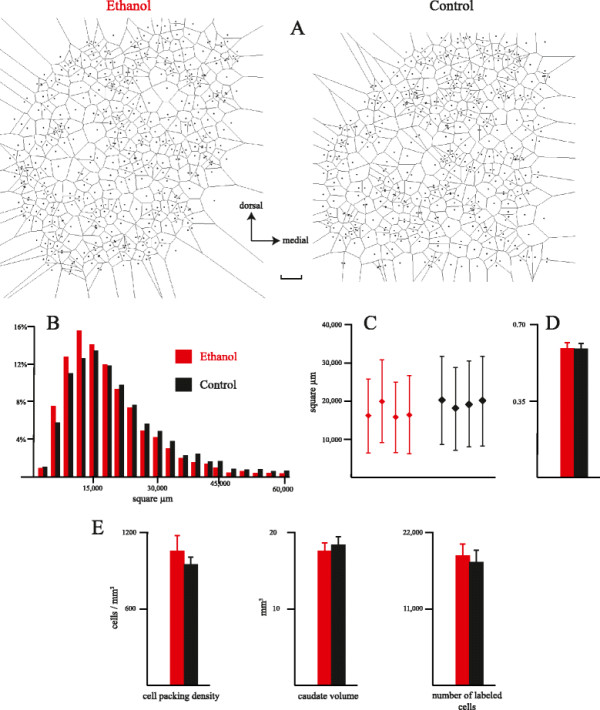
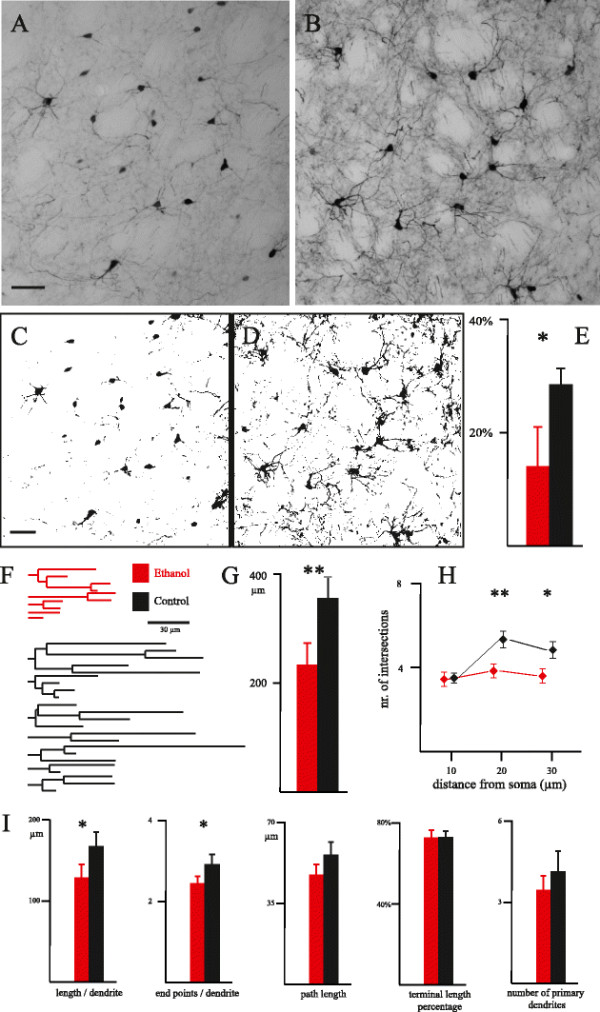
Parvalbumin interneurons of ethanol-treated animals showed a clustered spatial distribution similar to that observed in control animals. The dendritic tree of parvalbumin interneurons was significantly reduced in ethanol-treated animals, as compared with controls.
Striatal parvalbumin interneurons are crucial components of the brain network serving motor control. Therefore, the shrinkage of their dendrites could contribute to the motor and cognitive symptoms observed in fetal alcohol spectrum disorder.
胎儿期暴露于酒精是智力迟钝的已知原因。尽管胎儿酒精谱系障碍总是与一定程度的运动障碍相关,但对于运动控制缺陷的神经生物学基础知之甚少。我们研究了胎儿酒精谱系障碍大鼠模型中的含巴尔通体蛋白的纹状体中间神经元。
新生大鼠从出生后第 2 天到第 6 天通过吸入接受乙醇,并且在出生后第 60 天通过免疫组织化学标记巴尔通体蛋白纹状体神经元。使用 Voronoi 空间细分法研究巴尔通体蛋白中间神经元的空间分布,并完全重建其树突。
与对照组相比,乙醇处理动物的巴尔通体蛋白中间神经元表现出类似的簇状空间分布。与对照组相比,乙醇处理动物的巴尔通体蛋白中间神经元的树突显著减少。
纹状体巴尔通体蛋白中间神经元是运动控制脑网络的重要组成部分。因此,它们树突的萎缩可能导致胎儿酒精谱系障碍中观察到的运动和认知症状。