Benaroya Research Institute, Seattle, WA 98101, USA.
Immunity. 2012 Sep 21;37(3):501-10. doi: 10.1016/j.immuni.2012.05.031. Epub 2012 Sep 6.
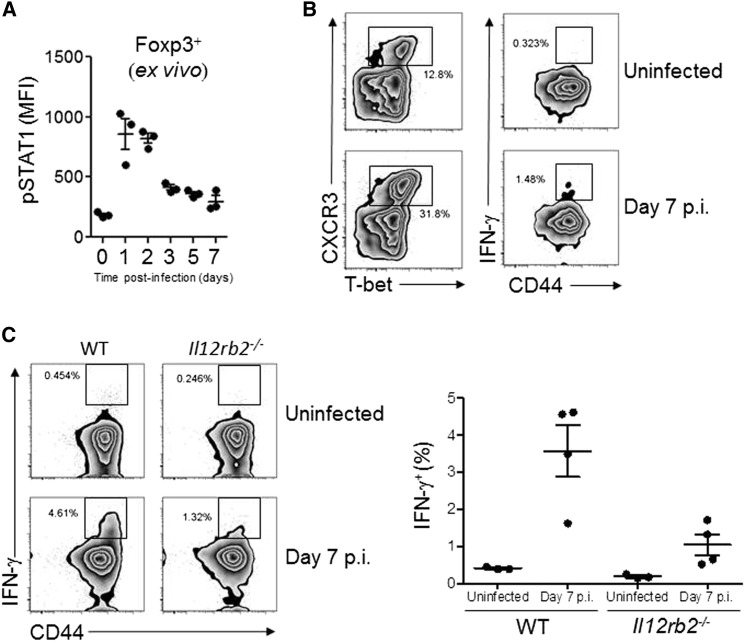
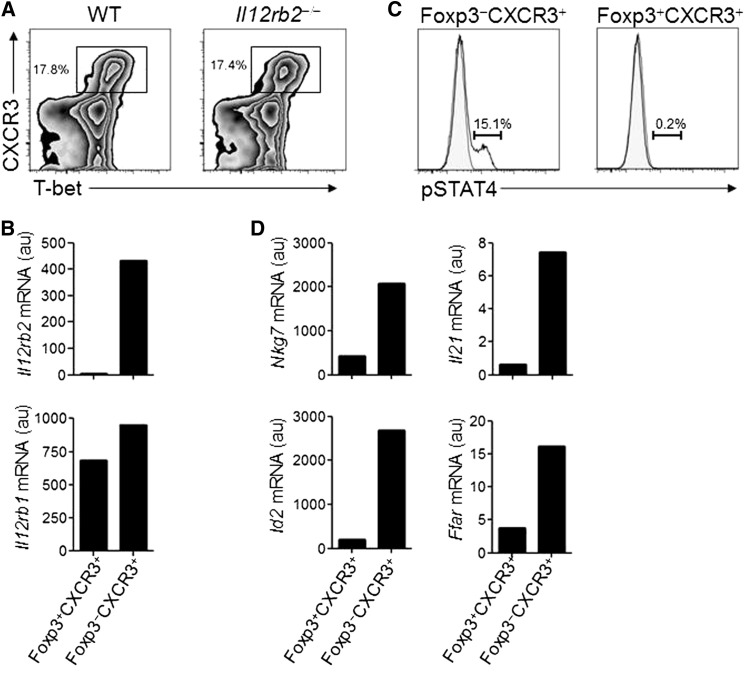
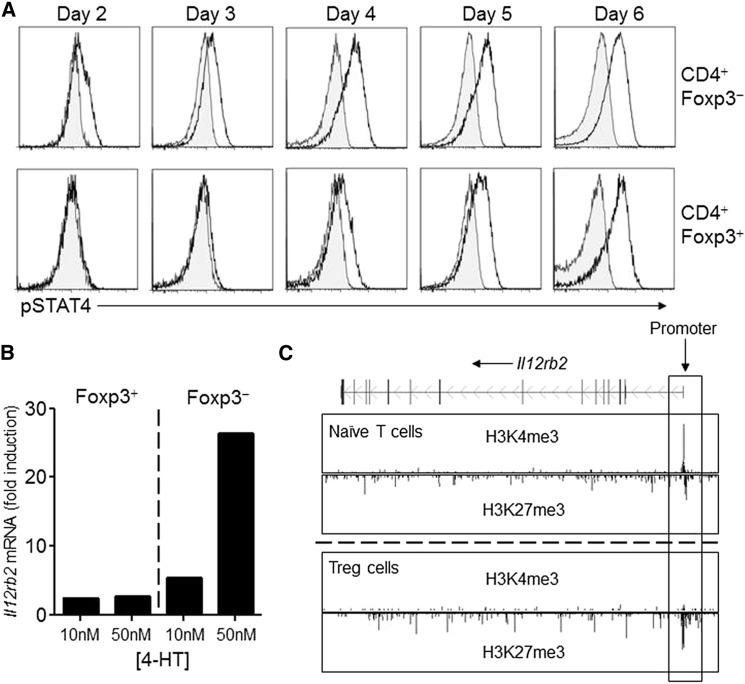
Foxp3(+) regulatory T (Treg) cells limit inflammatory responses and maintain immune homeostasis. Although comprised of several phenotypically and functionally distinct subsets, the differentiation of specialized Treg cell populations within the periphery is poorly characterized. We demonstrate that the development of T-bet(+) Treg cells that potently inhibit T helper 1 (Th1) cell responses was dependent on the transcription factor STAT1 and occurred directly in response to interferon-γ produced by effector T cells. Additionally, delayed induction of the IL-12Rβ2 receptor component after STAT1 activation helped ensure that Treg cells do not readily complete STAT4-dependent Th1 cell development and lose their ability to suppress effector T cell proliferation. Thus, we define a pathway of abortive Th1 cell development that results in the specialization of peripheral Treg cells and demonstrate that impaired expression of a single cytokine receptor helps maintain Treg cell-suppressive function in the context of inflammatory Th1 cell responses.
Foxp3(+) 调节性 T(Treg) 细胞限制炎症反应并维持免疫稳态。尽管由几个表型和功能不同的亚群组成,但外周专门的 Treg 细胞群体的分化特征描述甚少。我们证明了 T-bet(+)Treg 细胞的发育,其能强有力地抑制辅助性 T 细胞 1(Th1)细胞的反应,依赖于转录因子 STAT1,并且直接响应效应 T 细胞产生的干扰素-γ。此外,STAT1 激活后 IL-12Rβ2 受体成分的延迟诱导有助于确保 Treg 细胞不会轻易完成 STAT4 依赖性 Th1 细胞发育,并丧失其抑制效应 T 细胞增殖的能力。因此,我们定义了一条导致外周 Treg 细胞特化的无效 Th1 细胞发育途径,并证明单个细胞因子受体表达受损有助于在炎症性 Th1 细胞反应的背景下维持 Treg 细胞的抑制功能。