Department of Oncology and Diagnostic Sciences, Dental School, University of Maryland, Baltimore, MD 21201, USA.
Mol Cancer. 2012 Sep 11;11:66. doi: 10.1186/1476-4598-11-66.
Bone loss and pathological fractures are common skeletal complications associated with androgen deprivation therapy and bone metastases in prostate cancer patients. We have previously demonstrated that prostate cancer cells secrete receptor activator of NF-kB ligand (RANKL), a protein essential for osteoclast differentiation and activation. However, the mechanism(s) by which RANKL is produced remains to be determined. The objective of this study is to gain insight into the molecular mechanisms controlling RANKL expression in metastatic prostate cancer cells.
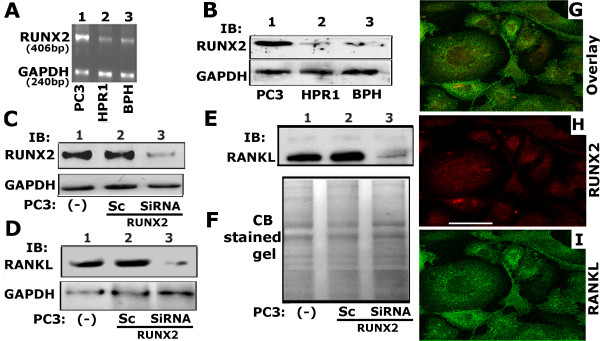
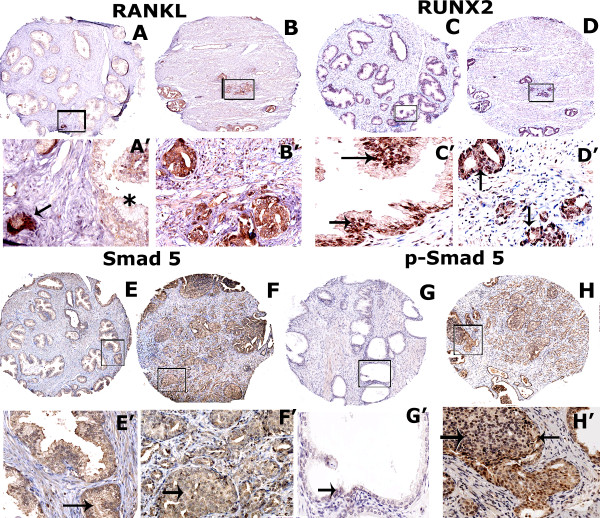
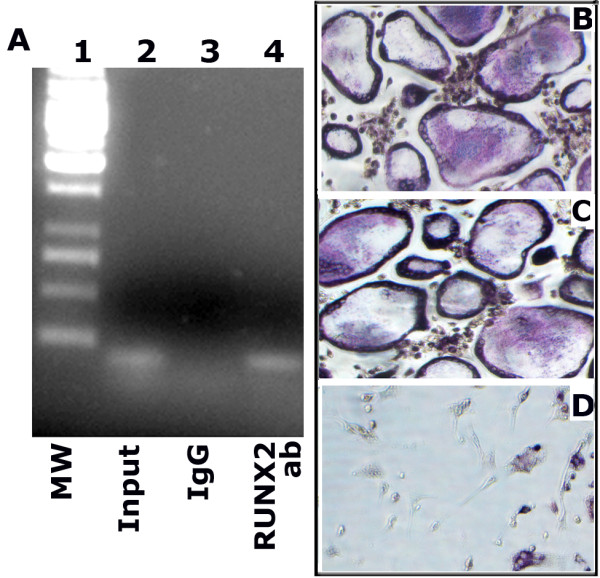
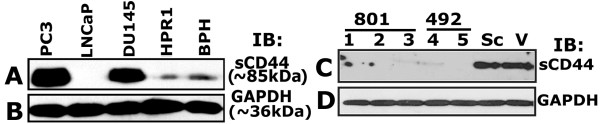
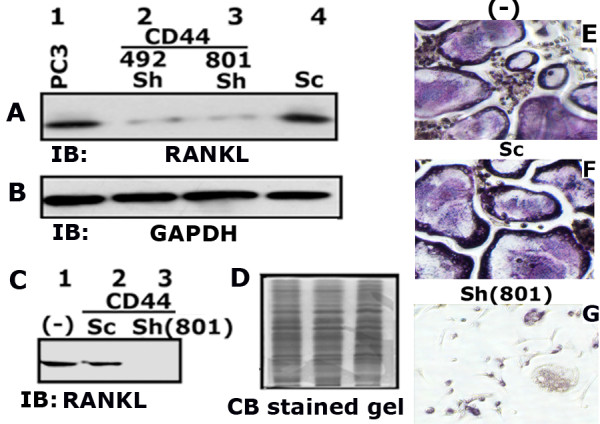
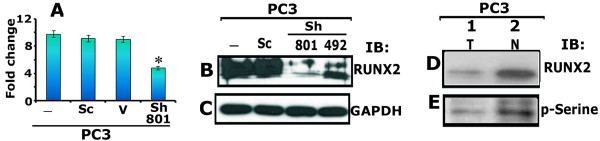
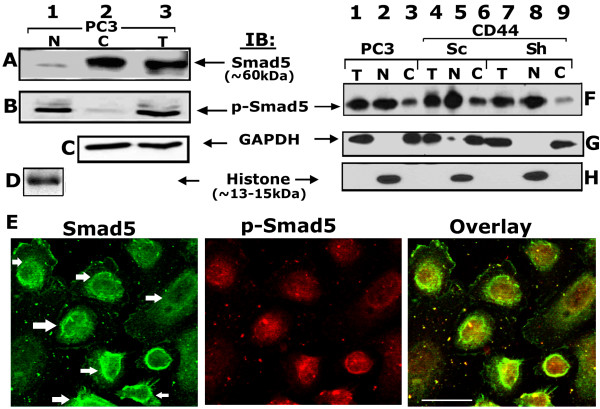
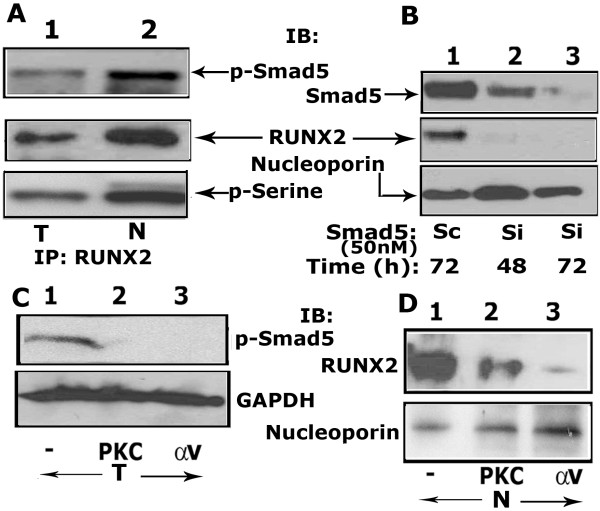
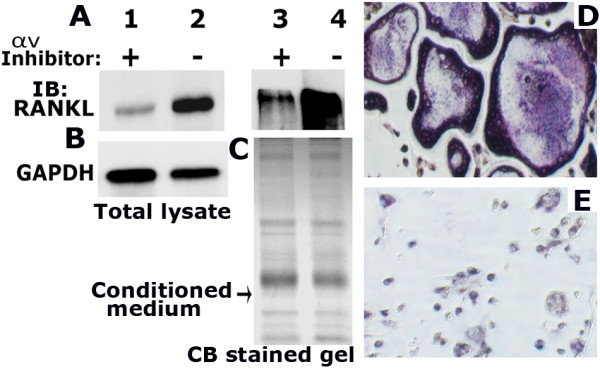
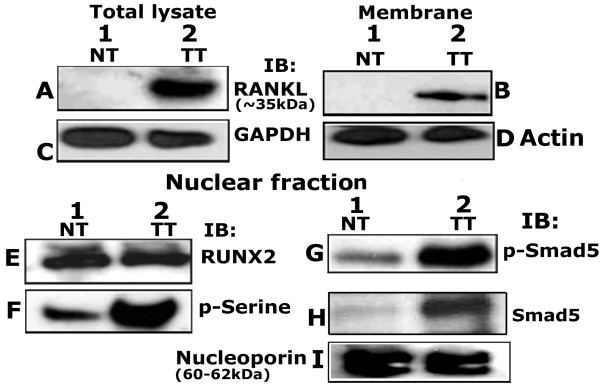
We show here that phosphorylation of Smad 5 by integrin αvβ3 and RUNX2 by CD44 signaling, respectively, regulates RANKL expression in human-derived PC3 prostate cancer cells isolated from bone metastasis. We found that RUNX2 intranuclear targeting is mediated by phosphorylation of Smad 5. Indeed, Smad5 knock-down via RNA interference and inhibition of Smad 5 phosphorylation by an αv inhibitor reduced RUNX2 nuclear localization and RANKL expression. Similarly, knockdown of CD44 or RUNX2 attenuated the expression of RANKL. As a result, conditioned media from these cells failed to support osteoclast differentiation in vitro. Immunohistochemistry analysis of tissue microarray sections containing primary prostatic tumor (grade2-4) detected predominant localization of RUNX2 and phosphorylated Smad 5 in the nuclei. Immunoblotting analyses of nuclear lysates from prostate tumor tissue corroborate these observations.
Collectively, we show that CD44 signaling regulates phosphorylation of RUNX2. Localization of RUNX2 in the nucleus requires phosphorylation of Smad-5 by integrin αvβ3 signaling. Our results suggest possible integration of two different pathways in the expression of RANKL. These observations imply a novel mechanistic insight into the role of these proteins in bone loss associated with bone metastases in patients with prostate cancer.
在前列腺癌患者中,去势治疗和骨转移会导致骨质流失和病理性骨折等常见的骨骼并发症。我们之前已经证明,前列腺癌细胞会分泌核因子-κB 配体受体激活剂(RANKL),这是一种对破骨细胞分化和激活至关重要的蛋白质。然而,RANKL 的产生机制仍有待确定。本研究的目的是深入了解控制转移性前列腺癌细胞中 RANKL 表达的分子机制。
我们在此表明,整合素 αvβ3 对 Smad 5 的磷酸化和 CD44 信号对 RUNX2 的磷酸化分别调节了人源前列腺癌 PC3 细胞株中 RANKL 的表达,该细胞株来源于骨转移。我们发现 RUNX2 的核内靶向是通过 Smad 5 的磷酸化介导的。实际上,通过 RNA 干扰敲低 Smad5 和抑制 Smad 5 磷酸化的 αv 抑制剂均可减少 RUNX2 的核内定位和 RANKL 的表达。同样,CD44 或 RUNX2 的敲低也减弱了 RANKL 的表达。因此,这些细胞的条件培养基在体外无法支持破骨细胞的分化。包含原发性前列腺肿瘤(2-4 级)的组织微阵列切片的免疫组织化学分析检测到 RUNX2 和磷酸化 Smad 5 主要定位于细胞核中。来自前列腺肿瘤组织的核裂解物的免疫印迹分析证实了这些观察结果。
综上所述,我们表明 CD44 信号调节 RUNX2 的磷酸化。RUNX2 在细胞核中的定位需要整合素 αvβ3 信号对 Smad-5 的磷酸化。我们的结果表明,RANKL 的表达可能整合了两条不同的通路。这些观察结果暗示了这些蛋白质在与前列腺癌骨转移相关的骨丢失中作用的新的机制见解。