Department of Anatomy and Neurobiology, Washington University School of Medicine, St. Louis, Missouri 63110, USA.
G3 (Bethesda). 2012 Sep;2(9):1019-25. doi: 10.1534/g3.112.003343. Epub 2012 Sep 1.
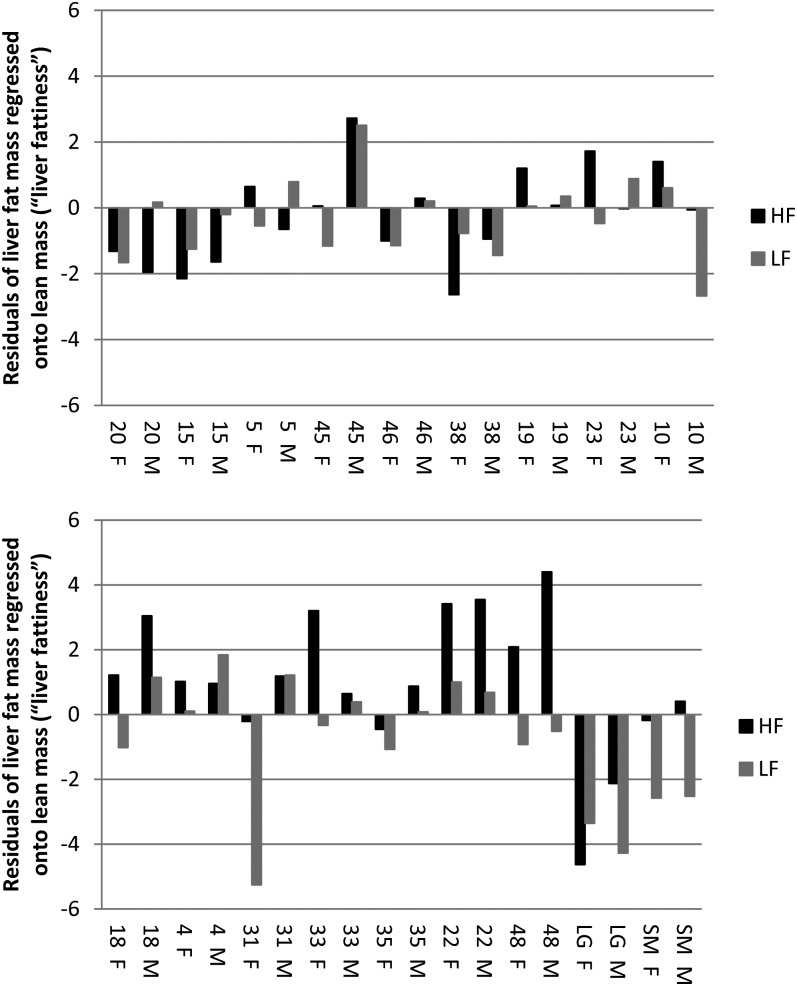
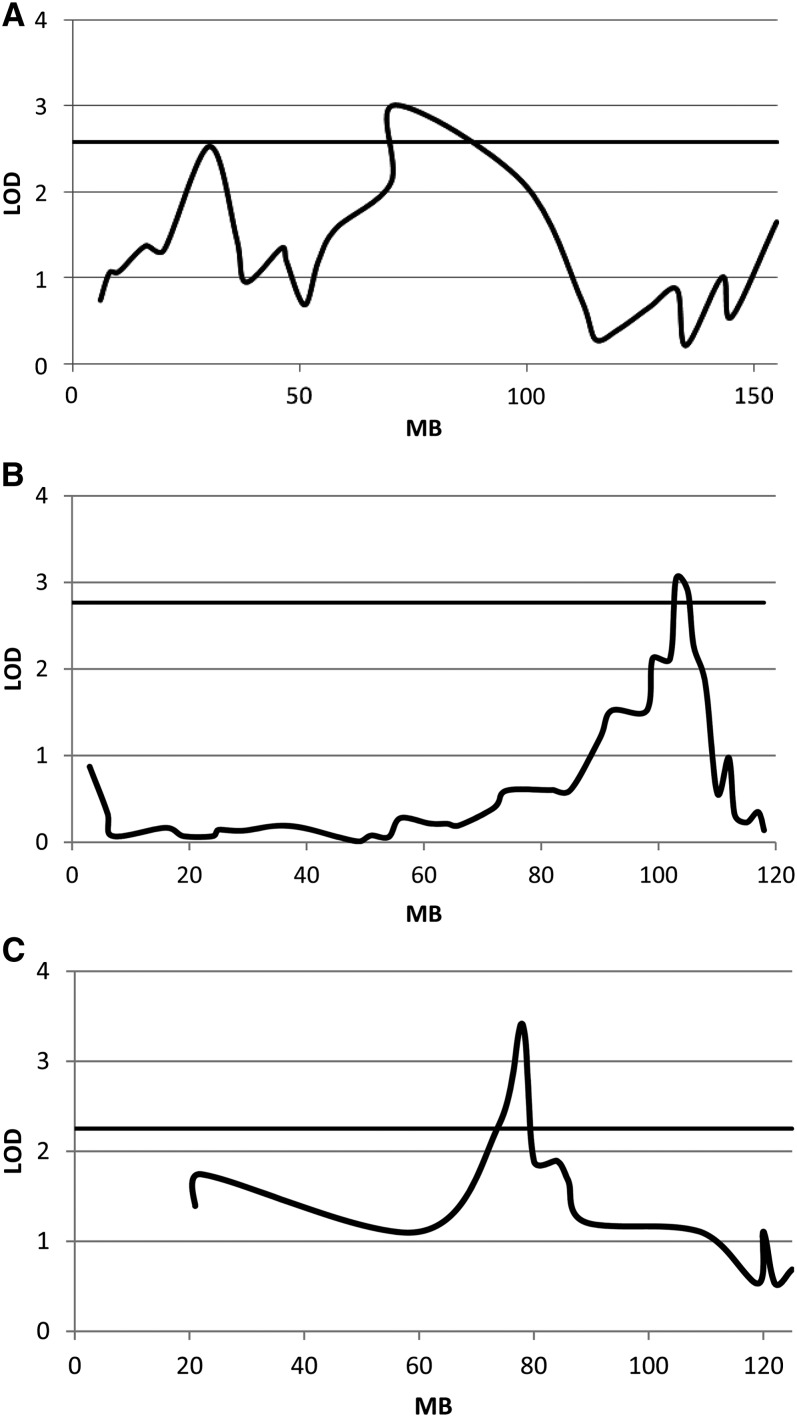
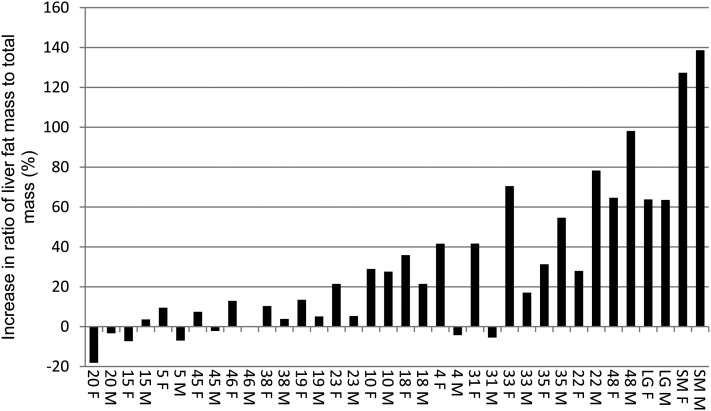
Nonalcoholic fatty liver disease, a condition in which excess fat accumulates in the liver, is strongly associated with the metabolic syndrome, including obesity and other related conditions. This disease has the potential to progress from steatosis to steatohepatitis, fibrosis, and cirrhosis. The recent increase in the prevalence of the metabolic syndrome is largely driven by changes in diet and activity levels. Individual variation in the response to this obesogenic environment, however, is attributable in part to genetic variation between individuals, but very few mammalian genetic loci have been identified with effects on fat accumulation in the liver. To study the genetic basis for variation in liver fat content in response to dietary fat, liver fat proportion was determined using quantitative magnetic resonance imaging in 478 mice from 16 LG/J X SM/J recombinant inbred strains fed either a high-fat (42% kcal from fat) or low-fat (15% kcal from fat) diet. An analysis of variance confirmed that there is a genetic basis for variation in liver fat content within the population with significant effects of sex and diet. Three quantitative trail loci that contribute to liver fat content also were mapped.
非酒精性脂肪性肝病是一种肝脏脂肪积聚过多的病症,与代谢综合征密切相关,包括肥胖和其他相关疾病。这种疾病有可能从脂肪变性进展为肝炎、纤维化和肝硬化。代谢综合征患病率的最近增加在很大程度上是由于饮食和活动水平的变化引起的。然而,个体对这种肥胖环境的反应存在差异,部分归因于个体之间的遗传差异,但很少有哺乳动物遗传基因座被确定对肝脏脂肪积聚有影响。为了研究饮食脂肪对肝脏脂肪含量变化的遗传基础,使用定量磁共振成像在来自 16 个 LG/J X SM/J 重组近交系的 478 只小鼠中确定了肝脏脂肪比例,这些小鼠分别喂食高脂肪(42%热量来自脂肪)或低脂肪(15%热量来自脂肪)饮食。方差分析证实,该人群的肝脏脂肪含量存在遗传基础,性别和饮食有显著影响。还映射了三个有助于肝脏脂肪含量的定量轨迹基因座。