Angkor Hospital for Children, Siem Reap, Cambodia.
J Trop Pediatr. 2013 Feb;59(1):36-42. doi: 10.1093/tropej/fms044. Epub 2012 Sep 13.
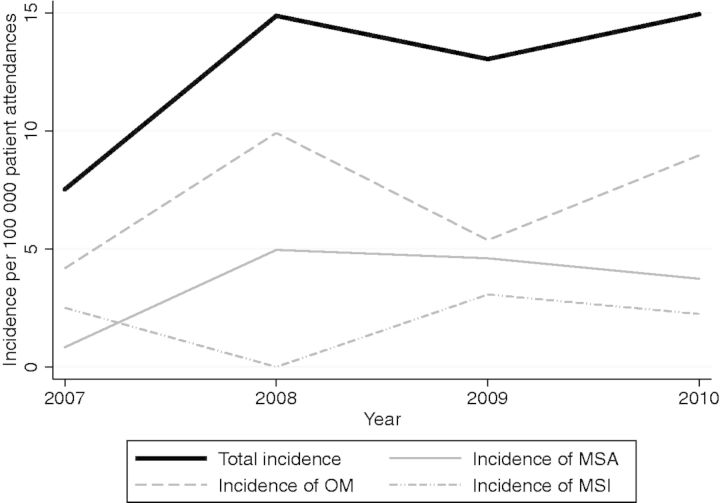
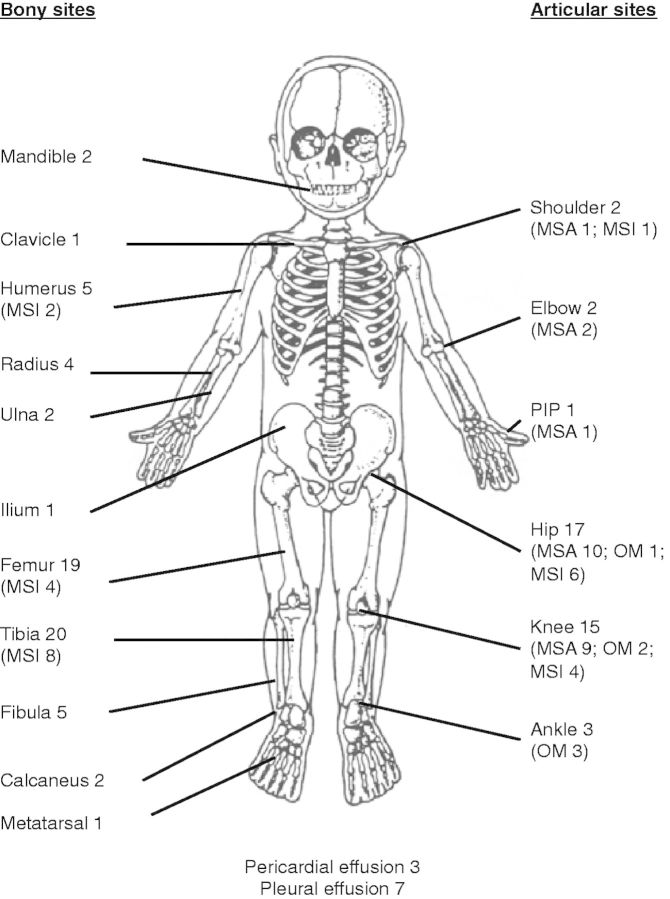
There are limited data on osteoarticular infections from resource-limited settings in Asia. A retrospective study of patients presenting to the Angkor Hospital for Children, Cambodia, January 2007-July 2011, identified 81 cases (28% monoarticular septic arthritis, 51% single-limb osteomyelitis and 15% multisite infections). The incidence was 13.8/100 000 hospital attendances. The median age was 7.3 years, with a male/female ratio of 1.9:1; 35% presented within 5 days of symptom onset (median 7 days). Staphylococcus aureus was cultured in 29 (36%) cases (52% of culture-positive cases); one isolate was methicillin-resistant (MRSA). Median duration of antimicrobial treatment was 29 days (interquartile range 21-43); rates of surgical intervention were 96%, and 46% of children had sequelae, with one fatality. In this setting osteoarticular infections are relatively common with high rates of surgical intervention and sequelae. Staphylococcus aureus is the commonest culturable cause, but methicillin-resistant S. aureus is not a major problem, unlike in other Asian centers.
亚洲资源有限地区的骨关节炎感染数据有限。2007 年 1 月至 2011 年 7 月,柬埔寨吴哥窟儿童医院对就诊的 81 例患者进行了回顾性研究(28%为单关节化脓性关节炎,51%为单肢骨髓炎,15%为多部位感染)。发病率为每 10 万住院患者 13.8 例。中位年龄为 7.3 岁,男女比例为 1.9:1;35%的患者在症状出现后 5 天内就诊(中位时间为 7 天)。29 例(36%)培养出金黄色葡萄球菌(52%的阳性培养病例);1 株为耐甲氧西林金黄色葡萄球菌(MRSA)。抗菌药物治疗的中位时间为 29 天(四分位间距 21-43);手术干预率为 96%,46%的儿童有后遗症,1 例死亡。在这种情况下,骨关节炎感染较为常见,手术干预和后遗症发生率较高。金黄色葡萄球菌是最常见的可培养病原体,但与其他亚洲中心不同,耐甲氧西林金黄色葡萄球菌并不是一个主要问题。