Department of Food and Nutrition and Institute of Health Sciences, Korea University, San 1, Jeongreung-dong, Seongbuk-gu, Seoul 136-703, Korea.
Nutr Res Pract. 2012 Aug;6(4):315-21. doi: 10.4162/nrp.2012.6.4.315. Epub 2012 Aug 31.
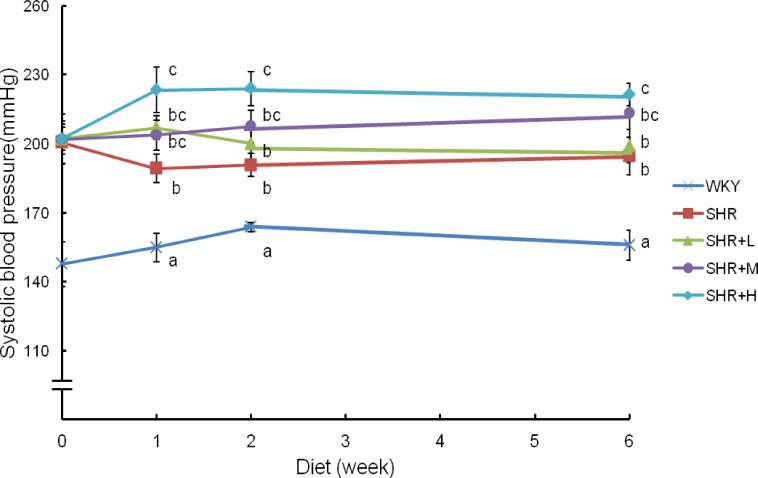
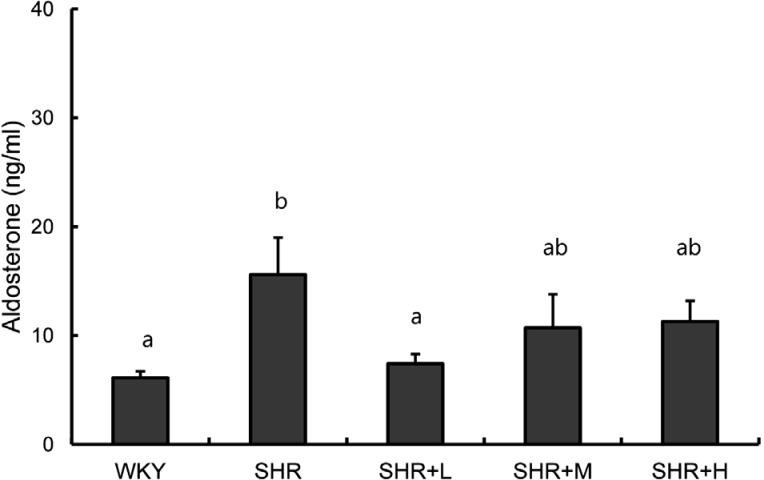
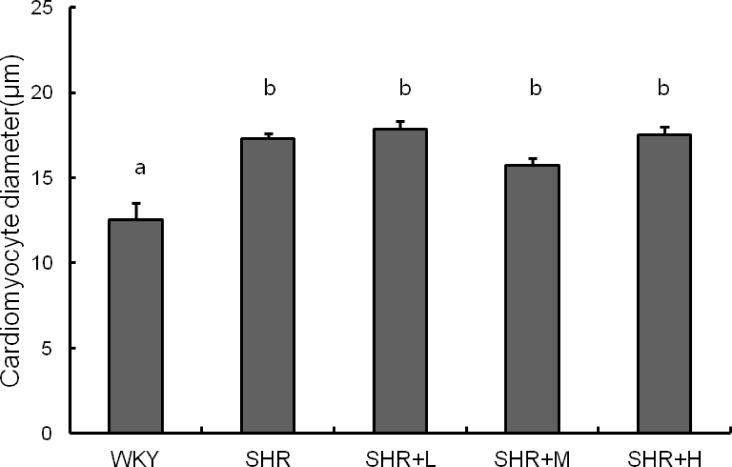
We tested the effects of dietary intake of freeze-dried Korean traditional fermented cabbage (generally known as kimchi) with varying amounts of sodium on blood pressure and cardiac hypertrophy in spontaneously hypertensive rats (SHRs). Wistar-Kyoto rats (WKY), as a control group, received a regular AIN-76 diet, and the SHRs were divided into four groups. The SHR group was fed a regular diet without kimchi supplementation, the SHR-L group was fed the regular diet supplemented with low sodium kimchi containing 1.4% salt by wet weight, which was provided in a freeze-dried form, the SHR-M group was supplemented with medium levels of sodium kimchi containing 2.4% salt, and the SHR-H group was supplemented with high sodium kimchi containing 3.0% salt. Blood pressure was measured over 6 weeks, and cardiac hypertrophy was examined by measuring heart and left ventricle weights and cardiac histology. SHRs showed higher blood pressure compared to that in WKY rats, which was further elevated by consuming high sodium containing kimchi but was not influenced by supplementing with low sodium kimchi. None of the SHR groups showed significant differences in cardiac and left ventricular mass or cardiomyocyte size. Levels of serum biochemical parameters, including blood urea nitrogen, creatinine, glutamic-oxaloacetic transaminase, glutamic-pyruvic transaminase, sodium, and potassium were not different among the groups. Elevations in serum levels of aldosterone in SHR rats decreased in the low sodium kimchi group. These results suggest that consuming low sodium kimchi may not adversely affect blood pressure and cardiac function even under a hypertensive condition.
我们测试了不同钠含量的冻干韩国传统发酵白菜(通常称为泡菜)饮食摄入对自发性高血压大鼠(SHR)血压和心脏肥大的影响。Wistar-Kyoto 大鼠(WKY)作为对照组,给予常规 AIN-76 饮食,SHR 分为四组。SHR 组给予不含泡菜的常规饮食,SHR-L 组给予含 1.4%盐的低钠泡菜补充剂,以冻干形式提供,SHR-M 组给予含 2.4%盐的中钠泡菜补充剂,SHR-H 组给予含 3.0%盐的高钠泡菜补充剂。在 6 周内测量血压,并通过测量心脏和左心室重量和心脏组织学检查心脏肥大。与 WKY 大鼠相比,SHR 表现出更高的血压,而食用含高钠的泡菜则进一步升高血压,但补充低钠泡菜对血压没有影响。SHR 组的心脏和左心室质量或心肌细胞大小均无显著差异。血清生化参数水平,包括血尿素氮、肌酐、谷草转氨酶、谷丙转氨酶、钠和钾在各组之间没有差异。SHR 大鼠血清醛固酮水平升高在低钠泡菜组中降低。这些结果表明,即使在高血压情况下,食用低钠泡菜也不会对血压和心脏功能产生不利影响。