Division of Neurogenetics, Center for Neurological Diseases and Cancer, Nagoya University Graduate School of Medicine, 65 Tsurumai, Showa-Ku, Nagoya 466-8550, Japan.
Chem Biol Interact. 2013 Mar 25;203(1):335-40. doi: 10.1016/j.cbi.2012.08.020. Epub 2012 Sep 8.
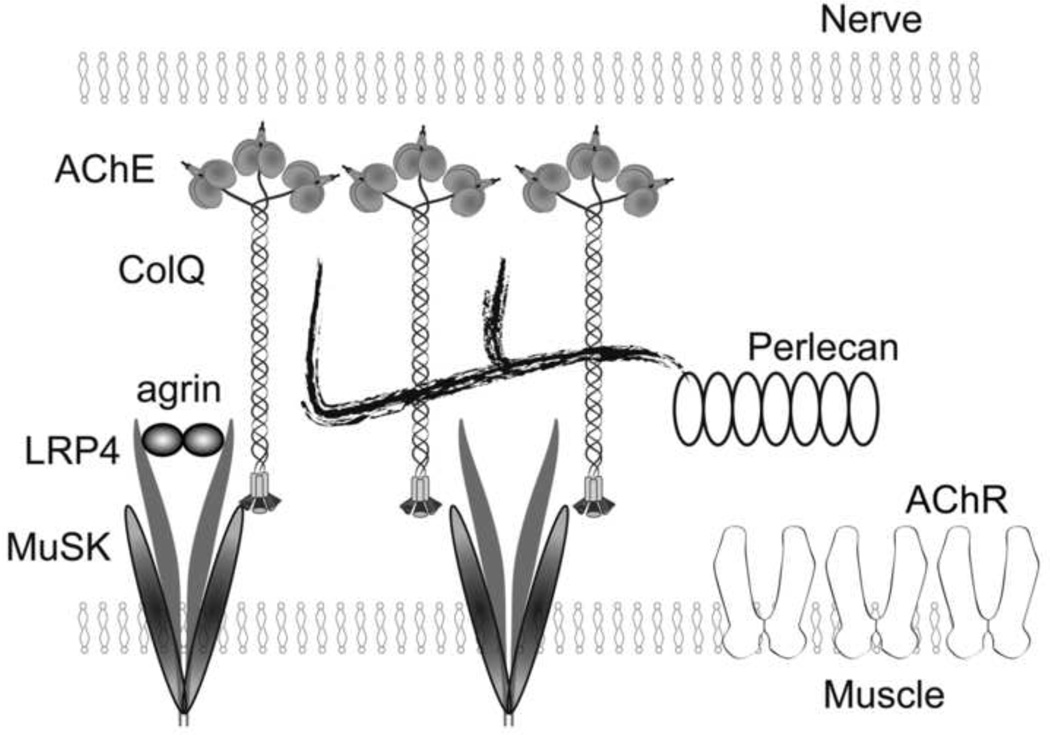
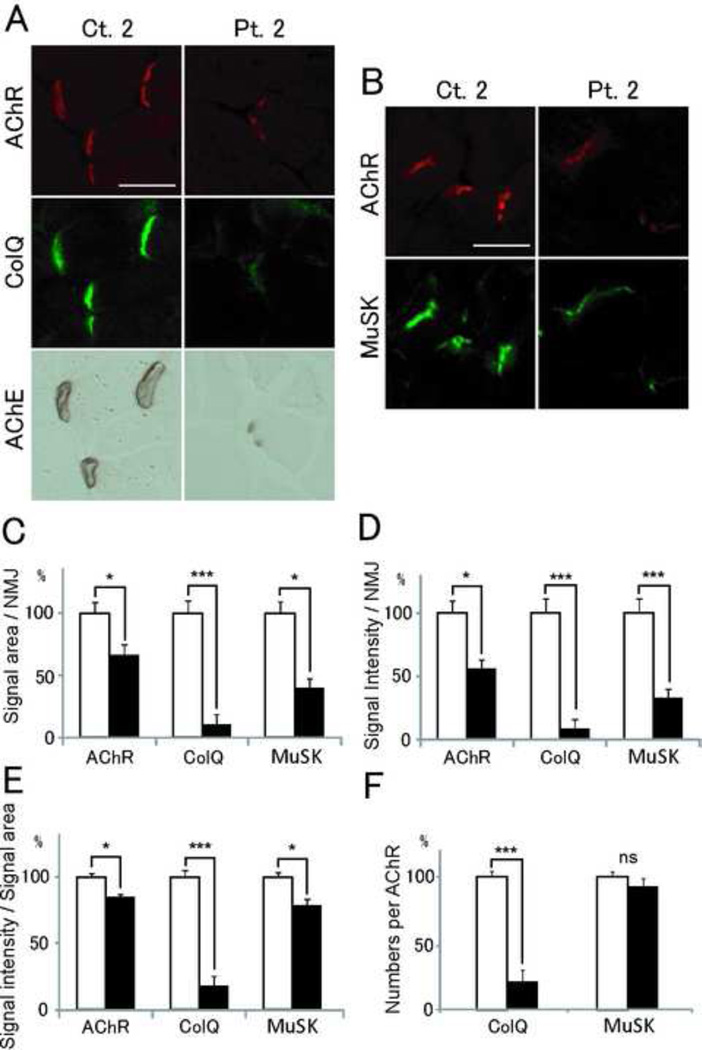
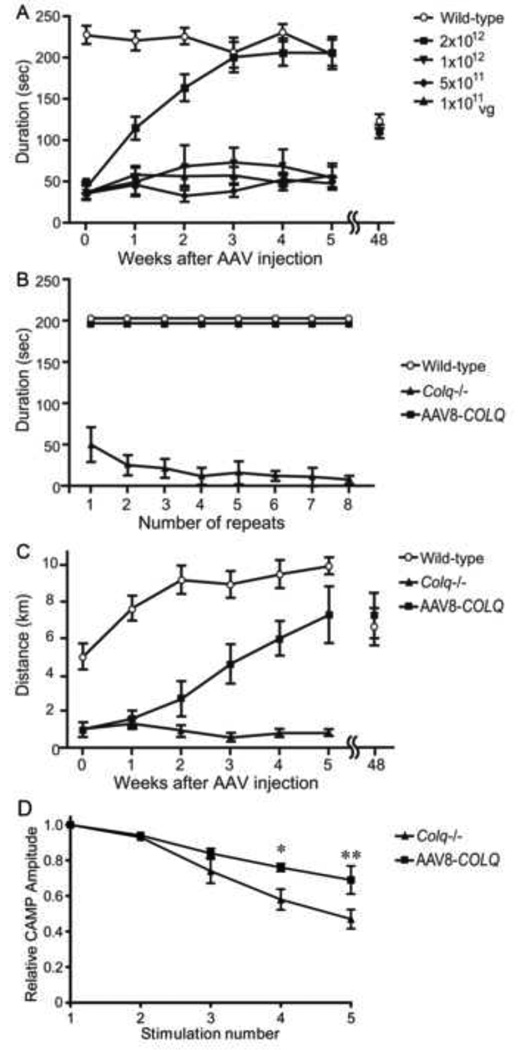
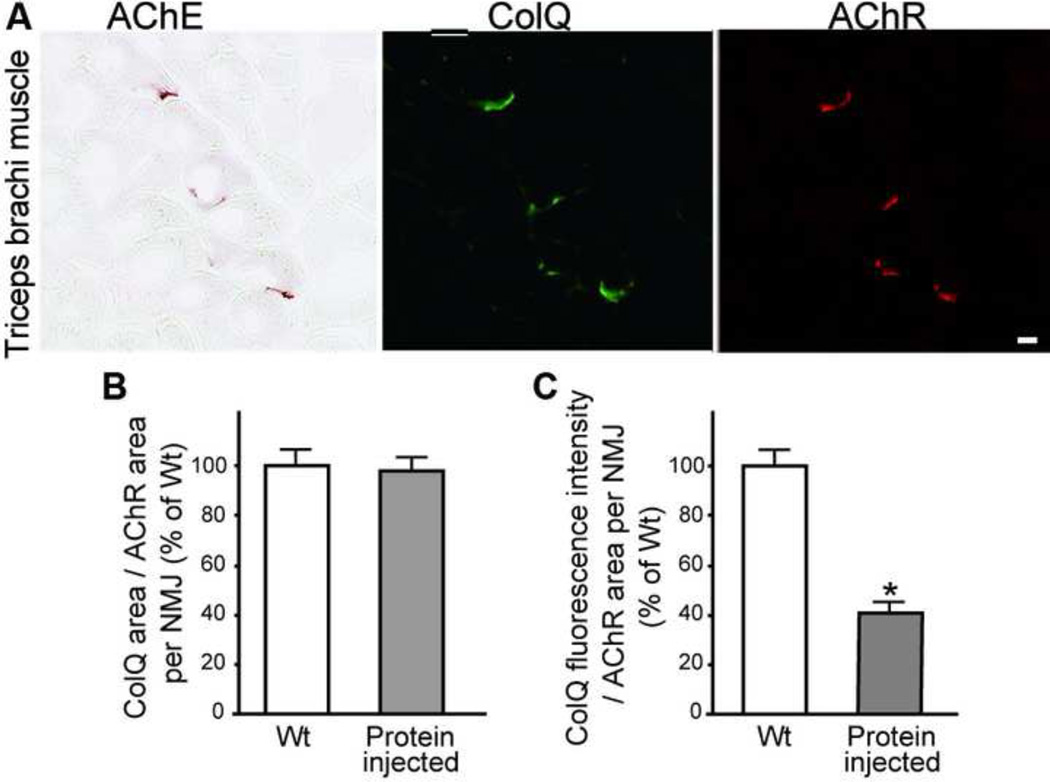
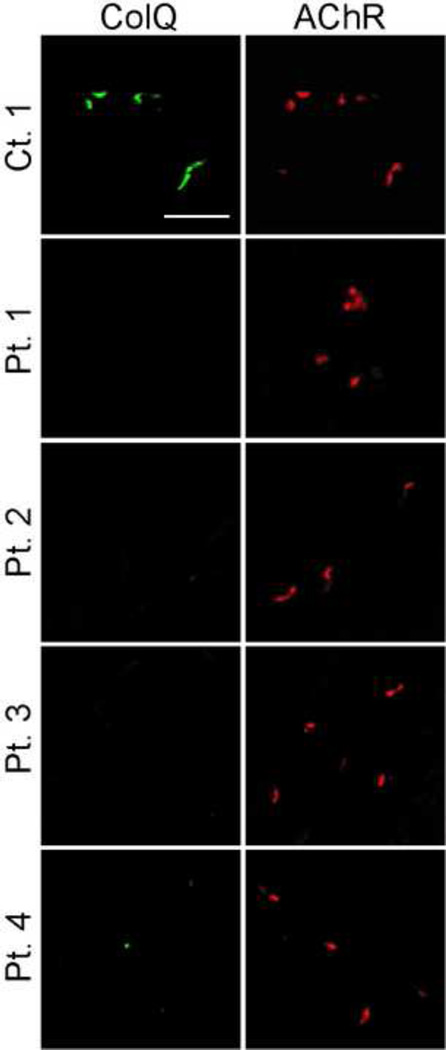
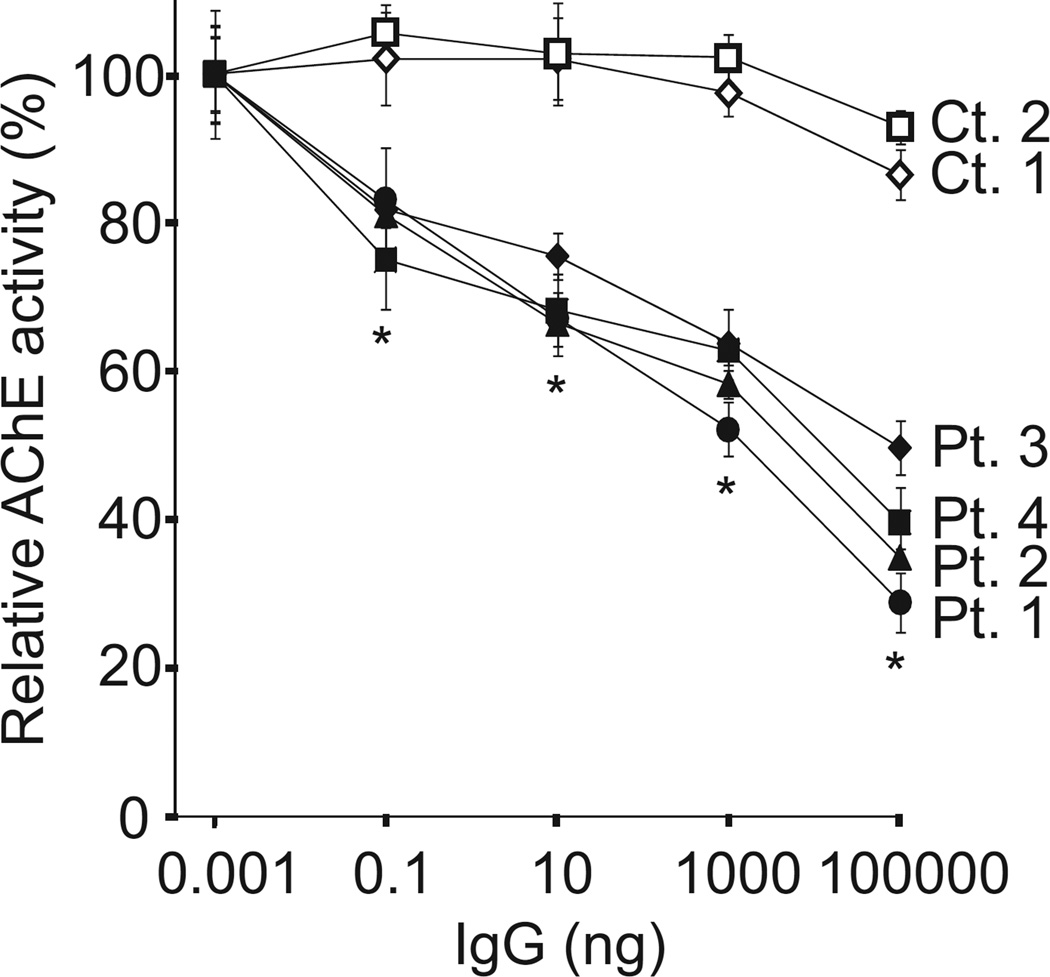
Acetylcholinesterase (AChE) at the neuromuscular junction (NMJ) is anchored to the synaptic basal lamina via a triple helical collagen Q (ColQ) in the form of asymmetric AChE (AChE/ColQ). The C-terminal domain of ColQ binds to MuSK, the muscle-specific receptor tyrosine kinase, that mediates a signal for acetylcholine receptor (AChR) clustering at the NMJ. ColQ also binds to heparan sulfate proteoglycans including perlecan. Congenital defects of ColQ cause endplate AChE deficiency. A single intravenous administration of adeno-associated virus serotype 8 (AAV8)-COLQ to Colq-/- mice rescued motor functions, synaptic transmission, and the ultrastructure of NMJ. We also injected AAV1-COLQ-IRES-EGFP to the left tibialis anterior and observed colocalization of AChE/ColQ at all the examined NMJs of the non-injected limbs. Additionally, injection of purified recombinant AChE/ColQ protein complex into gluteus maximus accumulated AChE in non-injected forelimbs. These observations suggest that the tissue-targeting signal of ColQ can be exploited to specifically deliver the transgene product to the target tissue. MuSK antibody-positive myasthenia gravis (MG) accounts for 5-15% of autoimmune MG. As AChR deficiency is typically mild and as cholinesterase inhibitors are generally ineffective or worsen myasthenic symptoms, we asked if the patient's MuSK-IgG interferes with binding of ColQ to MuSK. In vitro overlay of AChE/ColQ to muscle sections of Colq-/- mice revealed that MuSK-IgG blocks binding of ColQ to the NMJ. In vitro plate-binding of MuSK to ColQ disclosed that MuSK-IgG exerts a dose-dependent block of MuSK-ColQ interaction. In addition, passive transfer of MuSK-IgG to mice reduced the size and density of ColQ to ∼10% of controls and had a lesser effect on the sizes and densities of AChR and MuSK. Elucidation of molecular mechanisms of specific binding of ColQ to the NMJ enabled us to ameliorate devastating myasthenic symptoms of Colq-/- mice and to reveal bases of anti-MuSK MG.
乙酰胆碱酯酶(AChE)在神经肌肉接头(NMJ)处通过三螺旋胶原 Q(ColQ)以非对称 AChE(AChE/ColQ)的形式锚定在突触基底膜上。ColQ 的 C 末端结构域与肌肉特异性受体酪氨酸激酶 MuSK 结合,介导 NMJ 处乙酰胆碱受体(AChR)聚集的信号。ColQ 还与包括 perlecan 在内的硫酸乙酰肝素蛋白聚糖结合。ColQ 的先天性缺陷会导致终板 AChE 缺乏。向 Colq-/- 小鼠单次静脉内给予腺相关病毒血清型 8(AAV8)-COLQ 可挽救运动功能、突触传递和 NMJ 的超微结构。我们还将 AAV1-COLQ-IRES-EGFP 注入左胫骨前肌,并观察到非注射肢体的所有检查 NMJ 处 AChE/ColQ 的共定位。此外,将纯化的重组 AChE/ColQ 蛋白复合物注入臀大肌可使非注射前肢积累 AChE。这些观察结果表明,ColQ 的组织靶向信号可以被利用来将转基因产物特异性递送到靶组织。MuSK 抗体阳性重症肌无力(MG)占自身免疫性 MG 的 5-15%。由于 AChR 缺乏通常较轻,并且胆碱酯酶抑制剂通常无效或使肌无力症状恶化,因此我们询问患者的 MuSK-IgG 是否会干扰 ColQ 与 MuSK 的结合。体外将 AChE/ColQ 覆盖到 Colq-/- 小鼠的肌肉切片上,结果显示 MuSK-IgG 阻断了 ColQ 与 NMJ 的结合。体外 MuSK 与 ColQ 的平板结合显示 MuSK-IgG 对 MuSK-ColQ 相互作用具有剂量依赖性的阻断作用。此外,将 MuSK-IgG 被动转移到小鼠中,使 ColQ 的大小和密度降低到对照组的约 10%,对 AChR 和 MuSK 的大小和密度的影响较小。阐明 ColQ 与 NMJ 特异性结合的分子机制使我们能够改善 Colq-/- 小鼠毁灭性的肌无力症状,并揭示抗 MuSK MG 的基础。