Department of Microbiology and Immunology, Medical University of Silesia, Katowice, Jordana 19, Zabrze 41-808, Poland.
Molecules. 2012 Oct 1;17(10):11693-711. doi: 10.3390/molecules171011693.
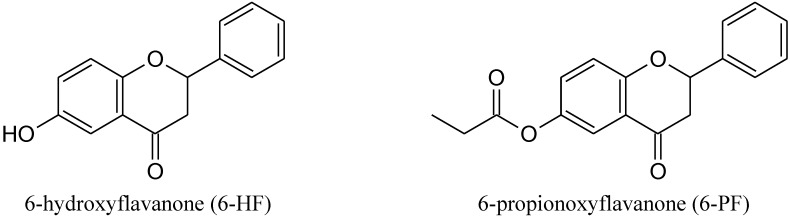
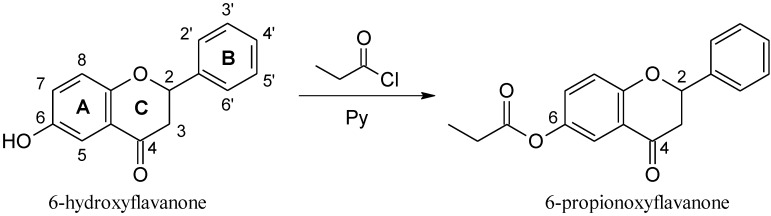
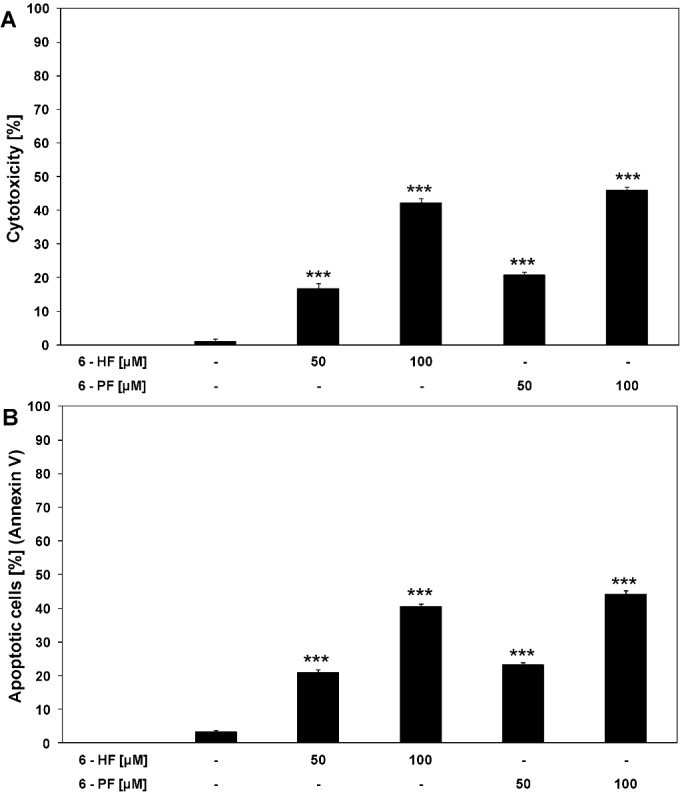
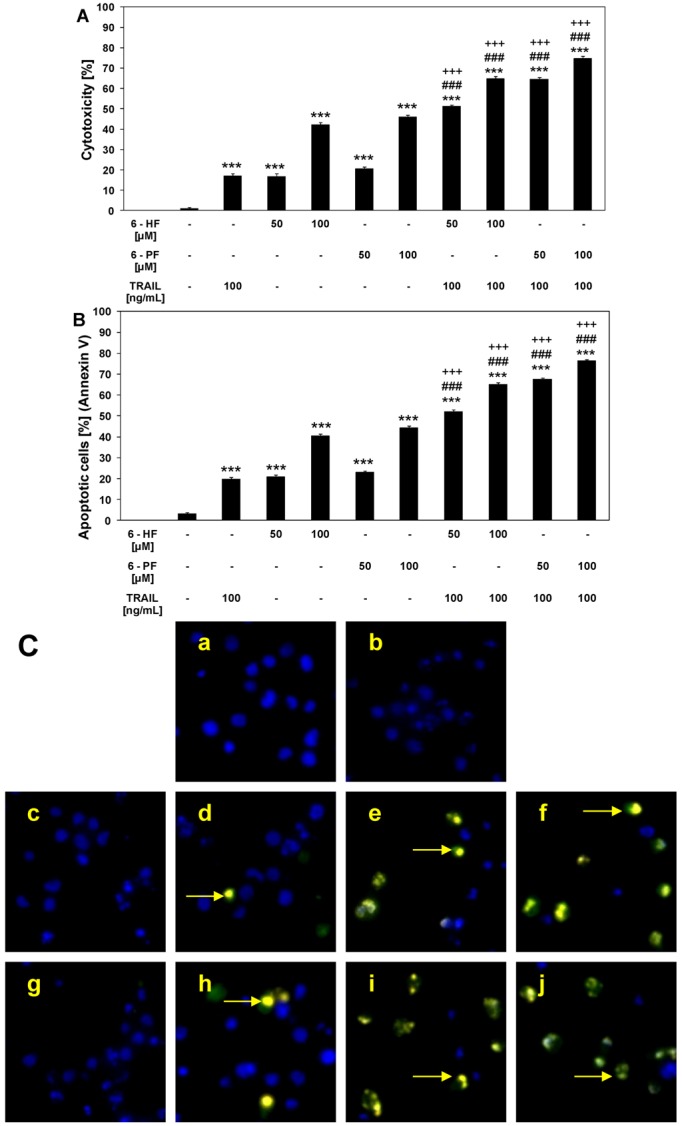
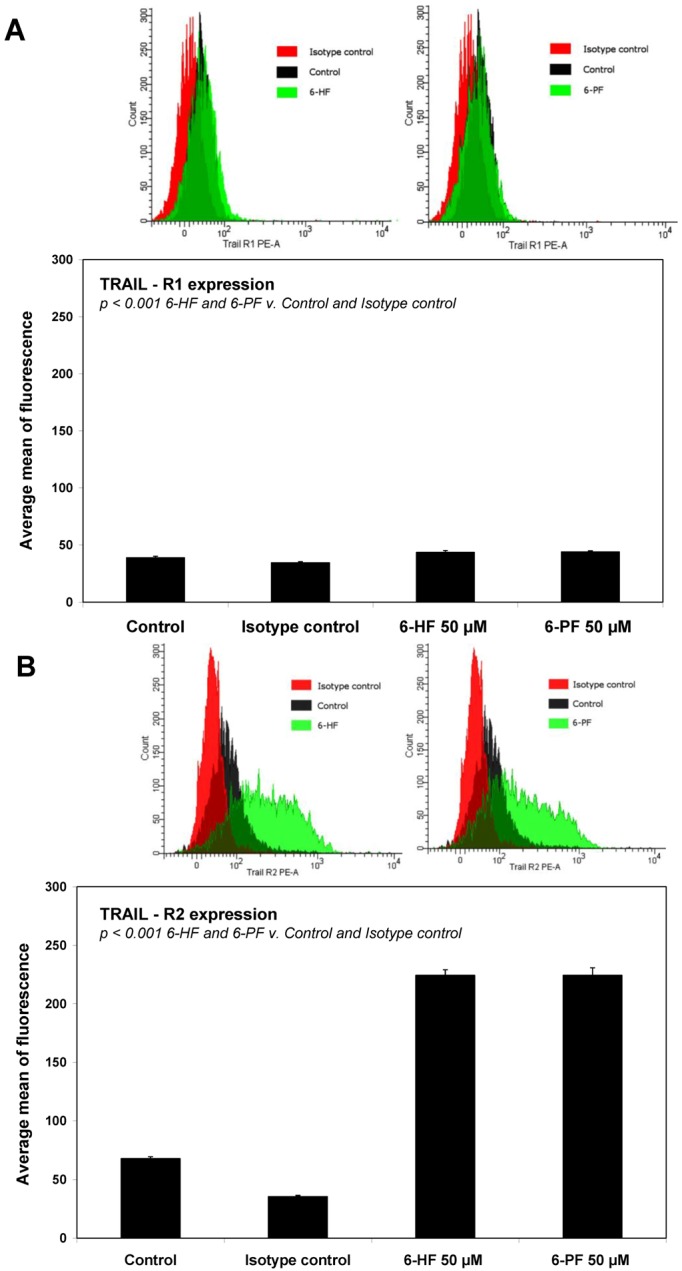
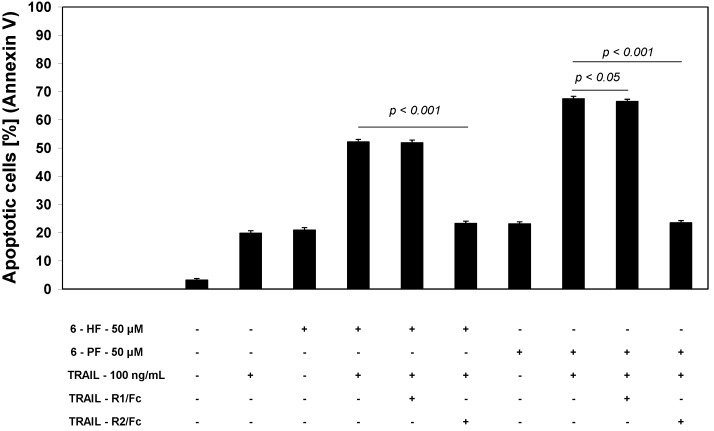
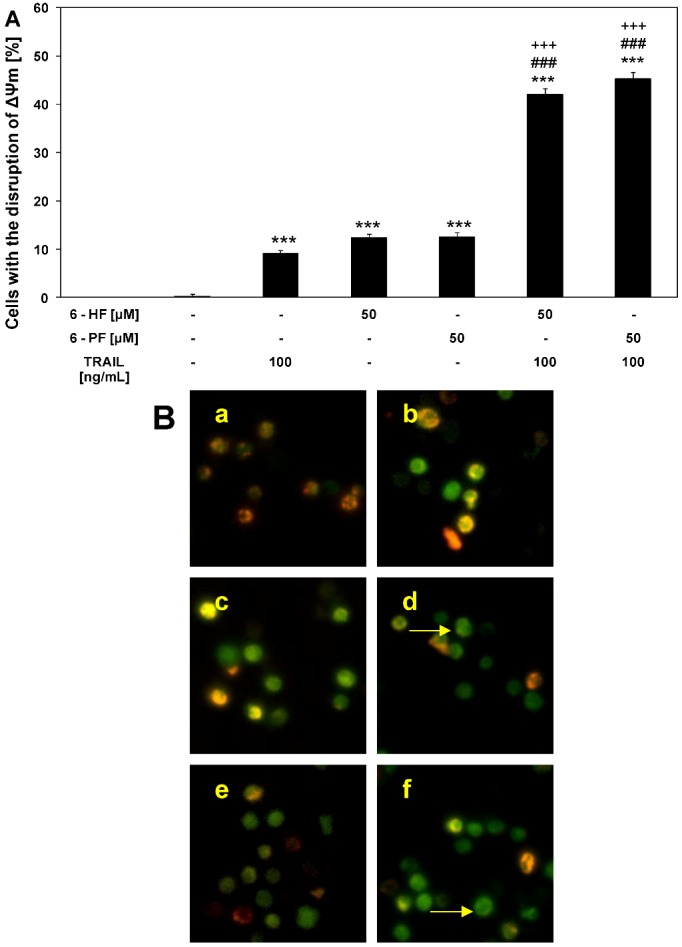
Tumor necrosis factor-related apoptosis-inducing ligand (TRAIL) is considered as the most promising anticancer agent in the TNF superfamily because of its selective cytotoxicity against tumor cells versus normal primary cells. However, as more tumor cells are reported to be resistant to TRAIL-mediated death, it is important to develop new therapeutic strategies to overcome this resistance. Flavonoids have been shown to sensitize cancer cells to TRAIL-induced apoptosis. The aim of this study was to examine the cytotoxic and apoptotic activities of TRAIL on HeLa cancer cells in combination with two synthetic compounds: 6-hydroxyflavanone (6-HF) and its derivative 6-propionoxy-flavanone (6-PF) and to determine the mechanism by which the flavanones overcome the TRAIL-resistance. The cytotoxicity was measured by MTT and LDH assays. The apoptosis was detected by annexin V-FITC fluorescence staining in flow cytometry and microscopy. Death receptor (TRAIL-R1/DR4 and TRAIL-R2/DR5) expression were analysed using flow cytometry. Mitochondrial membrane potential was evaluated using DePsipher staining by fluorescence microscopy. The synthetic flavanones enhanced TRAIL-induced apoptosis in HeLa cells through increased expression of TRAIL-R2 death receptor and reduction of mitochondrial membrane potential. Our study indicates that the 6-HF and 6-PF augmented the anticancer effects of TRAIL and confirm a potential use of flavanones in TRAIL-based anticancer therapy and prevention.
肿瘤坏死因子相关凋亡诱导配体(TRAIL)被认为是 TNF 超家族中最有前途的抗癌药物,因为它对肿瘤细胞具有选择性细胞毒性,而对正常原代细胞则没有毒性。然而,由于越来越多的肿瘤细胞被报道对 TRAIL 介导的死亡具有抗性,因此开发新的治疗策略来克服这种抗性非常重要。黄酮类化合物已被证明能使癌细胞对 TRAIL 诱导的凋亡敏感。本研究旨在研究 TRAIL 联合两种合成化合物:6-羟基黄酮(6-HF)及其衍生物 6-丙氧基黄酮(6-PF)对 HeLa 癌细胞的细胞毒性和凋亡活性,并确定黄酮类化合物克服 TRAIL 抗性的机制。细胞毒性通过 MTT 和 LDH 测定法测量。通过流式细胞术和显微镜检测 Annexin V-FITC 荧光染色来检测凋亡。使用流式细胞术分析死亡受体(TRAIL-R1/DR4 和 TRAIL-R2/DR5)的表达。通过荧光显微镜下的 DePsipher 染色评估线粒体膜电位。合成的黄酮类化合物通过增加 TRAIL-R2 死亡受体的表达和降低线粒体膜电位增强了 TRAIL 诱导的 HeLa 细胞凋亡。我们的研究表明,6-HF 和 6-PF 增强了 TRAIL 的抗癌作用,并证实了黄酮类化合物在 TRAIL 为基础的抗癌治疗和预防中的潜在用途。