Vaccine and Infectious Disease Division, Fred Hutchinson Cancer Research Center, Seattle, Washington, United States of America.
PLoS One. 2012;7(9):e44778. doi: 10.1371/journal.pone.0044778. Epub 2012 Sep 13.
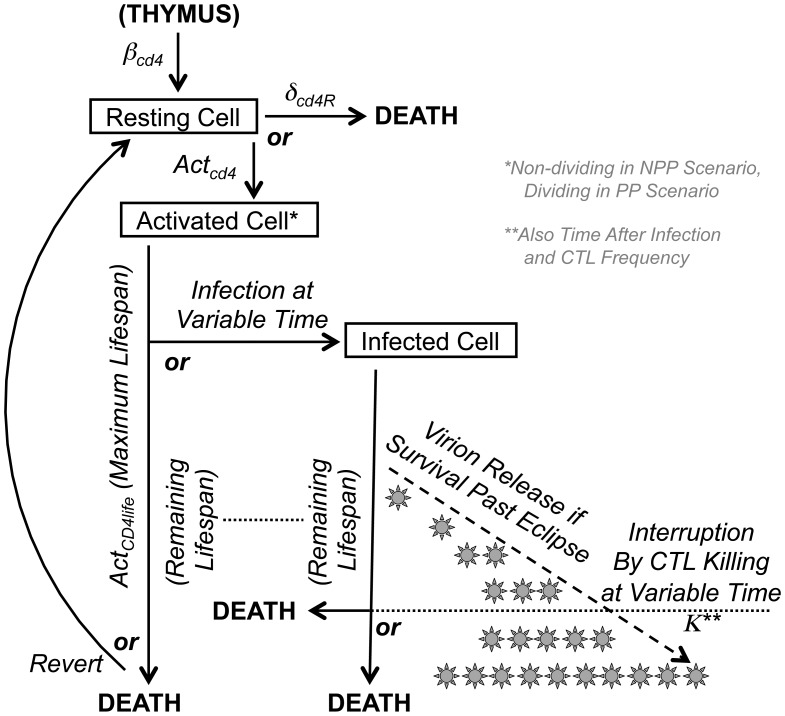
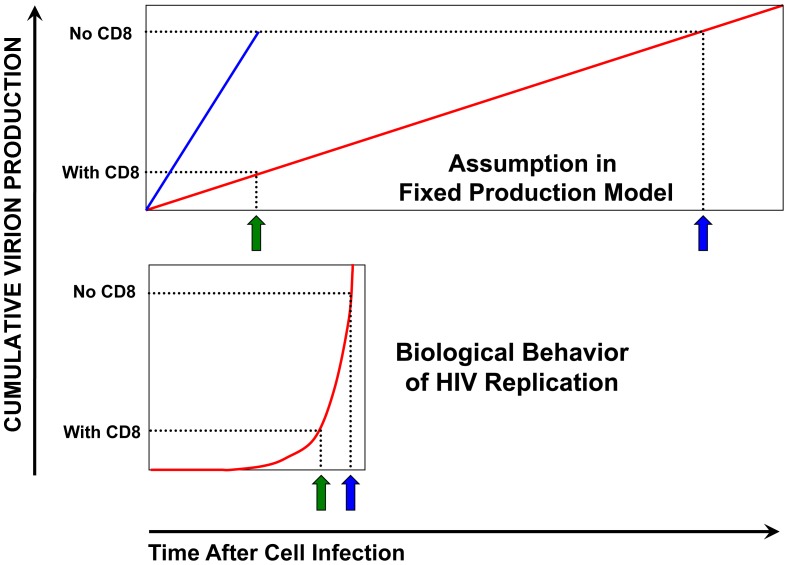
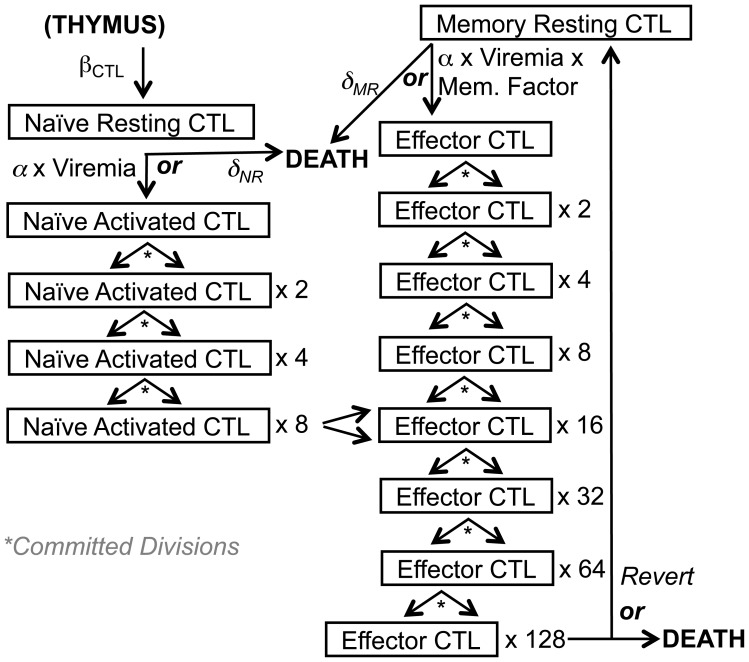
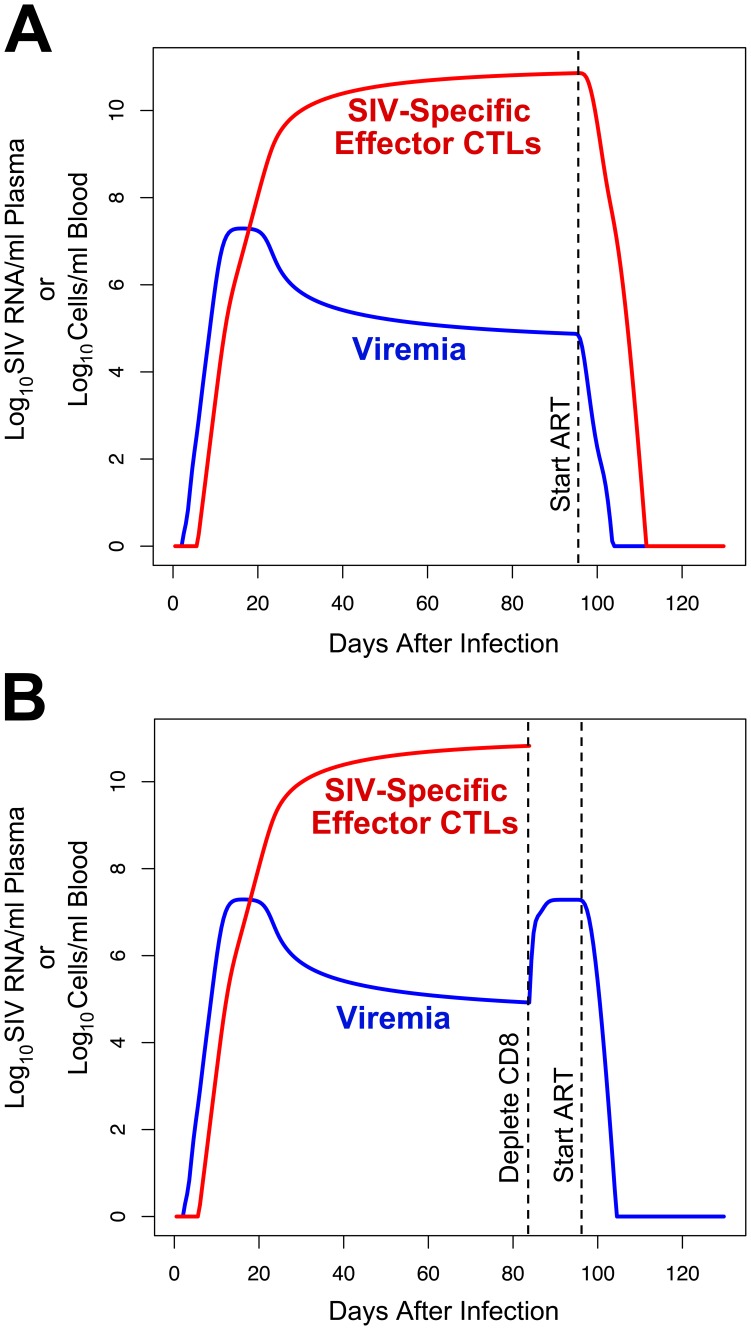
The disappointing outcomes of cellular immune-based vaccines against HIV-1 despite strong evidence for the protective role of CD8⁺ T lymphocytes (CTLs) has prompted revisiting the mechanisms of cellular immunity. Prior data from experiments examining the kinetics of Simian Immunodeficiency Virus (SIV) clearance in infected macaques with or without in vivo CD8 depletion were interpreted as refuting the concept that CTLs suppress SIV/HIV by direct killing of infected cells. Here we briefly review the biological evidence for CTL cytolytic activity in viral infections, and utilize biologically-directed modeling to assess the possibility of a killing mechanism for the antiviral effect of CTLs, taking into account the generation, proliferation, and survival of activated CD4⁺ and CD8⁺ T lymphocytes, as well as the life cycle of the virus. Our analyses of the published macaque data using these models support a killing mechanism, when one considers T lymphocyte and HIV-1 lifecycles, and factors such as the eclipse period before release of virions by infected cells, an exponential pattern of virion production by infected cells, and a variable lifespan for acutely infected cells. We conclude that for SIV/HIV pathogenesis, CTLs deserve their reputation as being cytolytic.
尽管有强有力的证据表明 CD8+T 淋巴细胞(CTL)在保护机体方面发挥着作用,但基于细胞免疫的 HIV-1 疫苗的令人失望的结果促使人们重新审视细胞免疫的机制。先前对感染 SIV 的猕猴中 CTL 耗竭与否对 SIV 清除动力学的实验数据的解读,曾被认为是对 CTL 通过直接杀伤感染细胞来抑制 SIV/HIV 这一概念的反驳。在这里,我们简要回顾了 CTL 在病毒感染中细胞毒性作用的生物学证据,并利用生物导向建模来评估CTL 的抗病毒作用的杀伤机制的可能性,同时考虑了活化的 CD4+和 CD8+T 淋巴细胞的产生、增殖和存活,以及病毒的生命周期。我们使用这些模型对已发表的猕猴数据进行分析,结果支持杀伤机制,同时考虑到 T 淋巴细胞和 HIV-1 的生命周期,以及感染细胞释放病毒前的潜伏期、感染细胞产生病毒的指数模式和急性感染细胞的可变寿命等因素。我们的结论是,对于 SIV/HIV 的发病机制,CTL 确实具有细胞毒性。