Department of Environmental and Global Health, School of Public Health and Health Profession, University of Florida at Gainesville, Gainesville, Florida, USA.
PLoS One. 2012;7(9):e45187. doi: 10.1371/journal.pone.0045187. Epub 2012 Sep 18.
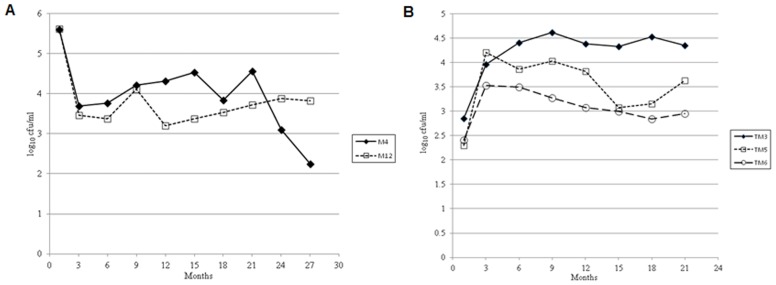
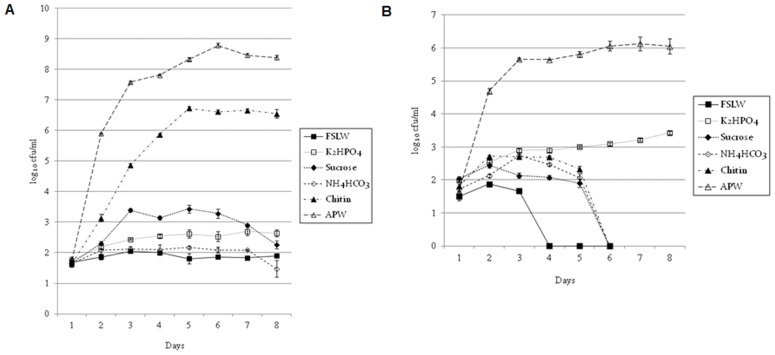
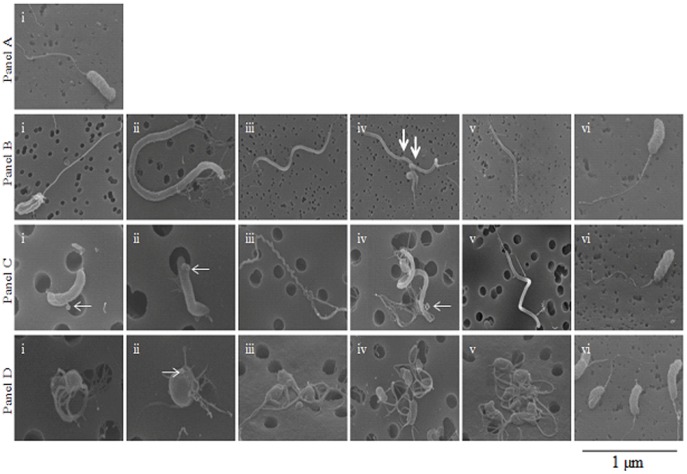
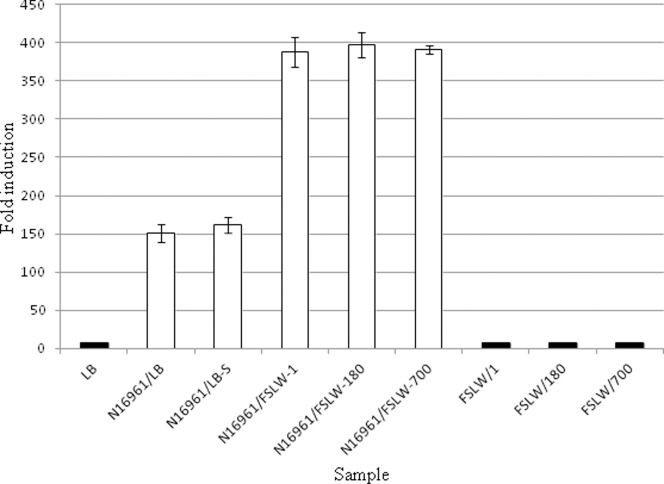
In response to antibiotic and/or environmental stress, some species of bacteria shift to a "persister" phenotype. Although toxigenic Vibrio cholerae, responsible for the disease cholera, can be found in nutrient-poor aquatic environments in endemic areas, the underlying mechanism(s) by which culturable cells persist in these environmental reservoirs is largely unknown. Here we report that introduction of V. cholerae into a nutrient-poor filter sterilized lake water (FSLW) microcosm promoted a shift to what we have defined as a "persister" phenotype (PP) which was culturable for >700 days. Direct transfer of PP of V. cholerae from original microcosms to freshly prepared FSLW resulted in the same pattern of persistence seen in the original microcosms. Scanning electron microscopy of cells persisting for over 700 days demonstrated cell morphologies that were very small in size, with a high degree of aggregation associated with flagella emanating from all aspects of the cell. V. cholerae PP cells reverted to a typical V. cholerae morphology when transferred to nutrient-rich L- broth. Cell-free supernatants obtained from microcosms at 24 hours, 180 days, and 700 days all showed >2-fold increase in CAI-1 signaling molecules, consistent with quorum sensing activity, as has been described for Pseudomonas aeruginosa persister cells. Chitin and phosphate promoted cell growth. Our data suggest that nutrient stress can select a V. cholerae persister phenotype in environmental reservoirs, with these strains then seeding subsequent cholera epidemics in response to chitin and phosphate availability.
在应对抗生素和/或环境压力时,一些细菌物种会转变为“持久型”表型。虽然产毒霍乱弧菌是导致霍乱的病原体,可以在流行地区营养贫乏的水生环境中被发现,但可培养细胞在这些环境储库中持续存在的潜在机制尚不清楚。在这里,我们报告称,将霍乱弧菌引入营养贫乏的过滤消毒湖水(FSLW)微宇宙中,会促进其向我们定义的“持久型”表型(PP)转变,该表型可在培养超过 700 天。将 PP 从原始微宇宙直接转移到新制备的 FSLW 中,会导致与原始微宇宙中相同的持续存在模式。对持续超过 700 天的细胞进行扫描电子显微镜观察,显示出细胞形态非常小,具有高度聚集性,鞭毛从细胞的各个方面发出。当将 PP 细胞从营养丰富的 L-肉汤转移回营养贫乏的 FSLW 中时,它们会恢复到典型的霍乱弧菌形态。在 24 小时、180 天和 700 天时,从微宇宙中获得的无细胞上清液均显示 CAI-1 信号分子增加了 2 倍以上,这与群体感应活性一致,已在铜绿假单胞菌持久型细胞中有所描述。几丁质和磷酸盐促进细胞生长。我们的数据表明,营养压力可以在环境储库中选择霍乱弧菌持久型表型,这些菌株随后会在几丁质和磷酸盐供应的情况下引发后续的霍乱流行。