Department of Environmental Protection, Estación Experimental del Zaidín, Consejo Superior de Investigaciones Científicas, Granada, Spain.
PLoS One. 2012;7(9):e45810. doi: 10.1371/journal.pone.0045810. Epub 2012 Sep 20.
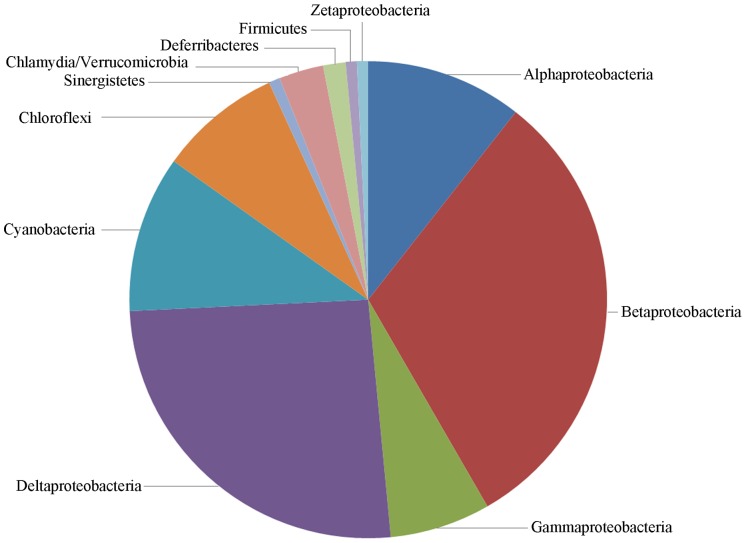
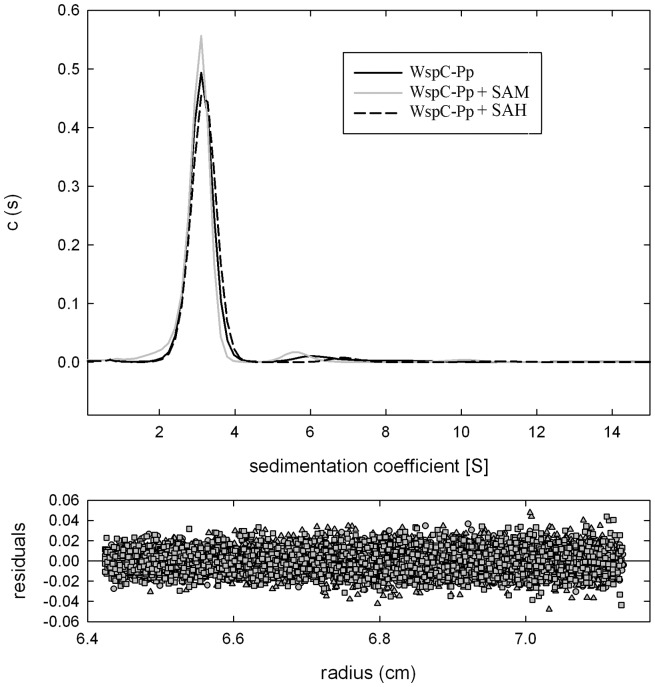
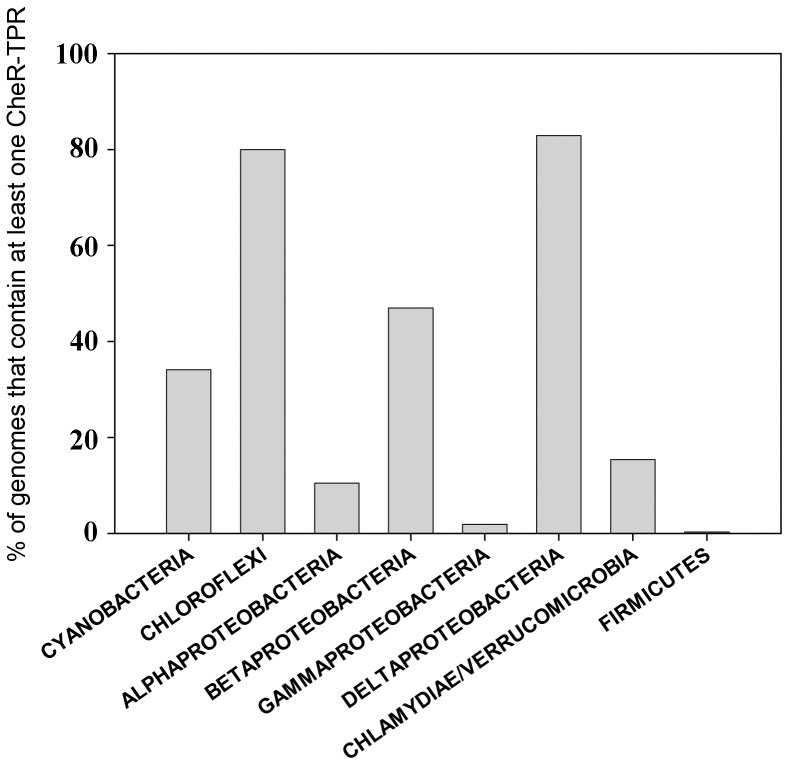
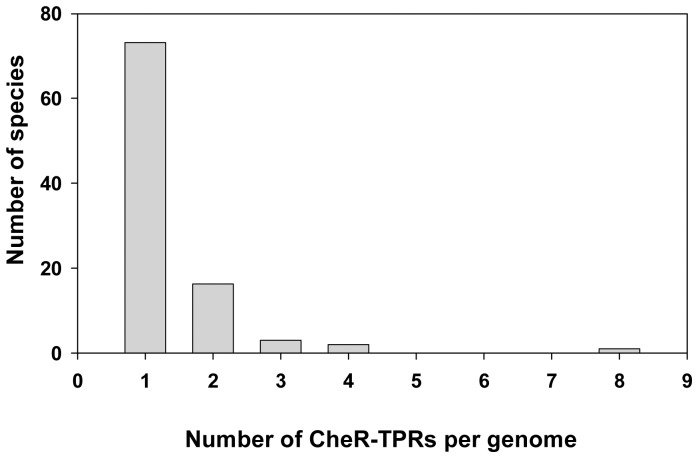
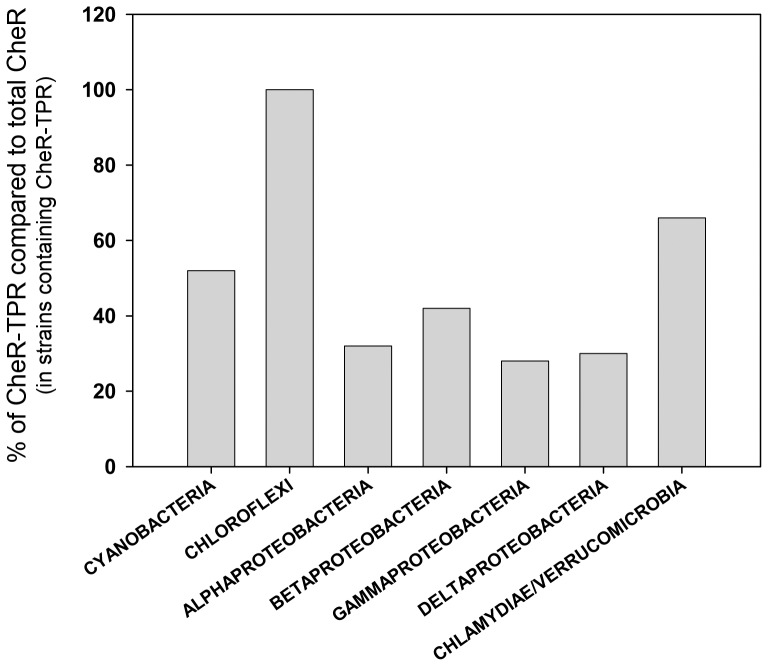
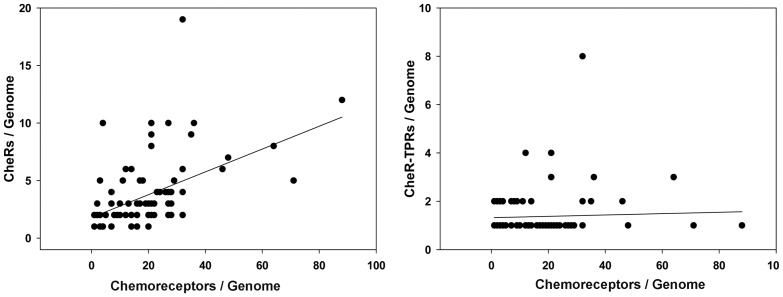
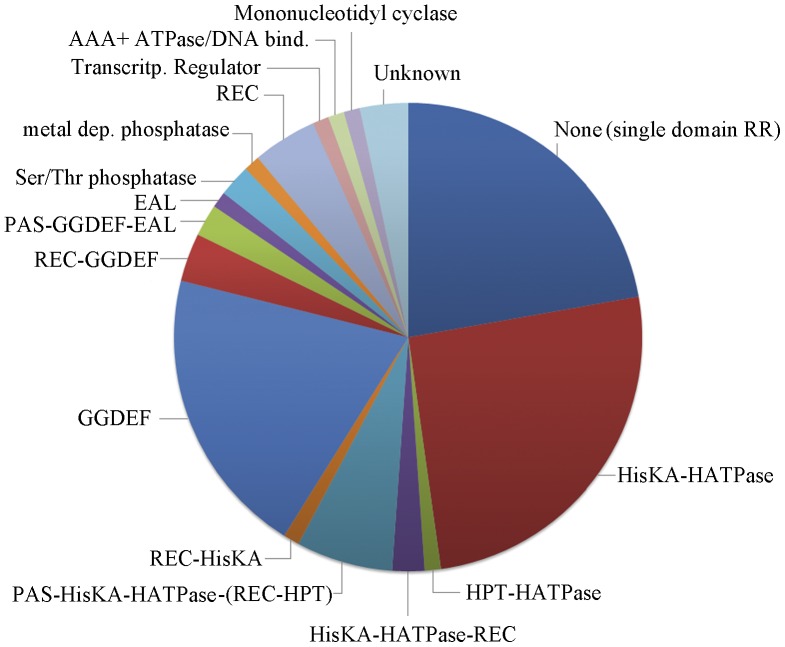
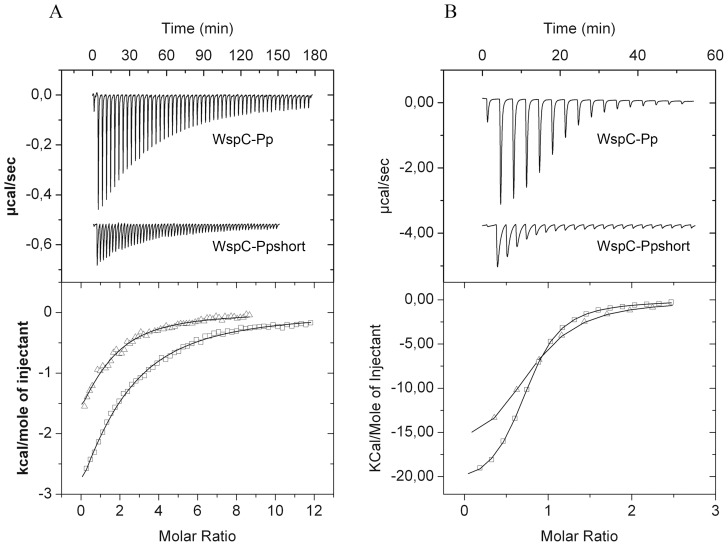
Chemosensory pathways correspond to major signal transduction mechanisms and can be classified into the functional families flagellum-mediated taxis, type four pili-mediated taxis or pathways with alternative cellular functions (ACF). CheR methyltransferases are core enzymes in all of these families. CheR proteins fused to tetratricopeptide repeat (TPR) domains have been reported and we present an analysis of this uncharacterized family. We show that CheR-TPRs are widely distributed in GRAM-negative but almost absent from GRAM-positive bacteria. Most strains contain a single CheR-TPR and its abundance does not correlate with the number of chemoreceptors. The TPR domain fused to CheR is comparatively short and frequently composed of 2 repeats. The majority of CheR-TPR genes were found in gene clusters that harbor multidomain response regulators in which the REC domain is fused to different output domains like HK, GGDEF, EAL, HPT, AAA, PAS, GAF, additional REC, HTH, phosphatase or combinations thereof. The response regulator architectures coincide with those reported for the ACF family of pathways. Since the presence of multidomain response regulators is a distinctive feature of this pathway family, we conclude that CheR-TPR proteins form part of ACF type pathways. The diversity of response regulator output domains suggests that the ACF pathways form a superfamily which regroups many different regulatory mechanisms, in which all CheR-TPR proteins appear to participate. In the second part we characterize WspC of Pseudomonas putida, a representative example of CheR-TPR. The affinities of WspC-Pp for S-adenosylmethionine and S-adenosylhomocysteine were comparable to those of prototypal CheR, indicating that WspC-Pp activity is in analogy to prototypal CheRs controlled by product feed-back inhibition. The removal of the TPR domain did not impact significantly on the binding constants and consequently not on the product feed-back inhibition. WspC-Pp was found to be monomeric, which rules out a role of the TPR domain in self-association.
化学感应途径对应于主要的信号转导机制,可分为鞭毛介导的趋性、四类菌毛介导的趋性或具有替代细胞功能 (ACF) 的途径的功能家族。CheR 甲基转移酶是所有这些家族的核心酶。已经报道了 CheR 蛋白融合到四肽重复 (TPR) 结构域,我们对这个未被表征的家族进行了分析。我们表明 CheR-TPR 在革兰氏阴性菌中广泛分布,但在革兰氏阳性菌中几乎不存在。大多数菌株含有单个 CheR-TPR,其丰度与化学感受器的数量无关。与 CheR 融合的 TPR 结构域相对较短,通常由 2 个重复组成。大多数 CheR-TPR 基因位于基因簇中,这些基因簇中含有多域响应调节剂,其中 REC 结构域与不同的输出结构域融合,如 HK、GGDEF、EAL、HPT、AAA、PAS、GAF、附加 REC、HTH、磷酸酶或它们的组合。响应调节剂的结构与 ACF 途径家族报道的结构一致。由于多域响应调节剂的存在是该途径家族的一个显著特征,我们得出结论,CheR-TPR 蛋白是 ACF 型途径的一部分。响应调节剂输出结构域的多样性表明,ACF 途径形成了一个超级家族,汇集了许多不同的调节机制,所有 CheR-TPR 蛋白似乎都参与其中。在第二部分,我们对 Pseudomonas putida 的 WspC 进行了表征,这是 CheR-TPR 的一个代表性例子。WspC-Pp 对 S-腺苷甲硫氨酸和 S-腺苷同型半胱氨酸的亲和力与原型 CheR 相当,表明 WspC-Pp 的活性与受产物反馈抑制控制的原型 CheR 类似。去除 TPR 结构域对结合常数没有显著影响,因此对产物反馈抑制没有影响。发现 WspC-Pp 是单体,这排除了 TPR 结构域在自我缔合中的作用。