Center for Cancer and Stem Cell Biology, Institute of Biosciences and Technology, Texas A&M Health Science Center, 2121 W, Holcombe Blvd, Houston, TX, 77030-3303, USA.
Nutr Metab (Lond). 2012 Oct 30;9(1):94. doi: 10.1186/1743-7075-9-94.
Endocrine FGF19 and FGF21 exert their effects on metabolic homeostasis through fibroblast growth factor receptor (FGFR) and co-factor betaKlotho (KLB). Ileal FGF19 regulates bile acid metabolism through specifically FGFR4-KLB in hepatocytes where FGFR1 is not significant. Both FGF19 and FGF21 activate FGFR1-KLB whose function predominates in adipocytes. Recent studies using administration of FGF19 and FGF21 and genetic ablation of KLB or adipocyte FGFR1 indicate that FGFR1-KLB mediates the response of adipocytes to both FGF21 and FGF19. Here we show that adipose FGFR1 regulates lipid metabolism through direct effect on adipose tissue and indirect effects on liver under starvation conditions that cause hepatic stress.
We employed adipocyte-specific ablations of FGFR1 and FGFR2 genes in mice, and analyzed metabolic consequences in adipose tissue, liver and systemic parameters under normal, fasting and starvation conditions.
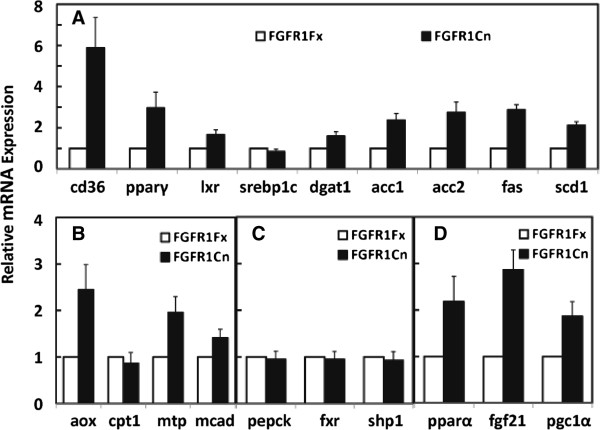
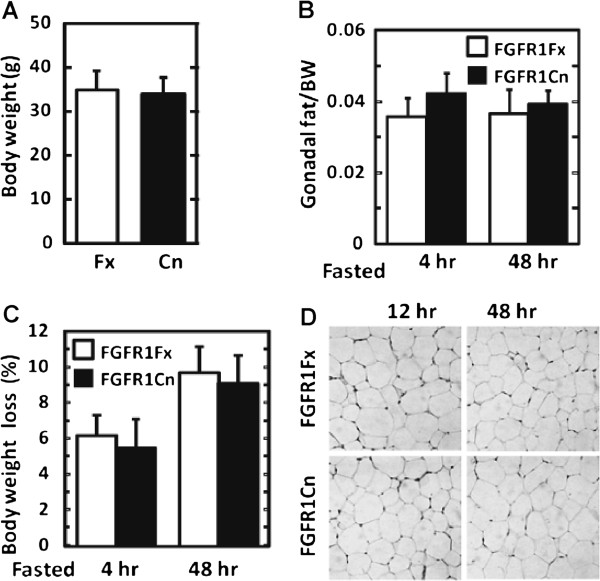
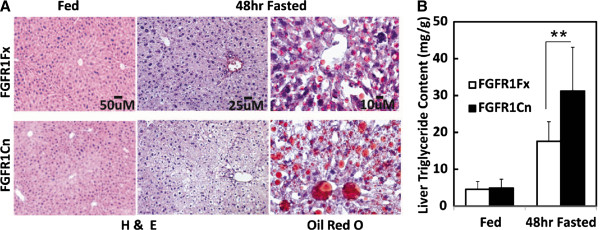
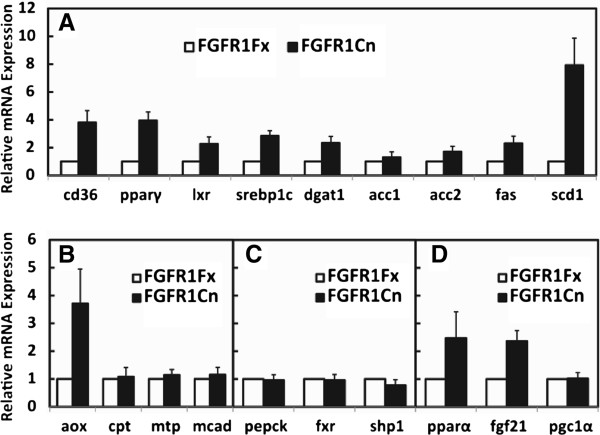
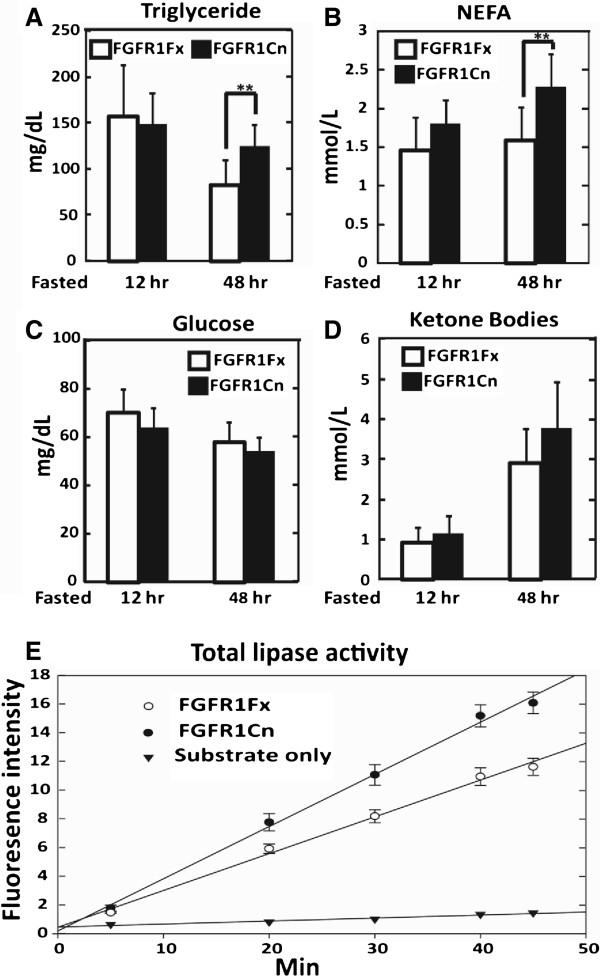
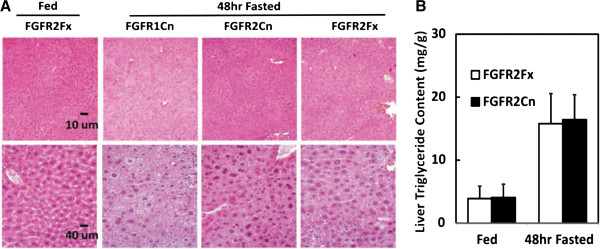
Under normal conditions, the ablation of adipose FGFR1 had little effect on adipocytes, but caused shifts in expression of hepatic genes involved in lipid metabolism. Starvation conditions precipitated a concurrent elevation of serum triglycerides and non-esterified fatty acids, and increased hepatic steatosis and adipose lipolysis in the FGFR1-deficient mice. Little effect on glucose or ketone bodies due to the FGFR1 deficiency was observed.
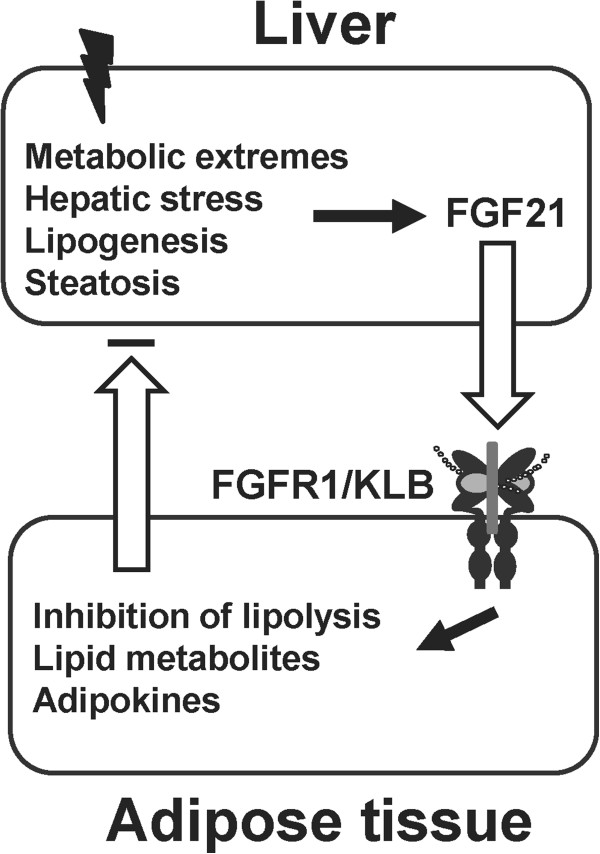
Our results suggest an adipocyte-hepatocyte communication network mediated by adipocyte FGFR1 that concurrently dampens hepatic lipogenesis and adipocyte lipolysis. We propose that this serves overall to mete out and extend lipid reserves for neural fuels (glucose and ketone bodies), while at the same time governing extent of hepatosteatosis during metabolic extremes and other conditions causing hepatic stress.
内分泌 FGF19 和 FGF21 通过成纤维细胞生长因子受体(FGFR)和共同因子βKlotho(KLB)发挥其对代谢稳态的作用。回肠 FGF19 通过在肝细胞中特异性 FGFR4-KLB 调节胆汁酸代谢,其中 FGFR1 不重要。FGF19 和 FGF21 均激活 FGFR1-KLB,其功能在脂肪细胞中占主导地位。最近使用 FGF19 和 FGF21 的给药和 KLB 或脂肪细胞 FGFR1 的基因缺失的研究表明,FGFR1-KLB 介导脂肪细胞对 FGF21 和 FGF19 的反应。在这里,我们表明脂肪组织 FGFR1 通过对脂肪组织的直接作用和对饥饿引起肝应激的肝脏的间接作用来调节脂质代谢。
我们在小鼠中使用脂肪细胞特异性 FGFR1 和 FGFR2 基因缺失,并在正常、禁食和饥饿条件下分析脂肪组织、肝脏和全身参数的代谢后果。
在正常条件下,脂肪组织 FGFR1 的缺失对脂肪细胞几乎没有影响,但导致参与脂质代谢的肝脏基因表达发生变化。饥饿条件下,FGFR1 缺陷小鼠血清甘油三酯和非酯化脂肪酸同时升高,肝脂肪变性和脂肪细胞脂肪分解增加。由于 FGFR1 缺乏,对葡萄糖或酮体的影响很小。
我们的结果表明,脂肪细胞 FGFR1 介导的脂肪细胞-肝细胞通讯网络同时抑制肝内脂质生成和脂肪细胞脂肪分解。我们提出,这有助于为神经燃料(葡萄糖和酮体)分配和扩展脂质储备,同时在代谢极端和其他引起肝应激的情况下控制肝脂肪变性的程度。