Center for Cancer and Stem Cell Biology, Institute of Biosciences and Technology, Texas A&M Health Science Center, 2121 W, Holcombe Blvd,, Houston, TX 77030-3303, USA.
Cancer Metab. 2013 Nov 25;1(1):21. doi: 10.1186/2049-3002-1-21.
Endocrine FGF21 and FGF19 target adipocytes and hepatocytes through betaKlotho (KLB) and FGFR tyrosine kinases effecting glucose, lipid and energy metabolism. Both factors alleviate obesity and metabolic abnormalities which are contributing factors to breast tumor progression. Genomic manipulation of hepatic FGFR4 has uncovered roles of endocrine FGF signaling in both metabolic and cellular homeostasis. Here we determined whether systemic and microenvironmental metabolic alterations caused by the FGFR4 deficiency affect tumorigenesis in breast where FGFR4 is negligible. Breast tumors were induced in the bigenic mice with ablation of FGFR4 and overexpression of TGFα that activates Her2 in the ductal and lobular epithelium surrounded by adipocytes. Mammary tumorigenesis and alterations in systemic and breast microenvironmental metabolic parameters and regulatory pathways were analyzed.
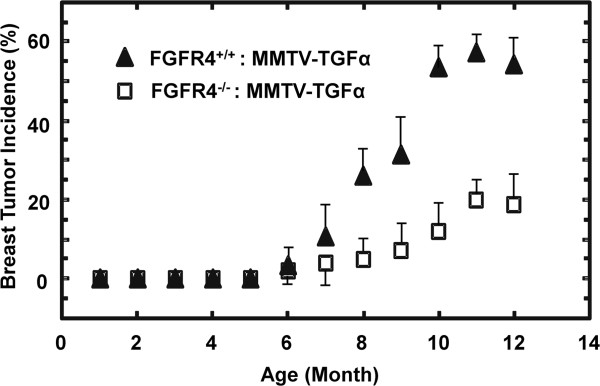
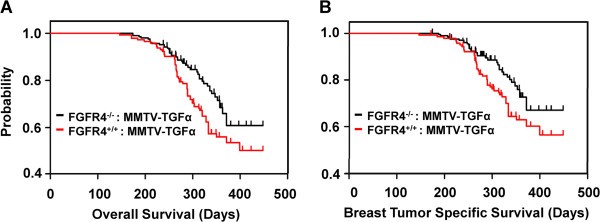
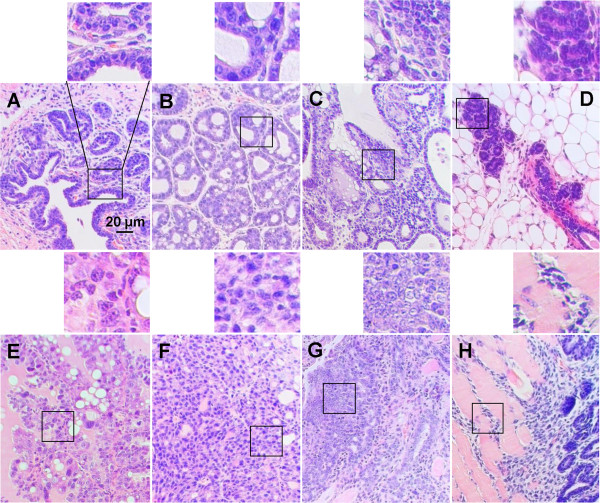
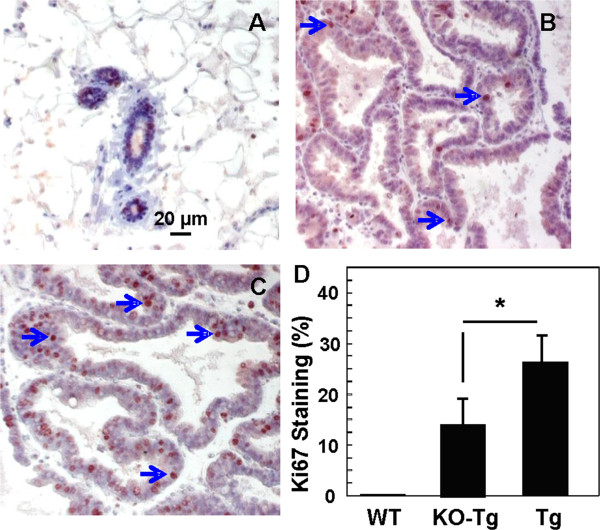
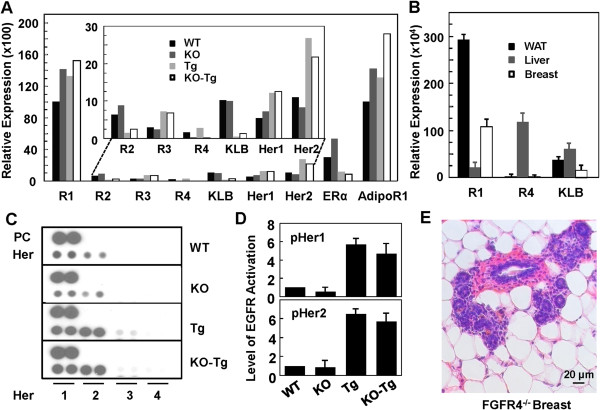
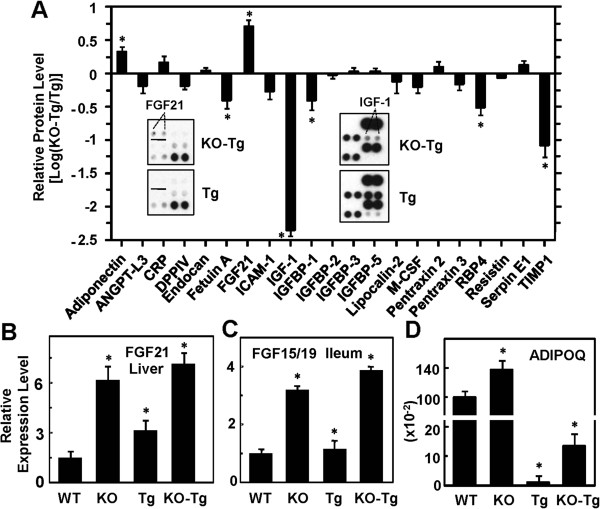
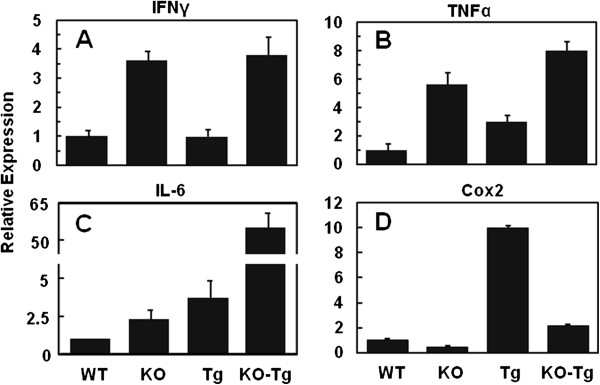
Ablation of FGFR4 had no effect on cellular homeostasis and Her2 activity of normal breast tissue. However, the absence of FGFR4 reduced TGFα-driven breast tumor incidence and progression and improved host survival. Notable increases in hepatic and serum FGF21, ileal FGF15/19, adiponectin and adipsin, and decreases in systemic Fetuin A, IGF-1, IGFBP-1, RBP4 and TIMP1 were observed. The ablation affected adipogenesis and secretory function of adipocytes as well as lipogenesis, glycolysis and energy homeostasis associated with the functions of mitochondria, ER and peroxisomes in the breast and tumor foci. Treatment with a chemical inhibitor of NAMPT involved in the pathways inhibited the growth and survival of breast tumor cells and tumor-initiating cell-containing spheres. The FGFR4 ablation also caused elevation of inflammatory factors in the breast.
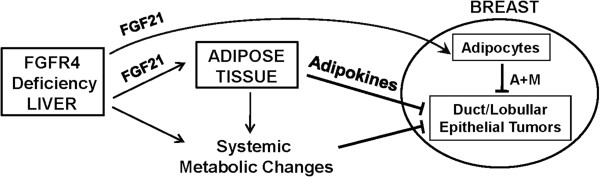
Although the primary role of FGFR4 in metabolism occurs in hepatocytes, its ablation results in a net inhibitory effect on mammary tumor progression. We suggest that the tumor-delaying effect of FGFR4 deficiency may be in large part due to elevated anti-obesogenic FGF21 that triggers tumor-suppressing signals from both peripheral and breast adipocytes. The predominant changes in metabolic pathways suggested roles of metabolic effects from both peripheral and breast adipocytes on metabolic reprogramming in breast epithelial cells that contribute to the suppression of tumor progression. These results provide new insights into the contribution of systemic and microenvironmental metabolic effects controlled by endocrine FGF signaling to breast carcinogenesis.
内分泌 FGF21 和 FGF19 通过βKlotho(KLB)和 FGFR 酪氨酸激酶作用于脂肪细胞和肝细胞,影响葡萄糖、脂质和能量代谢。这两种因子都能减轻肥胖和代谢异常,而肥胖和代谢异常是乳腺癌进展的促成因素。对肝 FGFR4 的基因组操作揭示了内分泌 FGF 信号在代谢和细胞内稳态中的作用。在这里,我们确定了由 FGFR4 缺乏引起的全身和微环境代谢改变是否会影响乳腺癌的发生,而 FGFR4 在乳腺癌中几乎不存在。在由 FGFR4 缺失和 TGFα 过表达引起的双基因小鼠中诱导乳腺肿瘤,该 TGFα 可激活脂肪细胞周围的导管和小叶上皮中的 Her2。分析了乳腺肿瘤发生和全身及乳腺微环境代谢参数和调节途径的改变。
FGFR4 的缺失对正常乳腺组织的细胞内稳态和 Her2 活性没有影响。然而,FGFR4 的缺失减少了 TGFα 驱动的乳腺肿瘤的发生率和进展,并提高了宿主的存活率。观察到肝和血清 FGF21、回肠 FGF15/19、脂联素和 adiposin 的显著增加,以及系统 Fetuin A、IGF-1、IGFBP-1、RBP4 和 TIMP1 的减少。这种缺失影响了脂肪细胞的脂肪生成和分泌功能,以及与乳腺和肿瘤灶中线粒体、内质网和过氧化物酶体功能相关的脂肪生成、糖酵解和能量稳态。用涉及该途径的 NAMPT 化学抑制剂处理可抑制乳腺肿瘤细胞和含有肿瘤起始细胞的球体的生长和存活。FGFR4 的缺失也导致了乳腺中炎症因子的升高。
虽然 FGFR4 在代谢中的主要作用发生在肝细胞中,但它的缺失导致了乳腺肿瘤进展的净抑制作用。我们认为,FGFR4 缺失的延迟肿瘤作用在很大程度上可能是由于升高的抗肥胖 FGF21 引发了来自外周和乳腺脂肪细胞的肿瘤抑制信号。代谢途径的主要变化表明,来自外周和乳腺脂肪细胞的代谢效应在代谢重编程中发挥作用,从而促进了肿瘤进展的抑制。这些结果为内分泌 FGF 信号控制的全身和微环境代谢效应对乳腺癌发生的贡献提供了新的见解。