
流感感染肺微血管内皮细胞导致微血管渗漏:细胞凋亡和紧密连接蛋白 5 的作用。
Influenza infects lung microvascular endothelium leading to microvascular leak: role of apoptosis and claudin-5.
机构信息
Institute of Medical Science, University of Toronto, Toronto, Canada.
出版信息
PLoS One. 2012;7(10):e47323. doi: 10.1371/journal.pone.0047323. Epub 2012 Oct 24.
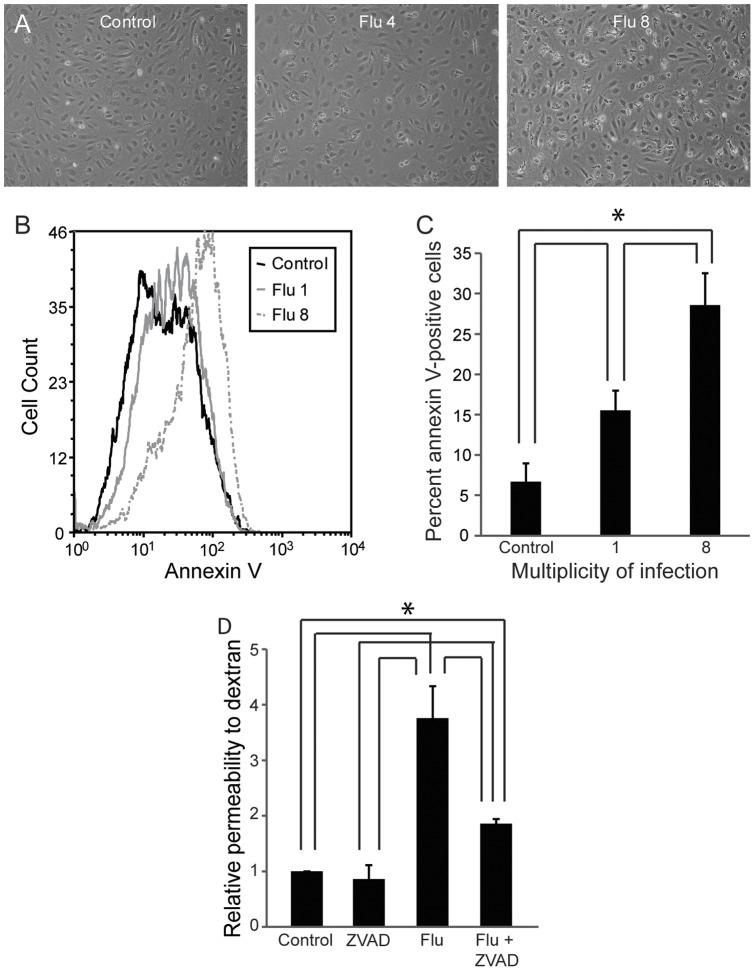
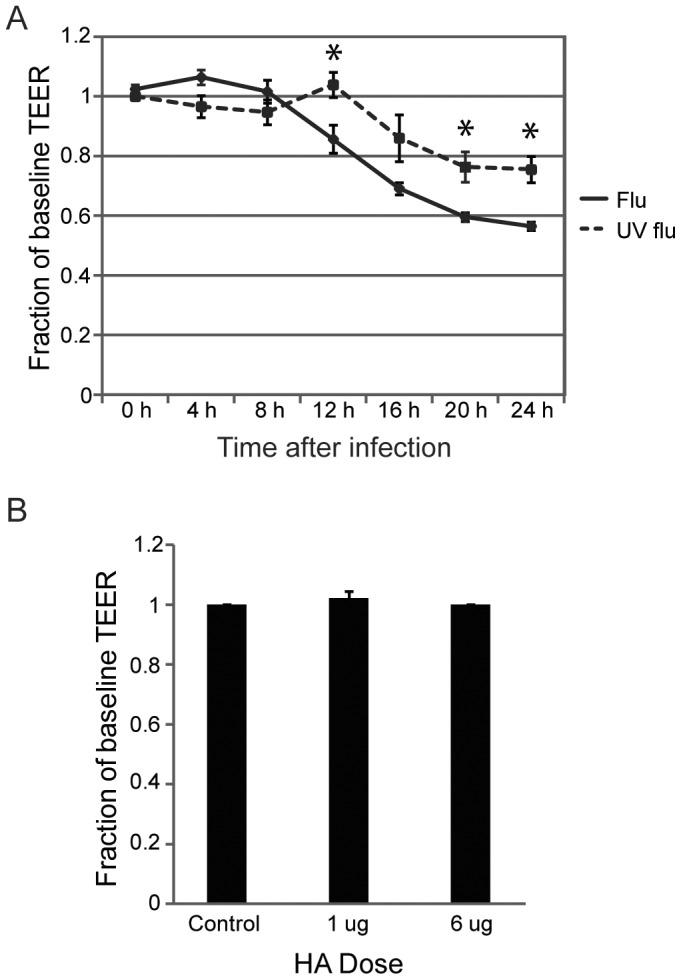
Severe influenza infections are complicated by acute lung injury, a syndrome of pulmonary microvascular leak. The pathogenesis of this complication is unclear. We hypothesized that human influenza could directly infect the lung microvascular endothelium, leading to loss of endothelial barrier function. We infected human lung microvascular endothelium with both clinical and laboratory strains of human influenza. Permeability of endothelial monolayers was assessed by spectrofluorimetry and by measurement of the transendothelial electrical resistance. We determined the molecular mechanisms of flu-induced endothelial permeability and developed a mouse model of severe influenza. We found that both clinical and laboratory strains of human influenza can infect and replicate in human pulmonary microvascular endothelium, leading to a marked increase in permeability. This was caused by apoptosis of the lung endothelium, since inhibition of caspases greatly attenuated influenza-induced endothelial leak. Remarkably, replication-deficient virus also caused a significant degree of endothelial permeability, despite displaying no cytotoxic effects to the endothelium. Instead, replication-deficient virus induced degradation of the tight junction protein claudin-5; the adherens junction protein VE-cadherin and the actin cytoskeleton were unaffected. Over-expression of claudin-5 was sufficient to prevent replication-deficient virus-induced permeability. The barrier-protective agent formoterol was able to markedly attenuate flu-induced leak in association with dose-dependent induction of claudin-5. Finally, mice infected with human influenza developed pulmonary edema that was abrogated by parenteral treatment with formoterol. Thus, we describe two distinct mechanisms by which human influenza can induce pulmonary microvascular leak. Our findings have implications for the pathogenesis and treatment of acute lung injury from severe influenza.
严重的流感感染会导致急性肺损伤,这是一种肺微血管渗漏的综合征。这种并发症的发病机制尚不清楚。我们假设人类流感可以直接感染肺微血管内皮细胞,导致内皮屏障功能丧失。我们用临床和实验室来源的人类流感株感染人肺微血管内皮细胞。通过光谱荧光法和测量跨内皮电阻来评估内皮单层的通透性。我们确定了流感引起的内皮通透性的分子机制,并建立了严重流感的小鼠模型。我们发现,临床和实验室来源的人类流感株均可感染并在人肺微血管内皮细胞中复制,导致通透性显著增加。这是由于肺内皮细胞凋亡所致,因为 caspase 的抑制大大减弱了流感诱导的内皮渗漏。值得注意的是,复制缺陷型病毒也会引起相当程度的内皮通透性,尽管对内皮没有细胞毒性作用。相反,复制缺陷型病毒诱导紧密连接蛋白 Claudin-5 的降解;黏着连接蛋白 VE-钙粘蛋白和肌动蛋白细胞骨架不受影响。 Claudin-5 的过表达足以防止复制缺陷型病毒诱导的通透性。屏障保护剂福莫特罗能够显著减轻流感诱导的渗漏,同时 Claudin-5 的表达呈剂量依赖性诱导。最后,感染人类流感的小鼠发生肺水肿,而福莫特罗的全身治疗可减轻这种肺水肿。因此,我们描述了人类流感诱导肺微血管渗漏的两种不同机制。我们的发现对严重流感引起的急性肺损伤的发病机制和治疗具有重要意义。





 Zotero 插件