Department of Biotechnology, University of Science and Technology Bannu, Khyber Pakutunkhwa, Pakistan.
BMC Complement Altern Med. 2012 Nov 1;12:204. doi: 10.1186/1472-6882-12-204.
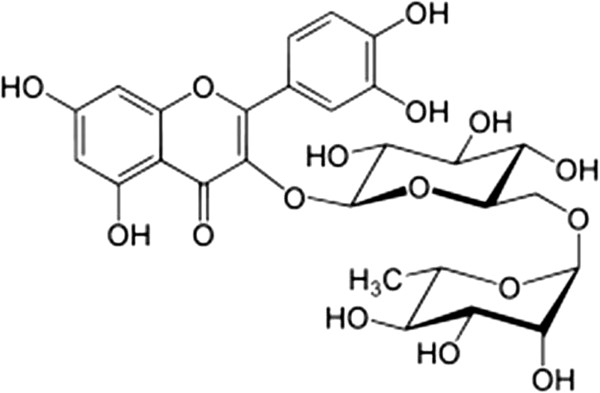
Rutin, a polyphenolic flavonoid, was investigated for its protective effects against the KBrO(3) induced renal injuries in rat.
Group I was control (untreated), group II was given saline 0.5 ml/kg bw (0.9% NaCl), group III was administered KBrO(3) (20 mg/kg bw) intragastric twice a week for four weeks. Rutin was administered to group VI (50 mg/kg bw) and Group V (70 mg/kg bw) along with KBrO(3) (20 mg/kg bw) while group VI was given rutin (70 mg/kg bw) alone twice a week for four weeks. Protective effects of rutin on KBrO(3)-induced nephrotoxicity in rats were determined for biochemical parameter of urine, and serum, various antioxidant enzymes, DNA and histopathological damages in kidneys.
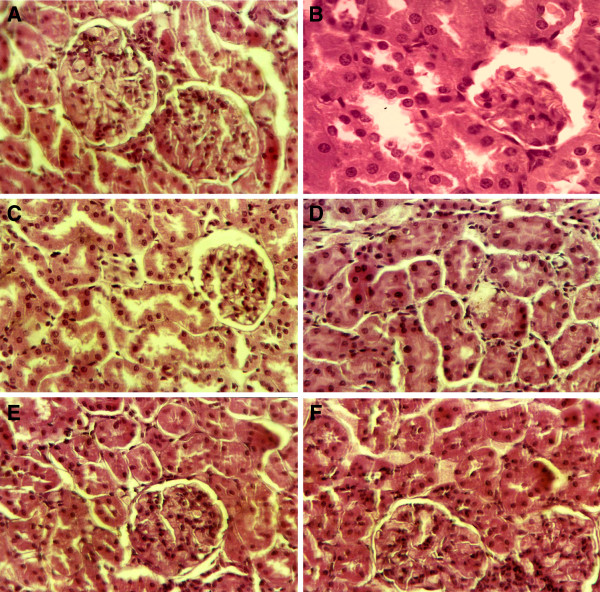
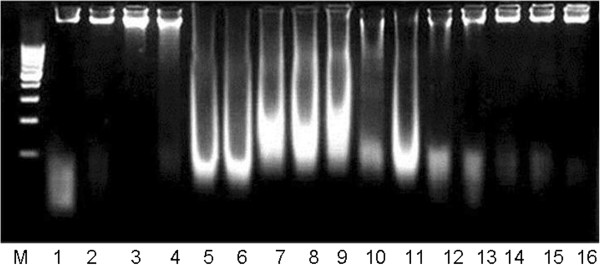
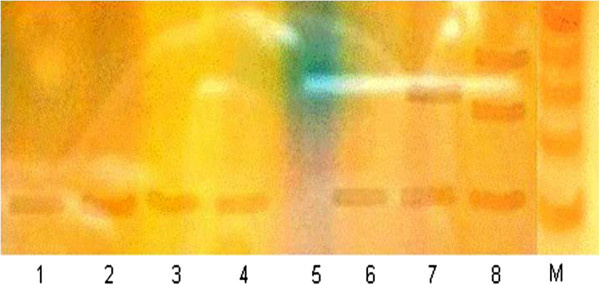
The level of urinary red blood cells, leucocytes count, specific gravity, urea, creatinine and urobilinogen was increased (P<0.01) whereas creatinine clearance was reduced. Serum level of protein, albumin, globulin, nitrite, creatinine and blood urea nitrogen (BUN) was significantly increased (P<0.01) by KBrO(3). Marked histopathological lesions, elevated DNA fragmentation and AgNORs count in renal tissues was determined. Activity of antioxidant enzymes; catalase, superoxide dismutase, glutathione peroxidase, glutathione-S-transferase, glutathione reductase, and reduced glutathione contents were decreased (P<0.01) while thiobarbituric acid reactive substances were increased (P<0.01) with KBrO(3) treatment in kidneys. DNA ladder assay was intimately related with the DNA fragmentation assay. Telomerase activity was found positive in the KBrO(3) treated kidneys. Treatment with rutin effectively ameliorated the alterations in the studied parameters of rat. Rutin administration alone to rats did not exhibit any significant change in any of the parameters studied.
These results suggest that rutin works as an antioxidant in vivo by scavenging reactive oxygen species and this serves to prevent oxidative renal damage in rat treated with KBrO(3).
芦丁是一种多酚类黄酮,研究其对大鼠 KBrO3 诱导的肾损伤的保护作用。
第 I 组为对照组(未处理),第 II 组给予生理盐水 0.5 ml/kg bw(0.9% NaCl),第 III 组每周两次灌胃 KBrO3(20 mg/kg bw)共四周。芦丁分别给予第 VI 组(50 mg/kg bw)和第 V 组(70 mg/kg bw),同时给予 KBrO3(20 mg/kg bw),而第 VI 组每周两次单独给予芦丁(70 mg/kg bw)共四周。芦丁对 KBrO3 诱导的大鼠肾毒性的保护作用通过尿液和血清的生化参数、各种抗氧化酶、DNA 和肾脏组织的组织病理学损伤来确定。
尿红细胞、白细胞计数、比重、尿素、肌酐和尿胆原水平升高(P<0.01),而肌酐清除率降低。血清蛋白、白蛋白、球蛋白、亚硝酸盐、肌酐和血尿素氮(BUN)水平显著升高(P<0.01)。KBrO3 处理后,肾脏组织中明显存在组织病理学损伤、DNA 片段化和 AgNORs 计数增加。抗氧化酶活性;过氧化氢酶、超氧化物歧化酶、谷胱甘肽过氧化物酶、谷胱甘肽 S-转移酶、谷胱甘肽还原酶和还原型谷胱甘肽含量降低(P<0.01),而丙二醛含量增加(P<0.01)。KBrO3 处理后,DNA 梯状带与 DNA 片段化测定密切相关。端粒酶活性在 KBrO3 处理的肾脏中呈阳性。芦丁治疗可有效改善大鼠研究参数的变化。芦丁单独给予大鼠时,对研究的任何参数均无显著变化。
这些结果表明,芦丁在体内作为抗氧化剂发挥作用,通过清除活性氧来防止 KBrO3 处理的大鼠发生氧化肾损伤。