Department of Medicine 1, University of Erlangen-Nuremberg, Erlangen, Germany.
Int J Biol Sci. 2012;8(9):1248-53. doi: 10.7150/ijbs.4614. Epub 2012 Oct 24.
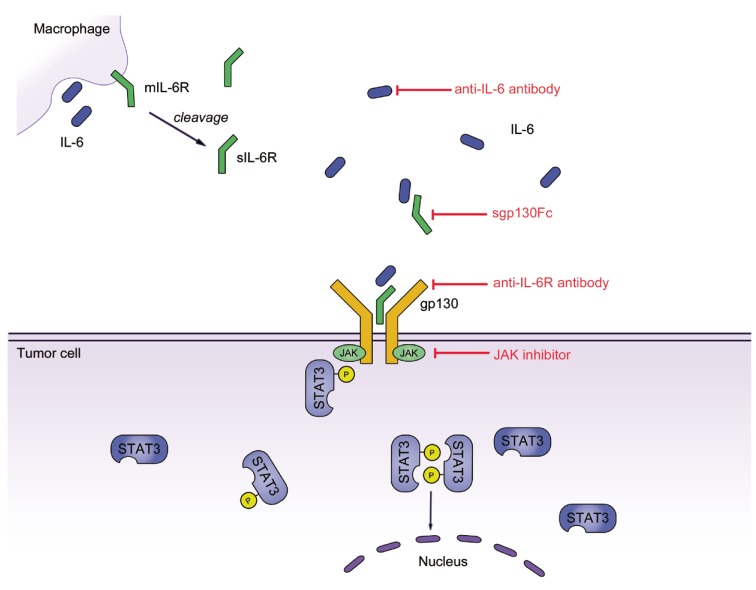
Growing evidence proposes an important role for pro-inflammatory cytokines during tumor development. Several experimental and clinical studies have linked the pleiotropic cytokine interleukin-6 (IL-6) to the pathogenesis of sporadic and inflammation-associated colorectal cancer (CRC). Increased IL-6 expression has been related to advanced stage of disease and decreased survival in CRC patients. According to experimental studies, these effects are mediated through IL-6 trans-signaling promoting tumor cell proliferation and inhibiting apoptosis through gp130 activation on tumor cells with subsequent signaling through Janus kinases (JAKs) and signal transducer and activator of transcription 3 (STAT3). During recent years, several therapeutics targeting the IL-6/STAT3 pathway have been developed and pose a promising strategy for the treatment of CRC. This review discusses the molecular mechanisms and possible therapeutic targets involved in IL-6 signaling in CRC.
越来越多的证据表明,促炎细胞因子在肿瘤发展过程中起着重要作用。一些实验和临床研究将多效细胞因子白细胞介素-6 (IL-6)与散发性和炎症相关结直肠癌 (CRC) 的发病机制联系起来。IL-6 表达增加与 CRC 患者疾病的晚期阶段和生存率降低有关。根据实验研究,这些作用是通过 IL-6 转信号传导介导的,通过 gp130 在肿瘤细胞上的激活促进肿瘤细胞增殖,并通过 Janus 激酶 (JAK) 和信号转导和转录激活因子 3 (STAT3) 抑制细胞凋亡。近年来,已经开发出几种针对 IL-6/STAT3 途径的治疗方法,这为 CRC 的治疗提供了一种很有前途的策略。这篇综述讨论了 IL-6 信号在 CRC 中涉及的分子机制和可能的治疗靶点。