Lilly Centre for Cognitive Neuroscience, Eli Lilly and Company, Erl Wood Manor, Windlesham, Surrey GU20 6PH, UK.
Neuron. 2012 Nov 8;76(3):526-33. doi: 10.1016/j.neuron.2012.09.016.
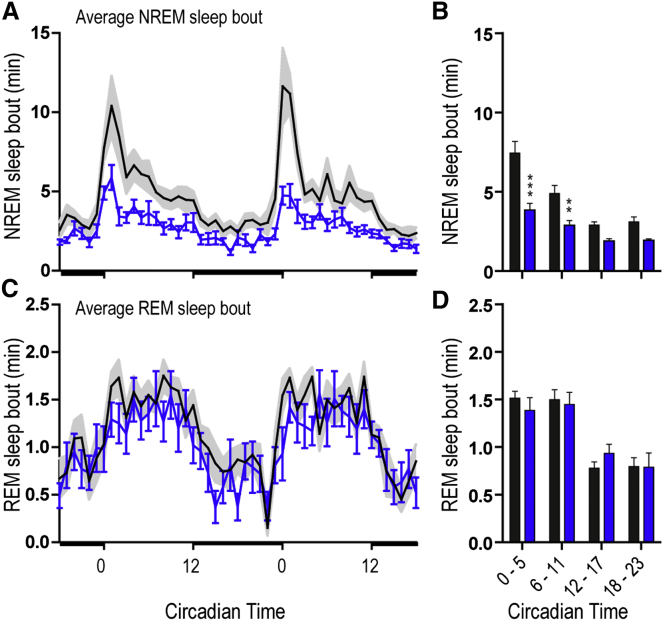
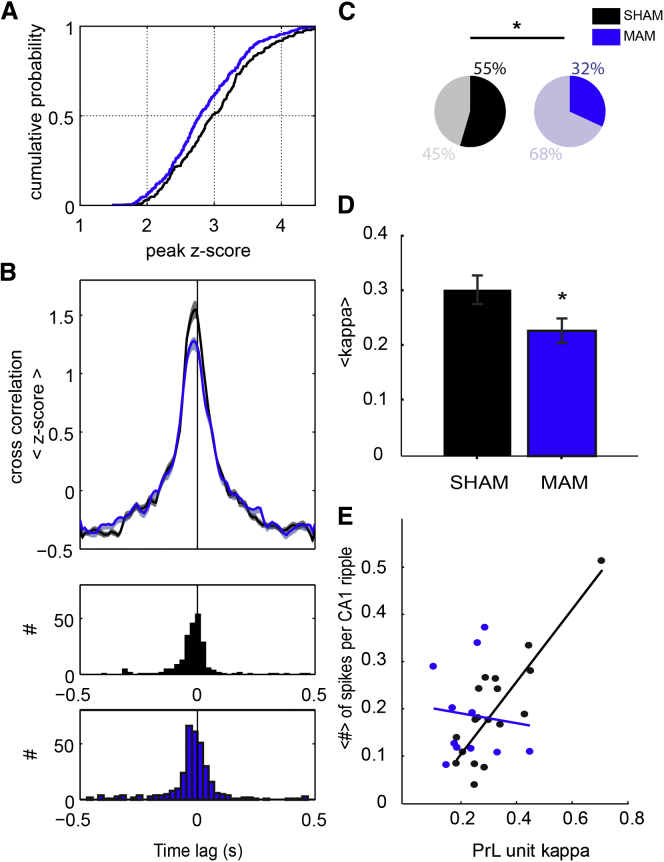
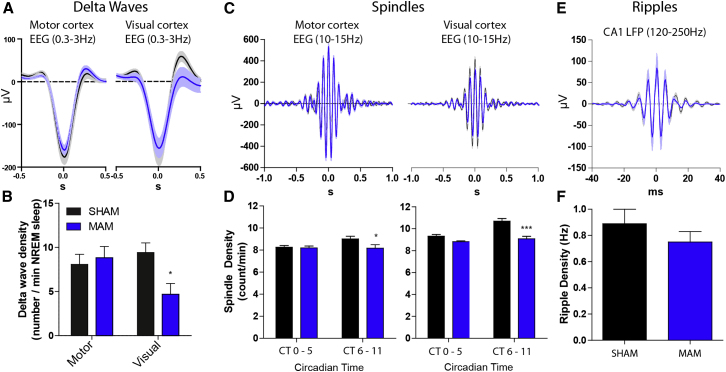
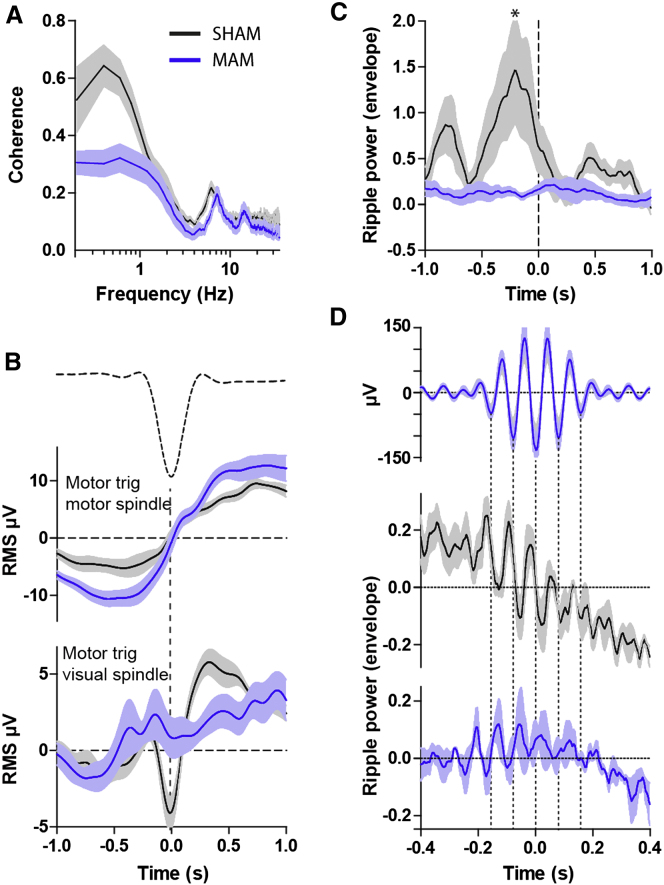
Rhythmic neural network activity patterns are defining features of sleep, but interdependencies between limbic and cortical oscillations at different frequencies and their functional roles have not been fully resolved. This is particularly important given evidence linking abnormal sleep architecture and memory consolidation in psychiatric diseases. Using EEG, local field potential (LFP), and unit recordings in rats, we show that anteroposterior propagation of neocortical slow-waves coordinates timing of hippocampal ripples and prefrontal cortical spindles during NREM sleep. This coordination is selectively disrupted in a rat neurodevelopmental model of schizophrenia: fragmented NREM sleep and impaired slow-wave propagation in the model culminate in deficient ripple-spindle coordination and disrupted spike timing, potentially as a consequence of interneuronal abnormalities reflected by reduced parvalbumin expression. These data further define the interrelationships among slow-wave, spindle, and ripple events, indicating that sleep disturbances may be associated with state-dependent decoupling of hippocampal and cortical circuits in psychiatric diseases.
节律性神经网络活动模式是睡眠的特征,但不同频率的边缘和皮质振荡之间的相互依赖性及其功能作用尚未完全解决。鉴于有证据表明精神疾病中的睡眠结构异常与记忆巩固有关,这一点尤为重要。使用脑电图、局部场电位 (LFP) 和大鼠的单位记录,我们发现,在 NREM 睡眠期间,新皮层慢波的前后传播协调了海马回波和前额叶皮质纺锤波的时间。这种协调在精神分裂症的大鼠神经发育模型中被选择性破坏:模型中的 NREM 睡眠片段化和慢波传播受损,最终导致涟漪-纺锤波协调不足和尖峰时间紊乱,这可能是由减少的表达反映的中间神经元异常所致。这些数据进一步定义了慢波、纺锤波和涟漪事件之间的相互关系,表明睡眠障碍可能与精神疾病中海马和皮质回路状态相关的去耦有关。