Inflammatory Disease Section, Medical Genetics Branch, National Human Genome Research Institute, National Institutes of Health, Bethesda, Maryland 20892, USA.
Nature. 2012 Dec 6;492(7427):123-7. doi: 10.1038/nature11588. Epub 2012 Nov 11.
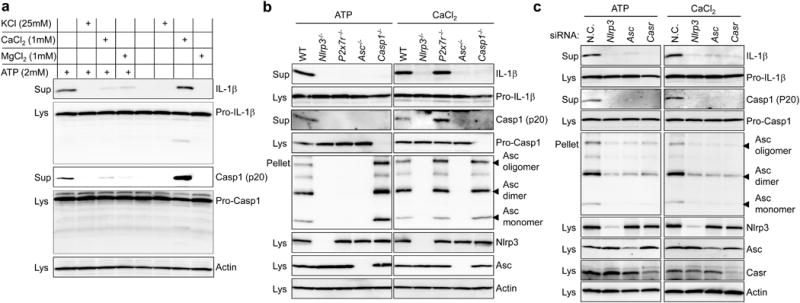
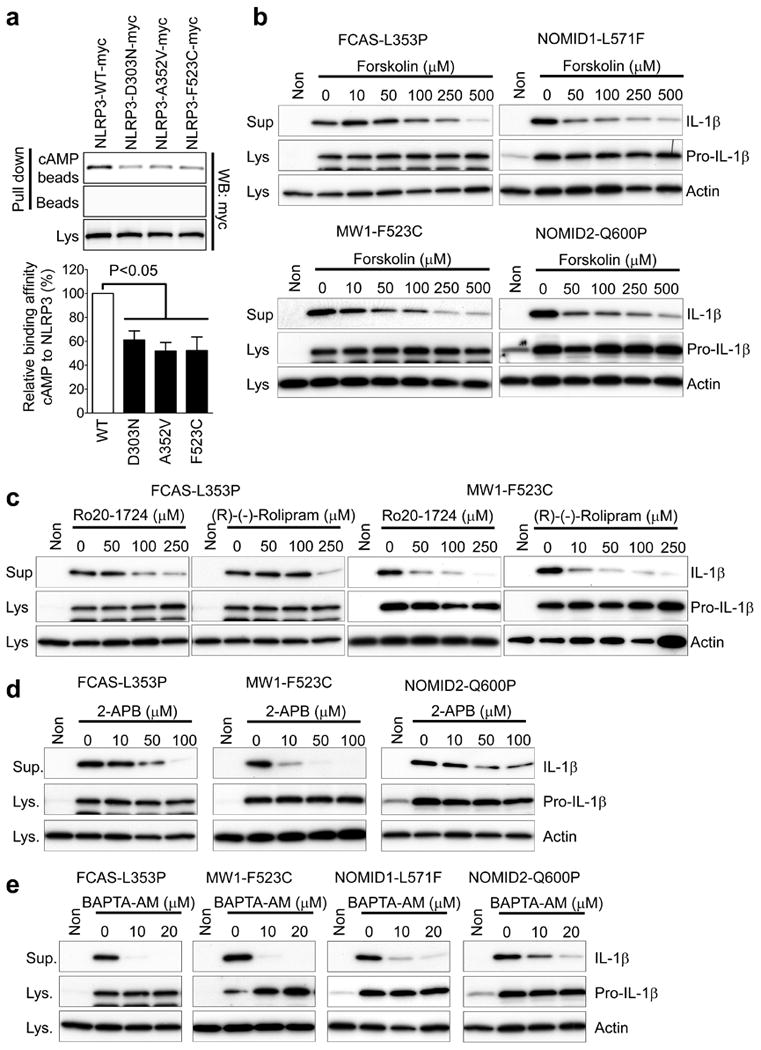
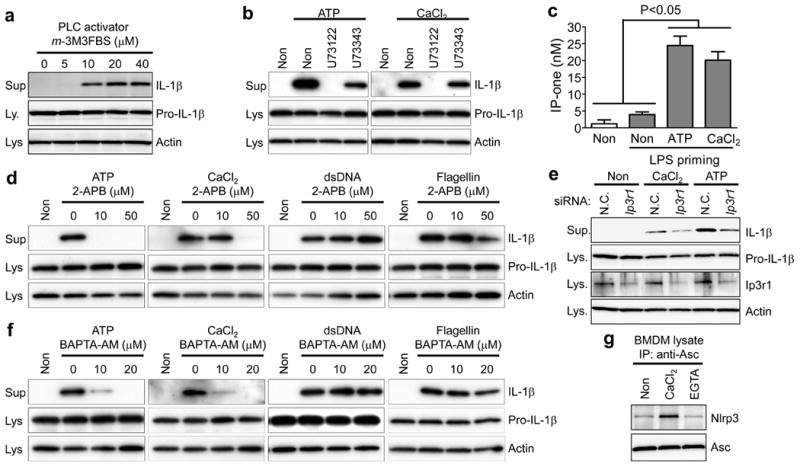
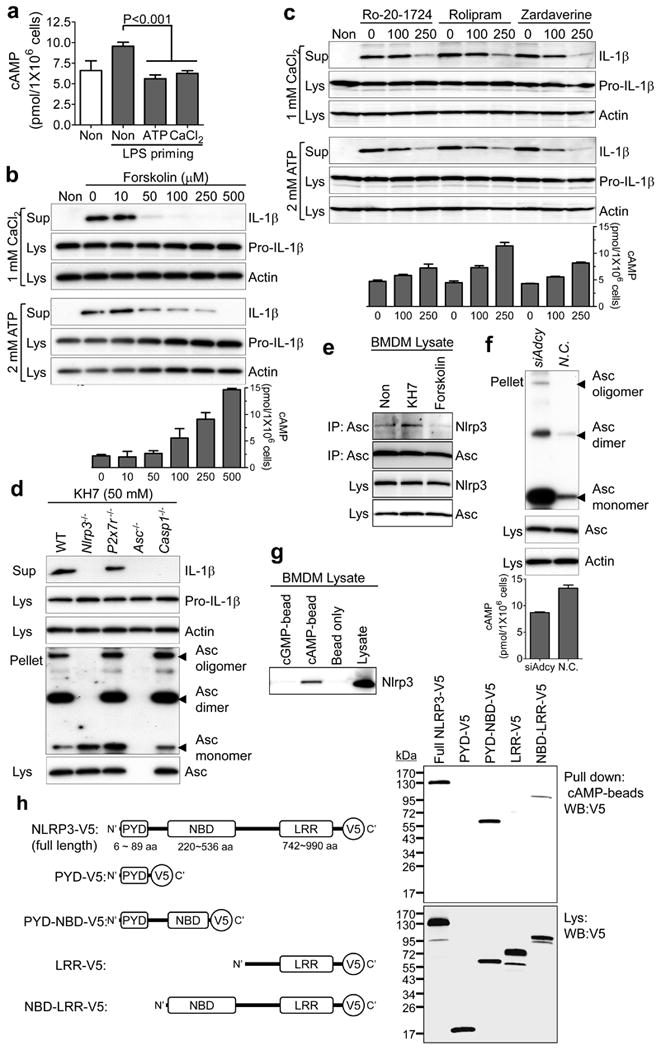
Mutations in the gene encoding NLRP3 cause a spectrum of autoinflammatory diseases known as cryopyrin-associated periodic syndromes (CAPS). NLRP3 is a key component of one of several distinct cytoplasmic multiprotein complexes (inflammasomes) that mediate the maturation of the proinflammatory cytokine interleukin-1β (IL-1β) by activating caspase-1. Although several models for inflammasome activation, such as K(+) efflux, generation of reactive oxygen species and lysosomal destabilization, have been proposed, the precise molecular mechanism of NLRP3 inflammasome activation, as well as the mechanism by which CAPS-associated mutations activate NLRP3, remain to be elucidated. Here we show that the murine calcium-sensing receptor (CASR) activates the NLRP3 inflammasome, mediated by increased intracellular Ca(2+) and decreased cellular cyclic AMP (cAMP). Ca(2+) or other CASR agonists activate the NLRP3 inflammasome in the absence of exogenous ATP, whereas knockdown of CASR reduces inflammasome activation in response to known NLRP3 activators. CASR activates the NLRP3 inflammasome through phospholipase C, which catalyses inositol-1,4,5-trisphosphate production and thereby induces release of Ca(2+) from endoplasmic reticulum stores. The increased cytoplasmic Ca(2+) promotes the assembly of inflammasome components, and intracellular Ca(2+) is required for spontaneous inflammasome activity in cells from patients with CAPS. CASR stimulation also results in reduced intracellular cAMP, which independently activates the NLRP3 inflammasome. cAMP binds to NLRP3 directly to inhibit inflammasome assembly, and downregulation of cAMP relieves this inhibition. The binding affinity of cAMP for CAPS-associated mutant NLRP3 is substantially lower than for wild-type NLRP3, and the uncontrolled mature IL-1β production from CAPS patients' peripheral blood mononuclear cells is attenuated by increasing cAMP. Taken together, these findings indicate that Ca(2+) and cAMP are two key molecular regulators of the NLRP3 inflammasome that have critical roles in the molecular pathogenesis of CAPS.
NLRP3 基因的突变导致一系列自身炎症性疾病,称为冷吡啉相关周期性综合征 (CAPS)。NLRP3 是几种不同细胞质多蛋白复合物(炎症小体)的关键组成部分,通过激活半胱氨酸蛋白酶-1 来介导前炎症细胞因子白细胞介素-1β(IL-1β)的成熟。虽然已经提出了几种炎症小体激活模型,例如 K+外排、活性氧的产生和溶酶体不稳定,但 NLRP3 炎症小体的精确分子激活机制以及 CAPS 相关突变激活 NLRP3 的机制仍有待阐明。在这里,我们表明,鼠钙敏感受体 (CASR) 通过增加细胞内 Ca2+和降低细胞环磷酸腺苷 (cAMP) 来激活 NLRP3 炎症小体。Ca2+或其他 CASR 激动剂在没有外源性 ATP 的情况下激活 NLRP3 炎症小体,而 CASR 的敲低会降低对已知 NLRP3 激活剂的炎症小体激活。CASR 通过磷脂酶 C 激活 NLRP3 炎症小体,该酶催化肌醇-1,4,5-三磷酸的产生,从而诱导内质网储存的 Ca2+释放。细胞质中增加的 Ca2+促进炎症小体成分的组装,并且 CAPS 患者细胞中自发炎症小体活性需要细胞内 Ca2+。CASR 刺激还导致细胞内 cAMP 减少,该 cAMP 独立激活 NLRP3 炎症小体。cAMP 直接与 NLRP3 结合以抑制炎症小体组装,并且 cAMP 的下调可缓解这种抑制。cAMP 与 CAPS 相关突变 NLRP3 的结合亲和力明显低于野生型 NLRP3,并且通过增加 cAMP 可减轻 CAPS 患者外周血单核细胞中不受控制的成熟 IL-1β 的产生。总之,这些发现表明,Ca2+和 cAMP 是 NLRP3 炎症小体的两个关键分子调节剂,它们在 CAPS 的分子发病机制中起关键作用。