Division of Renal Diseases and Hypertension, University of Colorado-Denver, Aurora, Colorado, United States of America.
PLoS One. 2012;7(11):e48801. doi: 10.1371/journal.pone.0048801. Epub 2012 Nov 9.
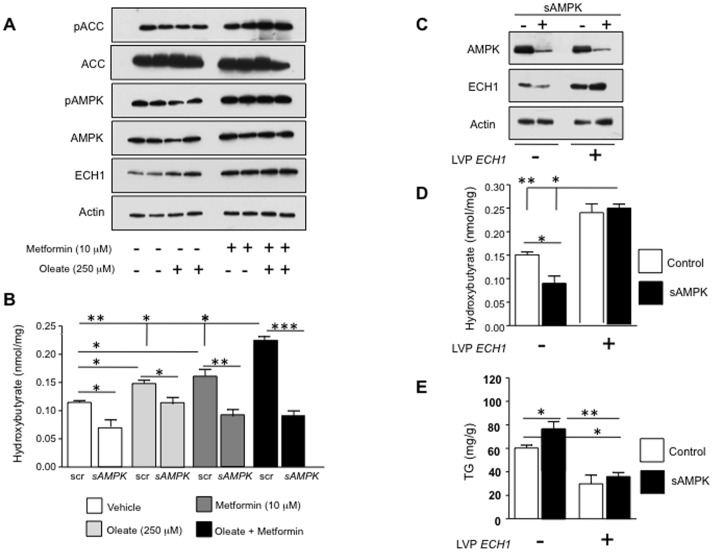
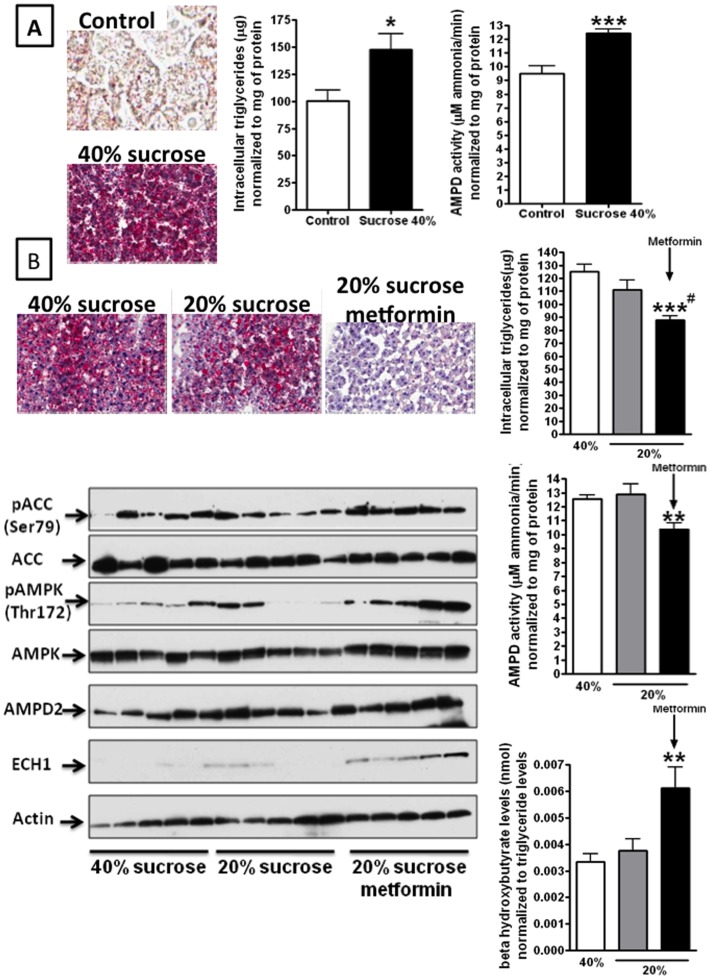
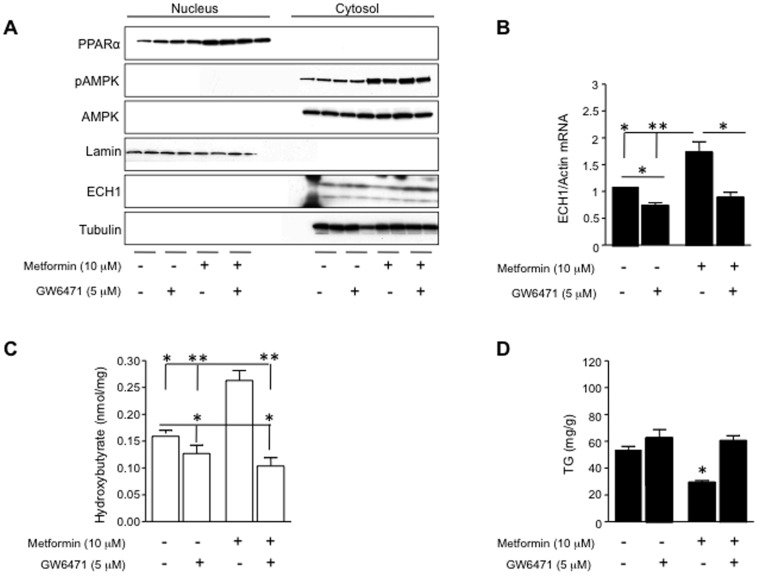
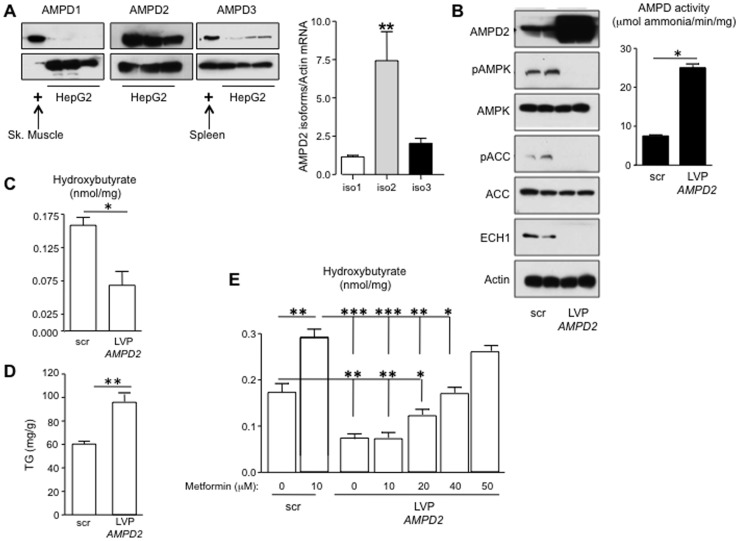
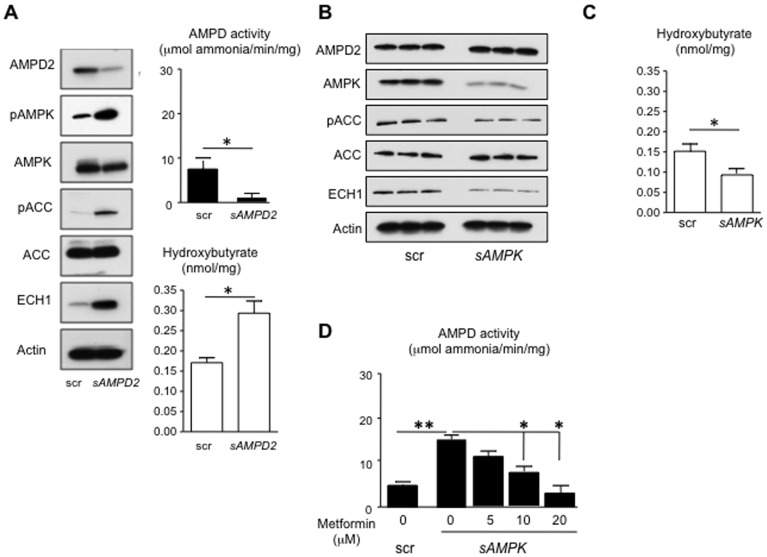
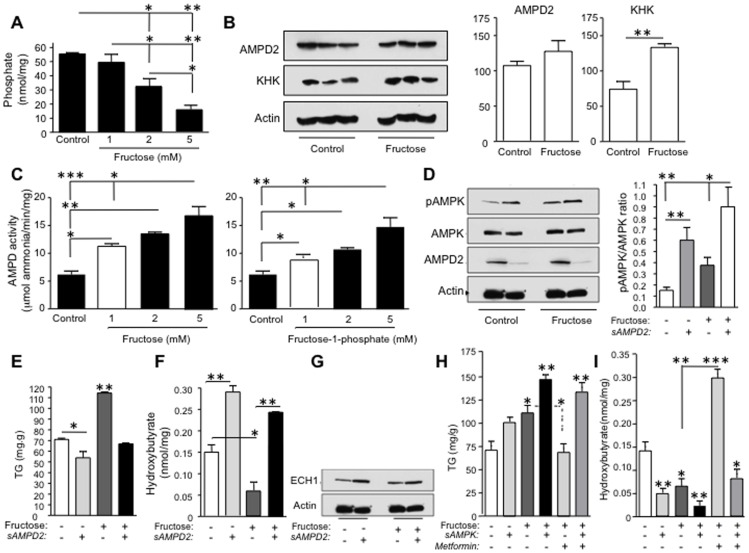
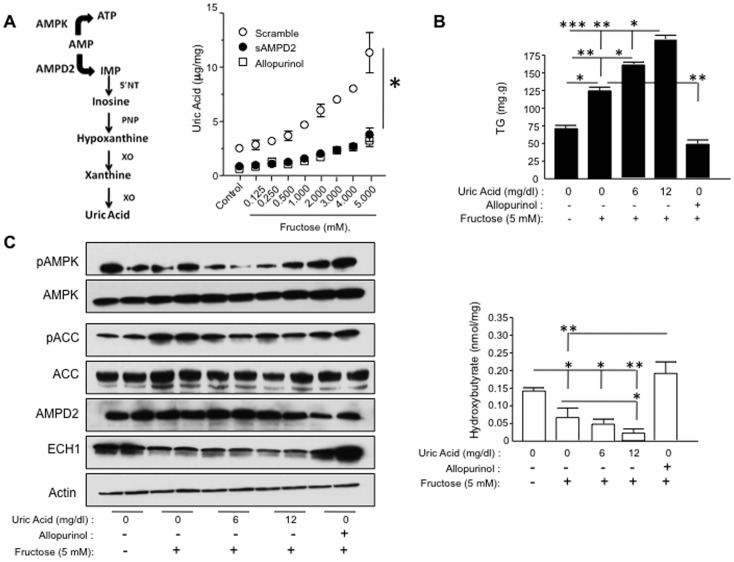
Fatty liver (hepatic steatosis) is associated with nucleotide turnover, loss of ATP and generation of adenosine monophosphate (AMP). It is well known that in fatty liver, activity of the AMP-activated kinase (AMPK) is reduced and that its stimulation can prevent hepatic steatosis by both enhancing fat oxidation and reducing lipogenesis. Here we show that another AMP dependent enzyme, AMPD2, has opposing effects on fatty acid oxidation when compared to AMPK. In human hepatocytres, AMPD2 activation -either by overexpression or by lowering intracellular phosphate levels with fructose- is associated with a significant reduction in AMPK activity. Likewise, silencing of AMPK spontaneously increases AMPD activity, demonstrating that these enzymes counter-regulate each other. Furthermore, we show that a downstream product of AMP metabolism through AMPD2, uric acid, can inhibit AMPK activity in human hepatocytes. Finally, we show that fructose-induced fat accumulation in hepatocytes is due to a dominant stimulation of AMPD2 despite stimulating AMPK. In this regard, AMPD2-deficient hepatocytes demonstrate a further activation of AMPK after fructose exposure in association with increased fatty acid oxidation, and conversely silencing AMPK enhances AMPD-dependent fat accumulation. In vivo, we show that sucrose fed rats also develop fatty liver that is blocked by metformin in association with both a reduction in AMPD activity and an increase in AMPK activity. In summary, AMPD and AMPK are both important in hepatic fat accumulation and counter-regulate each other. We present the novel finding that uric acid inhibits AMPK kinase activity in fructose-fed hepatocytes thus providing new insights into the pathogenesis of fatty liver.
脂肪肝(肝脂肪变性)与核苷酸周转、ATP 损失和单磷酸腺苷(AMP)的产生有关。众所周知,在脂肪肝中,AMP 激活的蛋白激酶(AMPK)的活性降低,其刺激可以通过增强脂肪氧化和减少脂肪生成来预防肝脂肪变性。在这里,我们表明另一种 AMP 依赖性酶,AMPD2,与 AMPK 相比,对脂肪酸氧化具有相反的作用。在人肝细胞中,AMPD2 的激活 - 通过过表达或通过果糖降低细胞内磷酸盐水平 - 与 AMPK 活性的显著降低有关。同样,AMPK 的沉默会自发增加 AMPD 活性,表明这些酶相互拮抗。此外,我们表明 AMP 通过 AMPD2 代谢的下游产物尿酸可以抑制人肝细胞中的 AMPK 活性。最后,我们表明果糖诱导的肝细胞脂肪积累是由于 AMPD2 的优势刺激,尽管刺激了 AMPK。在这方面,AMPD2 缺陷型肝细胞在果糖暴露后表现出 AMPK 的进一步激活,伴随着脂肪酸氧化的增加,相反,沉默 AMPK 会增强 AMPD 依赖性脂肪积累。在体内,我们表明蔗糖喂养的大鼠也会发展为脂肪肝,这种脂肪肝可以被二甲双胍阻断,同时伴随着 AMPD 活性的降低和 AMPK 活性的增加。总之,AMPD 和 AMPK 在肝脂肪积累中都很重要,并且相互拮抗。我们提出了一个新的发现,即尿酸抑制果糖喂养的肝细胞中的 AMPK 激酶活性,从而为脂肪肝的发病机制提供了新的见解。