Strathclyde Institute of Pharmacy and Biomedical Sciences, University of Strathclyde, Glasgow G4 0RE, Scotland, United Kingdom.
J Biol Chem. 2013 Feb 1;288(5):3678-90. doi: 10.1074/jbc.M112.415372. Epub 2012 Nov 19.
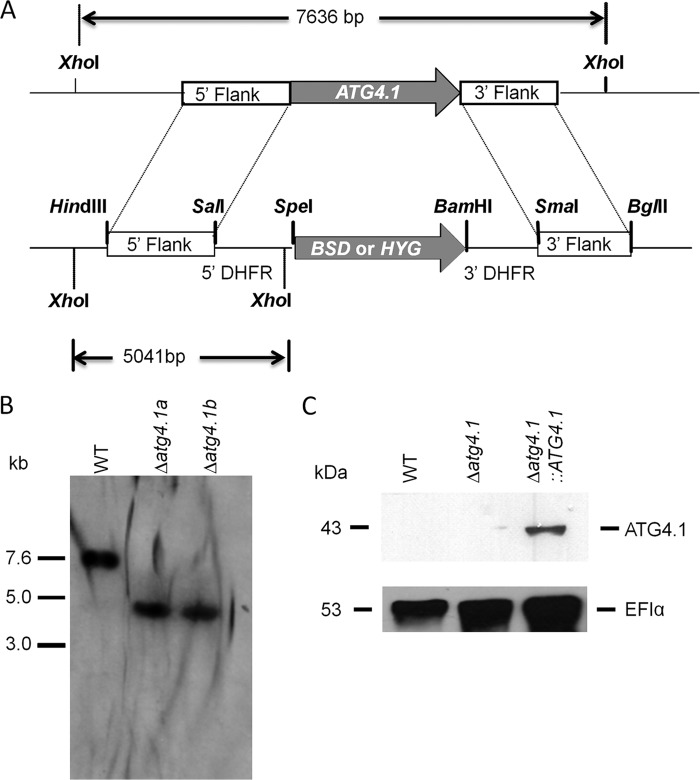
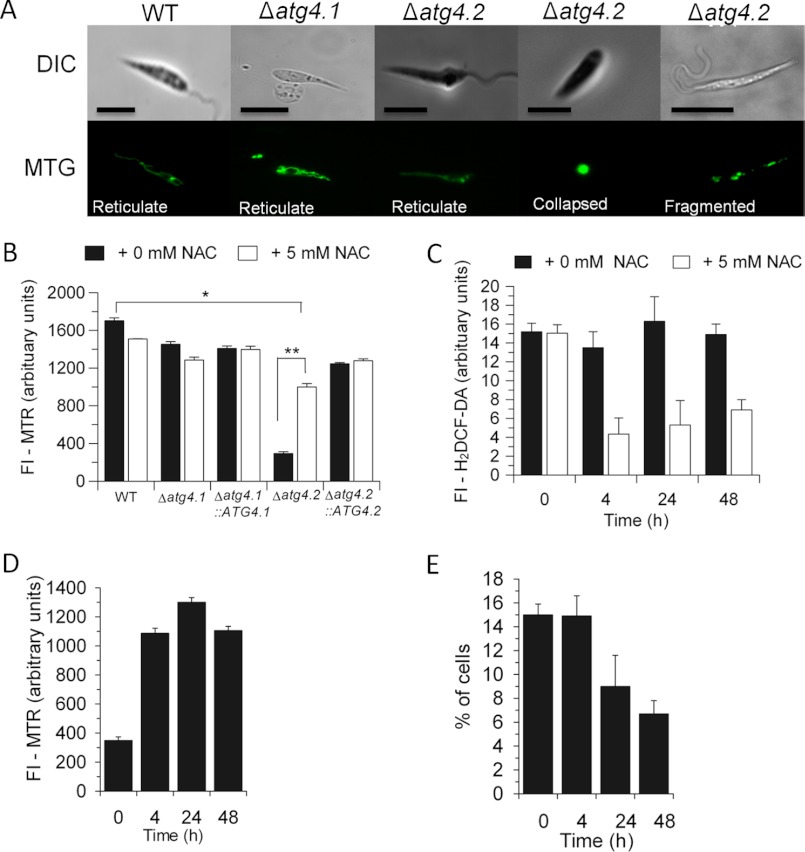
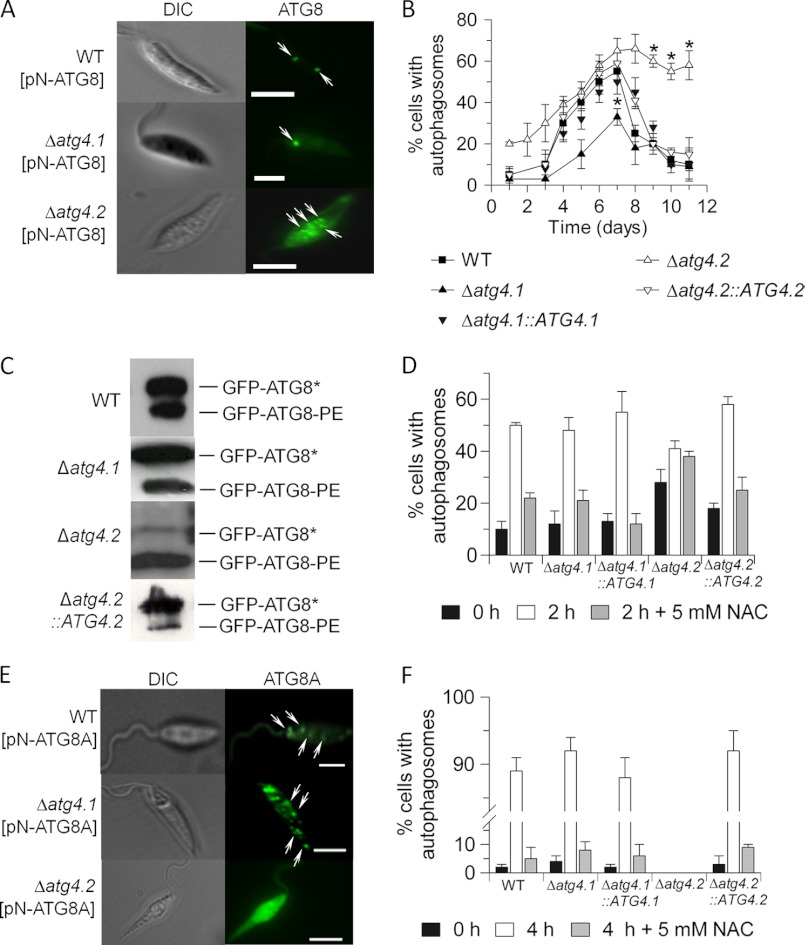
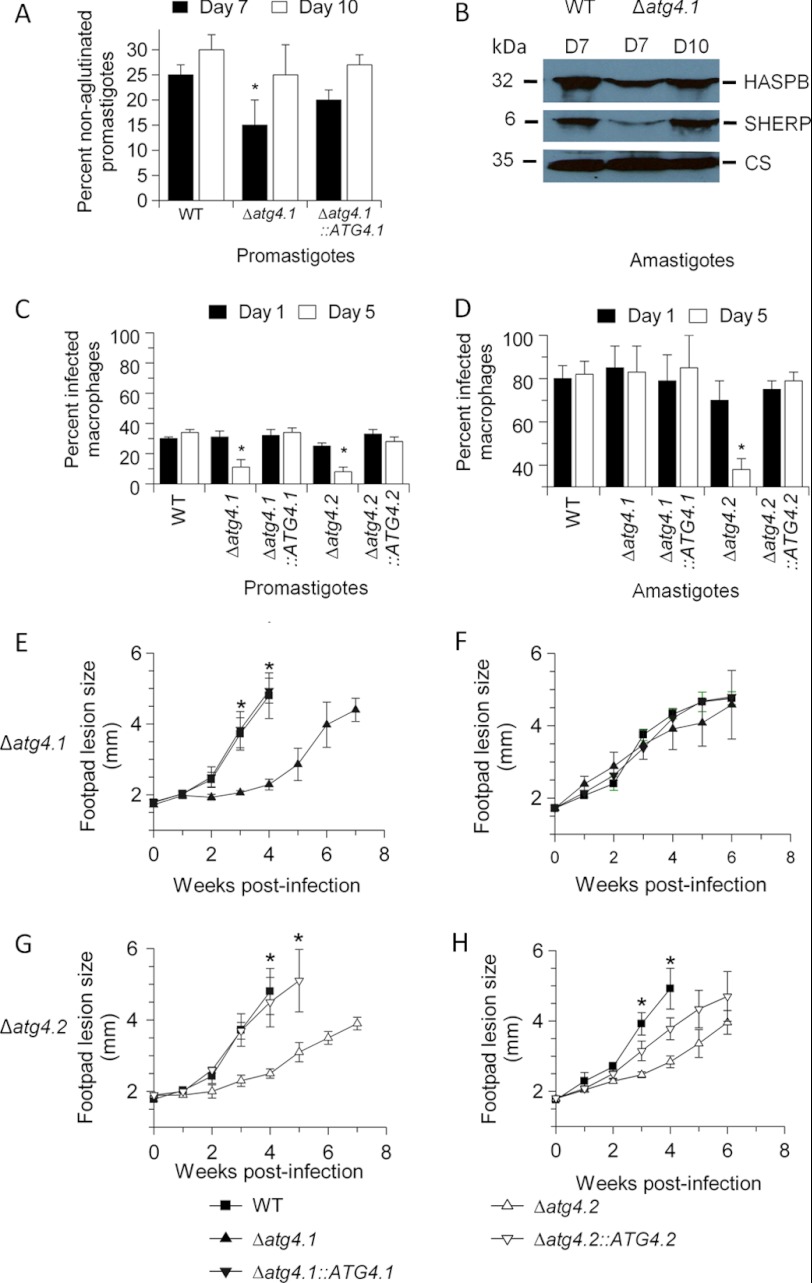
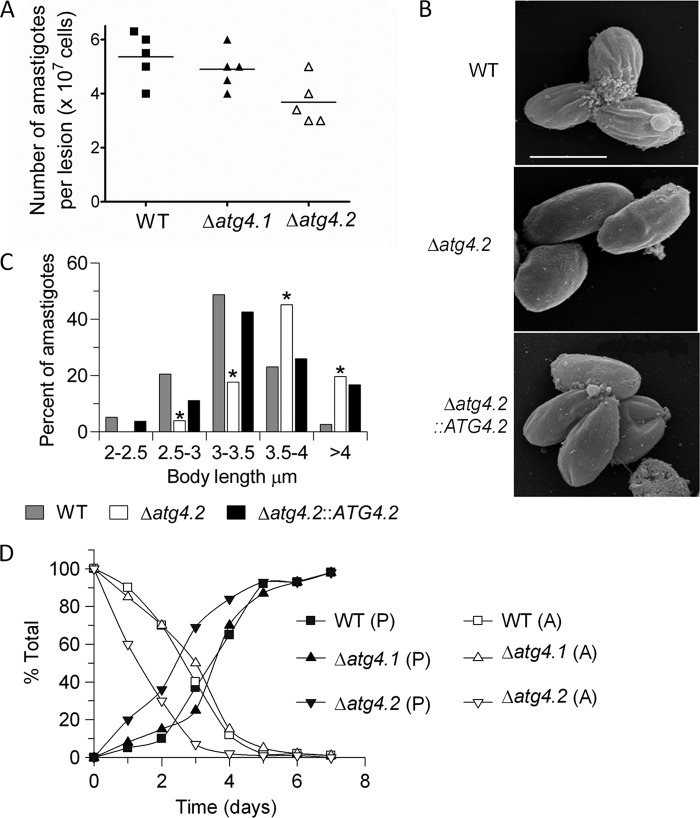
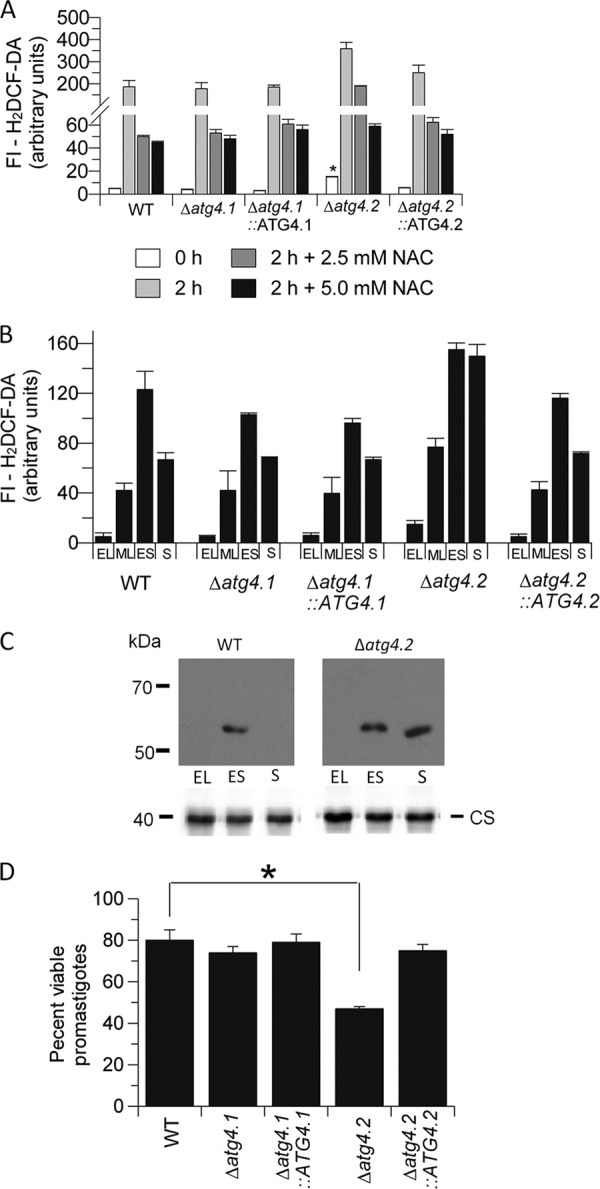
Macroautophagy in Leishmania, which is important for the cellular remodeling required during differentiation, relies upon the hydrolytic activity of two ATG4 cysteine peptidases (ATG4.1 and ATG4.2). We have investigated the individual contributions of each ATG4 to Leishmania major by generating individual gene deletion mutants (Δatg4.1 and Δatg4.2); double mutants could not be generated, indicating that ATG4 activity is required for parasite viability. Both mutants were viable as promastigotes and infected macrophages in vitro and mice, but Δatg4.2 survived poorly irrespective of infection with promastigotes or amastigotes, whereas this was the case only when promastigotes of Δatg4.1 were used. Promastigotes of Δatg4.2 but not Δatg4.1 were more susceptible than wild type promastigotes to starvation and oxidative stresses, which correlated with increased reactive oxygen species levels and oxidatively damaged proteins in the cells as well as impaired mitochondrial function. The antioxidant N-acetylcysteine reversed this phenotype, reducing both basal and induced autophagy and restoring mitochondrial function, indicating a relationship between reactive oxygen species levels and autophagy. Deletion of ATG4.2 had a more dramatic effect upon autophagy than did deletion of ATG4.1. This phenotype is consistent with a reduced efficiency in the autophagic process in Δatg4.2, possibly due to ATG4.2 having a key role in removal of ATG8 from mature autophagosomes and thus facilitating delivery to the lysosomal network. These findings show that there is a level of functional redundancy between the two ATG4s, and that ATG4.2 appears to be the more important. Moreover, the low infectivity of Δatg4.2 demonstrates that autophagy is important for the virulence of the parasite.
在 Leishmania 中,巨自噬对于分化过程中所需的细胞重塑很重要,它依赖于两种 ATG4 半胱氨酸肽酶(ATG4.1 和 ATG4.2)的水解活性。我们通过生成单个基因缺失突变体(Δatg4.1 和 Δatg4.2)来研究每个 ATG4 对 Leishmania major 的个体贡献;无法生成双突变体,表明 ATG4 活性对于寄生虫的生存是必需的。两个突变体在体外作为前鞭毛体和感染的巨噬细胞以及小鼠中都是可行的,但无论是否感染前鞭毛体或无鞭毛体,Δatg4.2 都存活不良,而只有当使用 Δatg4.1 的前鞭毛体时才会出现这种情况。与野生型前鞭毛体相比,Δatg4.2 的前鞭毛体对饥饿和氧化应激更敏感,而 Δatg4.1 的前鞭毛体则不然,这与细胞中活性氧水平和氧化损伤蛋白增加以及线粒体功能受损有关。抗氧化剂 N-乙酰半胱氨酸逆转了这种表型,减少了基础和诱导的自噬并恢复了线粒体功能,表明活性氧水平与自噬之间存在关系。与缺失 ATG4.1 相比,缺失 ATG4.2 对自噬的影响更为显著。这种表型与 Δatg4.2 中自噬过程的效率降低一致,可能是由于 ATG4.2 在从成熟自噬体中去除 ATG8 方面起着关键作用,从而有利于递送至溶酶体网络。这些发现表明两种 ATG4 之间存在一定程度的功能冗余,而 ATG4.2 似乎更为重要。此外,Δatg4.2 的低感染性表明自噬对于寄生虫的毒力很重要。