University Division of Infectious and Tropical Diseases, University of Brescia and Spedali Civili General Hospital, Brescia (Italy), Piazza Spedali Civili, 1 - 25123-Brescia, Italy.
Mediterr J Hematol Infect Dis. 2012;4(1):e2012060. doi: 10.4084/MJHID.2012.060. Epub 2012 Oct 4.
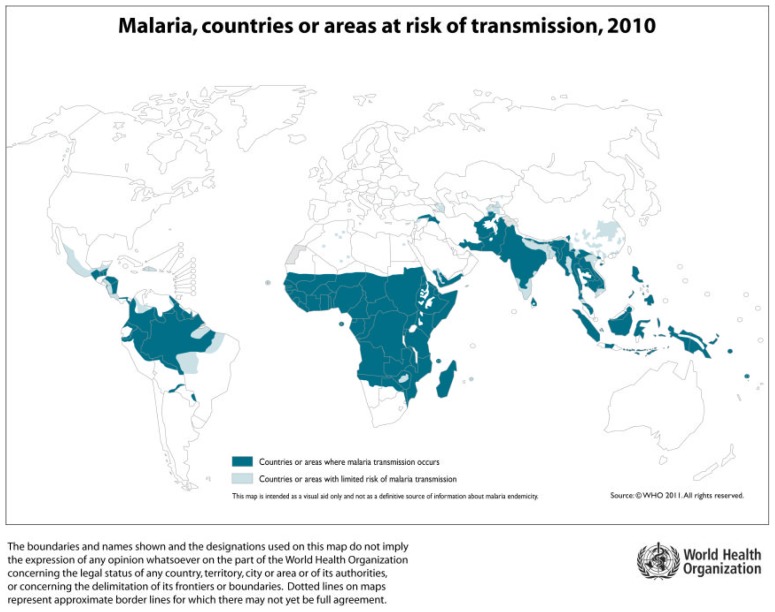
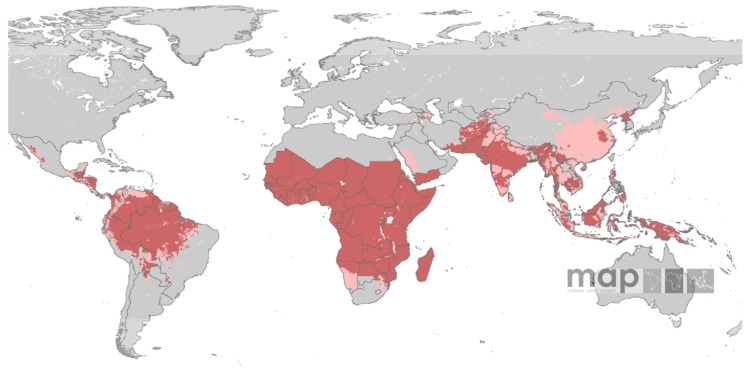
Malaria infection is still to be considered a major public health problem in those 106 countries where the risk of contracting the infection with one or more of the Plasmodium species exists. According to estimates from the World Health Organization, over 200 million cases and about 655.000 deaths have occurred in 2010. Estimating the real health and social burden of the disease is a difficult task, because many of the malaria endemic countries have limited diagnostic resources, especially in rural settings where conditions with similar clinical picture may coexist in the same geographical areas. Moreover, asymptomatic parasitaemia may occur in high transmission areas after childhood, when anti-malaria semi-immunity occurs. Malaria endemicity and control activities are very complex issues, that are influenced by factors related to the host, to the parasite, to the vector, to the environment and to the health system capacity to fully implement available anti-malaria weapons such as rapid diagnostic tests, artemisinin-based combination treatment, impregnated bed-nets and insecticide residual spraying while waiting for an effective vaccine to be made available.
疟疾感染仍然被认为是一个重大的公共卫生问题,在全球 106 个国家中存在感染一种或多种疟原虫的风险。根据世界卫生组织的估计,2010 年全球疟疾发病人数超过 2 亿例,死亡人数约为 65.5 万。评估疾病的实际健康和社会负担是一项艰巨的任务,因为许多疟疾流行国家的诊断资源有限,尤其是在农村地区,在同一地理区域可能存在类似临床症状的疾病。此外,在抗疟半免疫发生后,高传播地区可能会出现无症状寄生虫血症。疟疾流行和控制活动是非常复杂的问题,受到宿主、寄生虫、媒介、环境以及卫生系统全面实施现有抗疟武器(如快速诊断测试、基于青蒿素的联合治疗、驱虫蚊帐和杀虫剂残留喷洒)能力的相关因素的影响,同时还需要等待有效的疫苗问世。