Department of River Ecology and Conservation, Biodiversity and Climate Research Centre & Senckenberg Research Institute and Natural History Museum Frankfurt Clamecystr. 12, 63571, Gelnhausen, Germany.
Ecol Evol. 2012 Nov;2(11):2843-53. doi: 10.1002/ece3.382. Epub 2012 Oct 11.
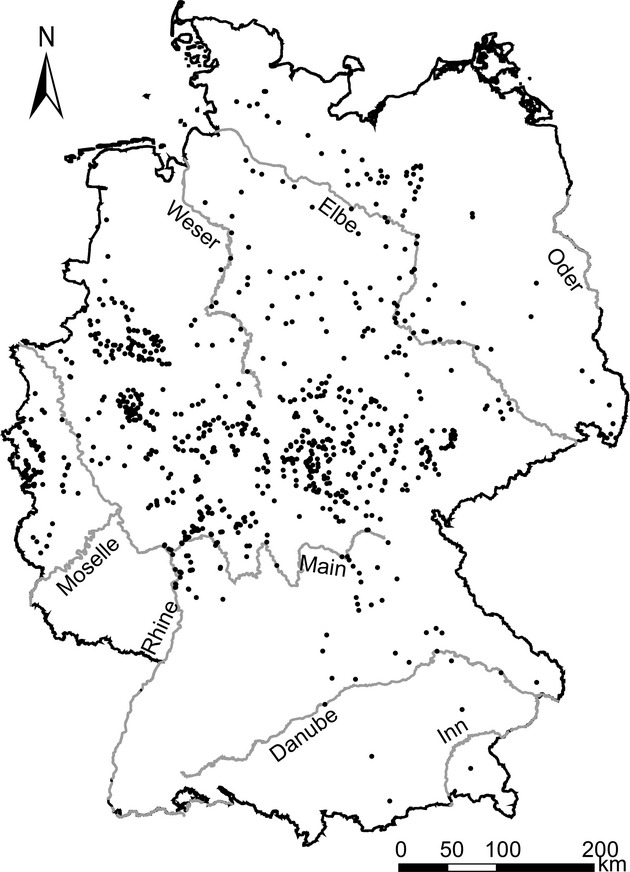
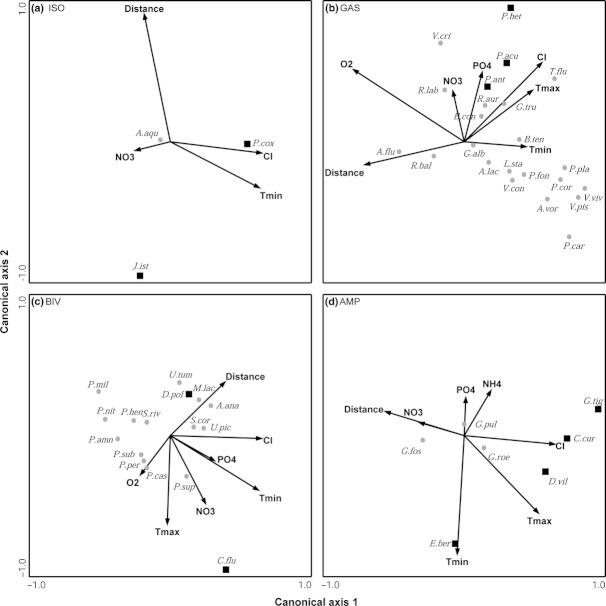
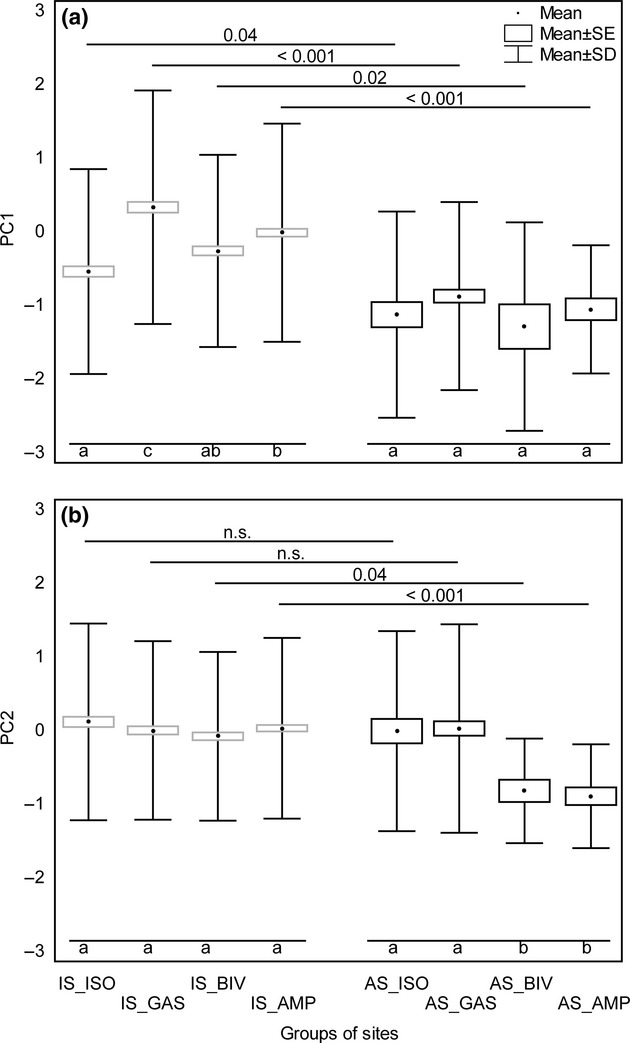
The aim of this study was to assess the invasion risk of freshwater habitats and determine the environmental variables that are most favorable for the establishment of alien amphipods, isopods, gastropods, and bivalves. A total of 981 sites located in streams and rivers in Germany. Therefore we analyzed presence-absence data of alien and indigenous amphipods, isopods, gastropods, and bivalves from 981 sites located in small to large rivers in Germany with regard to eight environmental variables: chloride, ammonium, nitrate, oxygen, orthophosphate, distance to the next navigable waterway, and maximum and minimum temperature. Degraded sites close to navigable waters were exposed to an increased invasion risk by all major groups of alien species. Moreover, invaded sites by all four groups of alien species were similar, whereas the sites where indigenous members of the four groups occurred were more variable. Increased temperature and chloride concentration as well as decreased oxygen concentration were identified as major factors for the invasibility of a site. Species-specific analyses showed that chloride was among the three most predictive environmental variables determining species assemblage in all four taxonomic groups. Also distance to the next navigable waterways was similarly important. Additionally, the minimum temperature was among the most important variables for amphipods, isopods, and bivalves. The bias in the occurrence patterns of alien species toward similarly degraded habitats suggests that the members of all four major groups of freshwater alien species are a non-random, more tolerant set of species. Their common tolerance to salinity, high temperature, and oxygen depletion may reflect that most alien species were spread in ballast water tanks, where strong selective pressures, particularly temperature fluctuations, oxygen depletion, and increased salinity may create a bottleneck for successful invasion. Knowledge on the major factors that influence the invasion risk of a habitat is needed to develop strategies to limit the spread of invasive species.
本研究旨在评估淡水生境的入侵风险,并确定最有利于外来广温性十足目、等足目、腹足纲和双壳纲生物定殖的环境变量。共 981 个位于德国溪流和河流中的地点。因此,我们分析了德国从小型到大型河流中 981 个地点的外来和本地十足目、等足目、腹足纲和双壳纲的存在 - 缺失数据,涉及 8 个环境变量:氯化物、铵、硝酸盐、氧气、正磷酸盐、到最近通航水道的距离以及最高和最低温度。靠近通航水道的退化地点受到所有主要外来物种群体入侵风险的增加。此外,所有四个外来物种组入侵的地点相似,而四个组本地成员发生的地点则更加多样化。温度升高和氯化物浓度增加以及氧气浓度降低被确定为一个地点易受入侵的主要因素。物种特异性分析表明,氯化物是所有四个分类群中确定物种组合的三个最具预测性环境变量之一。靠近通航水道的距离也同样重要。此外,最低温度是对十足目、等足目和双壳纲最重要的变量之一。外来物种发生模式的偏向表明,所有四个主要淡水外来物种组的成员都是一组非随机的、更具耐受性的物种。它们对盐度、高温和氧气耗尽的共同耐受性可能反映出大多数外来物种是在压载水舱中传播的,在压载水舱中,强烈的选择压力,特别是温度波动、氧气耗尽和增加的盐度,可能会为成功入侵创造瓶颈。了解影响生境入侵风险的主要因素对于制定限制入侵物种传播的策略是必要的。