Department of Nephrology, Peking Union Medical College Hospital, Chinese Academy of Medical Sciences, No. 1 Shuaifuyan, Wangfujing Street, Beijing, China.
Department of Physiology and Pathophysiology, National Key Laboratory of Medical Molecular Biology, Institute of Basic Medical Sciences Chinese Academy of Medical Sciences/School of Basic Medicine Peking Union Medical College, 5 Dong Dan San Tiao, Beijing, China.
Proteome Sci. 2012 Nov 21;10(1):70. doi: 10.1186/1477-5956-10-70.
The urinary proteome has been widely used for biomarker discovery. A urinary proteome database from normal humans can provide a background for discovery proteomics and candidate proteins/peptides for targeted proteomics. Therefore, it is necessary to define the minimum number of individuals required for sampling to represent the normal urinary proteome.
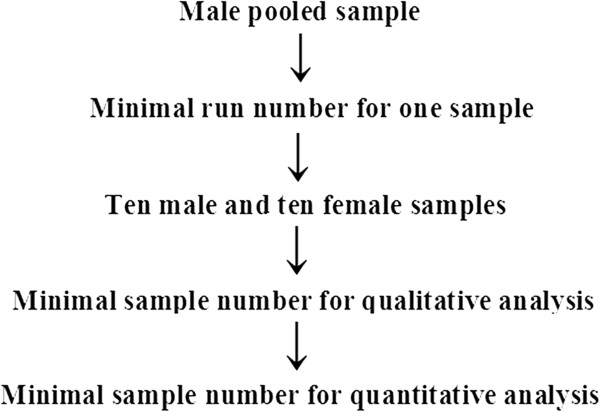
In this study, inter-individual and inter-gender variations of urinary proteome were taken into consideration to achieve a representative database. An individual analysis was performed on overnight urine samples from 20 normal volunteers (10 males and 10 females) by 1DLC/MS/MS. To obtain a representative result of each sample, a replicate 1DLCMS/MS analysis was performed. The minimal sample number was estimated by statistical analysis.
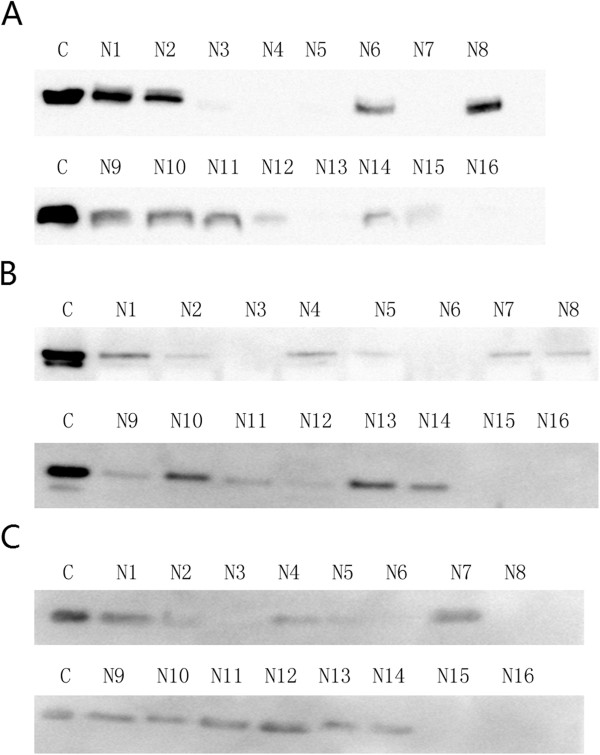
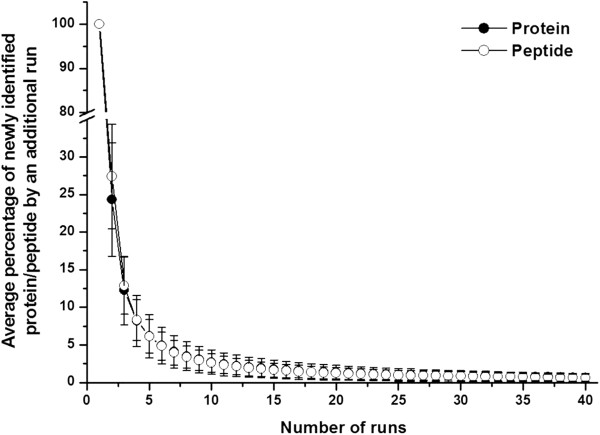
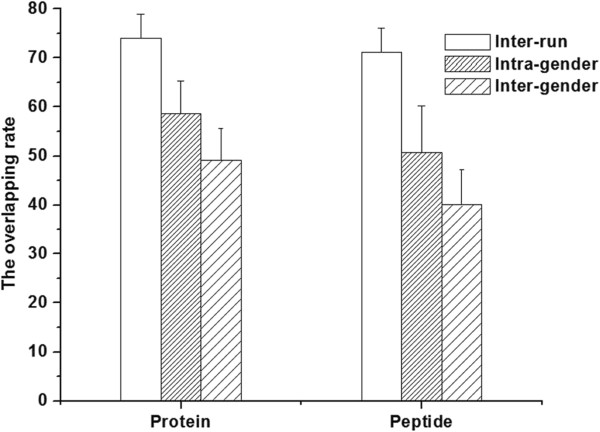
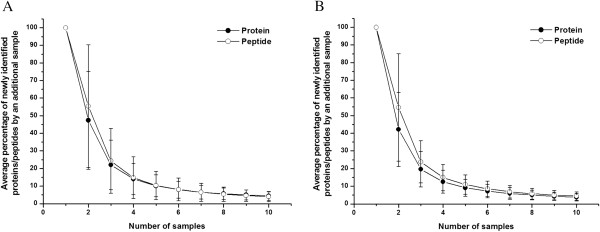
For qualitative analysis, less than 5% of new proteins/peptides were identified in a male/female normal group by adding a new sample when the sample number exceeded nine. In addition, in a normal group, the percentage of newly identified proteins/peptides was less than 5% upon adding a new sample when the sample number reached 10. Furthermore, a statistical analysis indicated that urinary proteomes from normal males and females showed different patterns. For quantitative analysis, the variation of protein abundance was defined by spectrum count and western blotting methods. And then the minimal sample number for quantitative proteomic analysis was identified.
For qualitative analysis, when considering the inter-individual and inter-gender variations, the minimum sample number is 10 and requires a balanced number of males and females in order to obtain a representative normal human urinary proteome. For quantitative analysis, the minimal sample number is much greater than that for qualitative analysis and depends on the experimental methods used for quantification.
尿蛋白质组已被广泛用于生物标志物的发现。正常人群的尿蛋白质组数据库可以为发现蛋白质组学提供背景,并为靶向蛋白质组学提供候选蛋白质/肽。因此,有必要定义取样所需的最少个体数量,以代表正常尿蛋白质组。
在这项研究中,考虑到个体间和性别间的尿蛋白质组差异,以实现具有代表性的数据库。对 20 名正常志愿者(10 名男性和 10 名女性)的过夜尿液样本进行个体分析,采用 1DLC/MS/MS。为了获得每个样本的代表性结果,对其进行了重复的 1DLC-MS/MS 分析。通过统计分析估计最小样本数。
定性分析中,当样本数超过 9 时,男性/女性正常组中通过添加新样本,新鉴定的蛋白质/肽不到 5%。此外,在正常组中,当样本数达到 10 时,通过添加新样本,新鉴定的蛋白质/肽不到 5%。此外,统计分析表明,正常男性和女性的尿蛋白质组显示出不同的模式。定量分析中,通过光谱计数和 Western blot 方法定义蛋白质丰度的变化。然后确定了定量蛋白质组学分析的最小样本数。
定性分析时,考虑到个体间和性别间的差异,最小样本数为 10,并且需要平衡的男性和女性数量,以获得具有代表性的正常人类尿蛋白质组。定量分析时,最小样本数比定性分析多得多,并且取决于用于定量的实验方法。