Origins Institute and Department of Physics and Astronomy, McMaster University, Hamilton, ON L8S 4M1, Canada.
Biol Direct. 2012 Nov 24;7:42. doi: 10.1186/1745-6150-7-42.
Life depends on biopolymer sequences as catalysts and as genetic material. A key step in the Origin of Life is the emergence of an autocatalytic system of biopolymers. Here we study computational models that address the way a living autocatalytic system could have emerged from a non-living chemical system, as envisaged in the RNA World hypothesis.
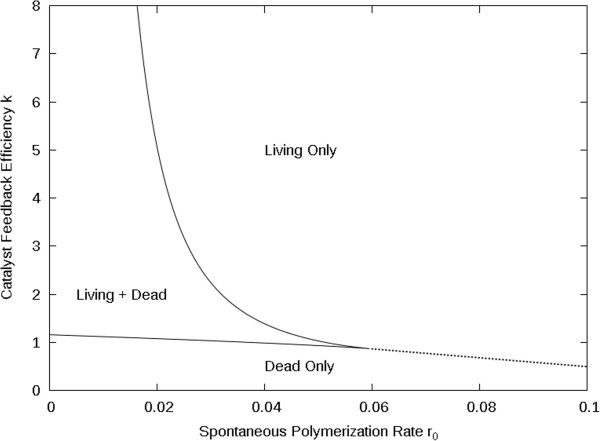
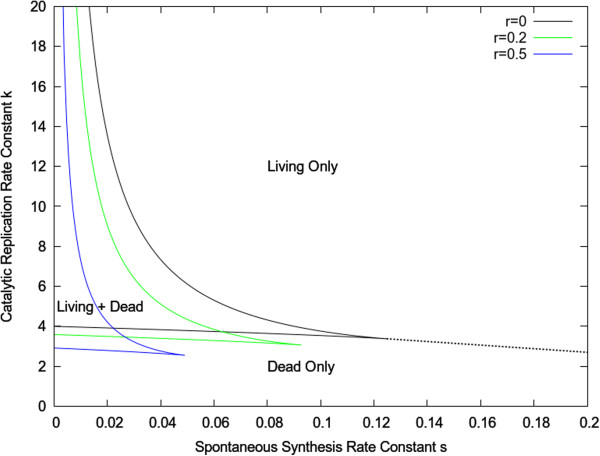
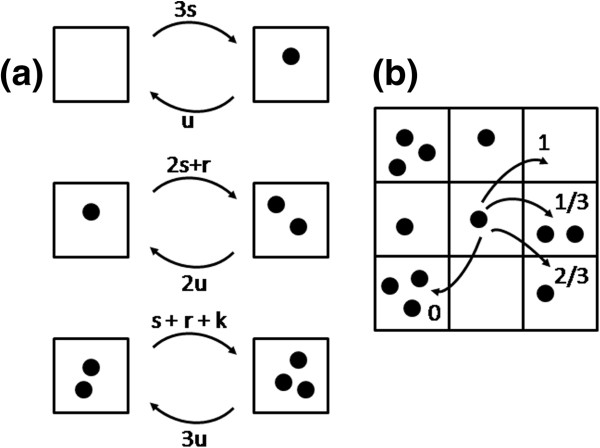
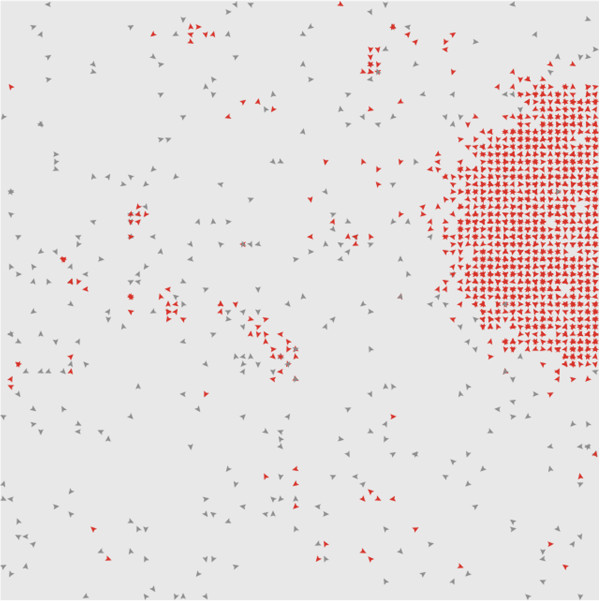
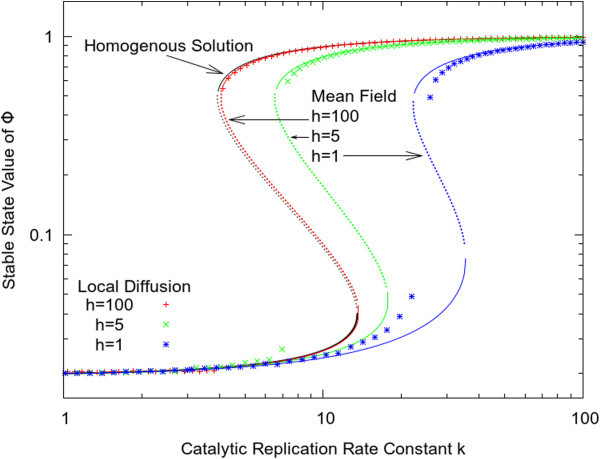
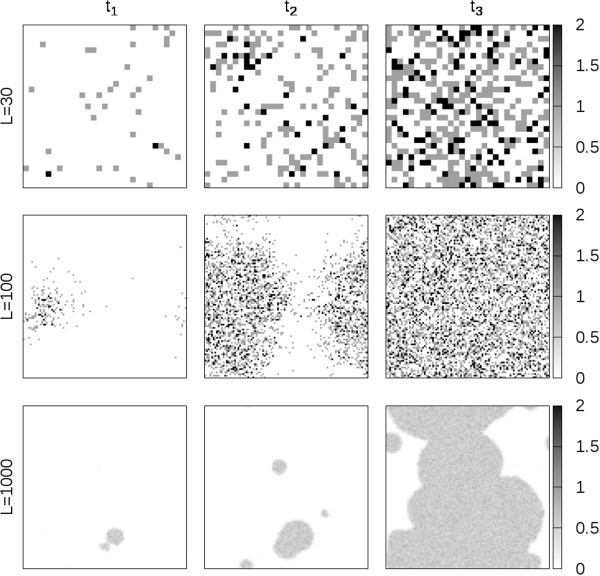
We consider (i) a chemical reaction system describing RNA polymerization, and (ii) a simple model of catalytic replicators that we call the Two's Company model. Both systems have two stable states: a non-living state, characterized by a slow spontaneous rate of RNA synthesis, and a living state, characterized by rapid autocatalytic RNA synthesis. The origin of life is a transition between these two stable states. The transition is driven by stochastic concentration fluctuations involving relatively small numbers of molecules in a localized region of space. These models are simulated on a two-dimensional lattice in which reactions occur locally on single sites and diffusion occurs by hopping of molecules to neighbouring sites.
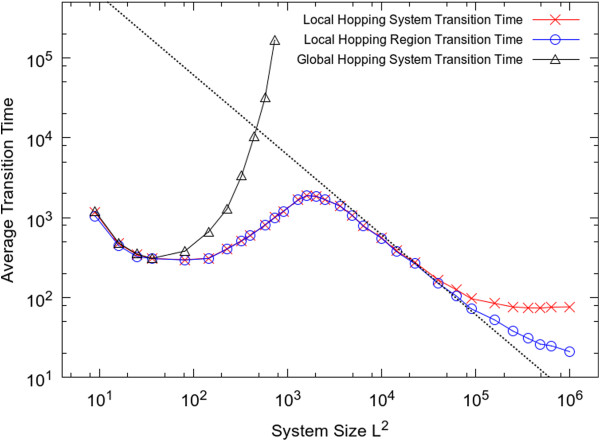
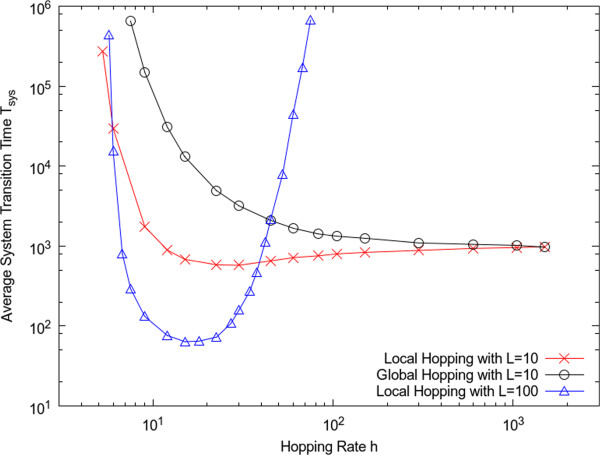
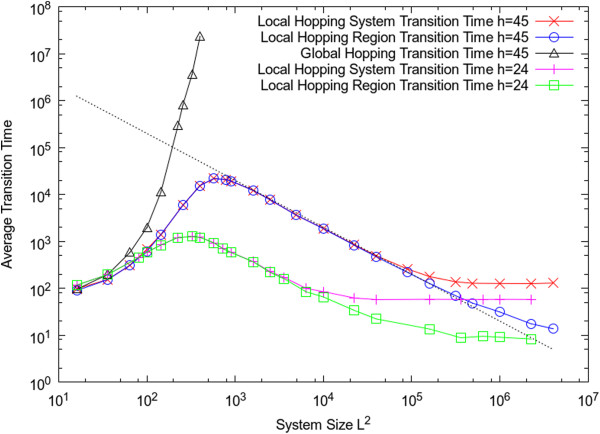
If diffusion is very rapid, the system is well-mixed. The transition to life becomes increasingly difficult as the lattice size is increased because the concentration fluctuations that drive the transition become relatively smaller when larger numbers of molecules are involved. In contrast, when diffusion occurs at a finite rate, concentration fluctuations are local. The transition to life occurs in one local region and then spreads across the rest of the surface. The transition becomes easier with larger lattice sizes because there are more independent regions in which it could occur. The key observations that apply to our models and to the real world are that the origin of life is a rare stochastic event that is localized in one region of space due to the limited rate of diffusion of the molecules involved and that the subsequent spread across the surface is deterministic. It is likely that the time required for the deterministic spread is much shorter than the waiting time for the origin, in which case life evolves only once on a planet, and then rapidly occupies the whole surface.
生命依赖于作为催化剂和遗传物质的生物聚合物序列。生命起源的关键步骤是生物聚合物自动催化体系的出现。在这里,我们研究了计算模型,以解决在 RNA 世界假说中设想的从非生命化学体系中出现活的自动催化体系的方法。
我们考虑了(i)描述 RNA 聚合反应的化学反应体系,以及(ii)我们称之为“二人公司”模型的简单催化复制模型。这两个系统都有两个稳定状态:一个是非生命状态,其特征是 RNA 合成的自发速率较慢,另一个是生命状态,其特征是快速的自动催化 RNA 合成。生命的起源是这两个稳定状态之间的转变。这种转变是由涉及空间局部区域中相对少量分子的随机浓度波动驱动的。这些模型在二维晶格上进行模拟,其中反应在单个站点上局部发生,分子通过跳跃到相邻站点进行扩散。
如果扩散非常快,系统就是均匀混合的。随着晶格尺寸的增加,向生命的转变变得越来越困难,因为当涉及更多分子时,驱动转变的浓度波动会相对变小。相比之下,当扩散以有限的速率发生时,浓度波动是局部的。向生命的转变发生在一个局部区域,然后扩展到表面的其余部分。随着晶格尺寸的增大,向生命的转变变得更容易,因为有更多独立的区域可以发生转变。适用于我们的模型和现实世界的关键观察结果是,生命的起源是一个罕见的随机事件,由于涉及的分子扩散速率有限,它局限于空间的一个区域,随后向表面的扩展是确定性的。在这种情况下,向表面的确定性扩展所需的时间很可能比起源的等待时间短得多,因此生命在一个行星上只进化一次,然后迅速占据整个表面。