Department of Biomedical Sciences, University of Prince Edward Island, 550 University Avenue, Charlottetown, PEI, Canada C1A4P3.
EPMA J. 2010 Jun;1(2):217-27. doi: 10.1007/s13167-010-0019-0. Epub 2010 Jun 9.
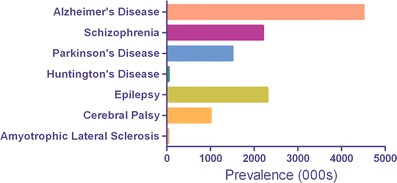
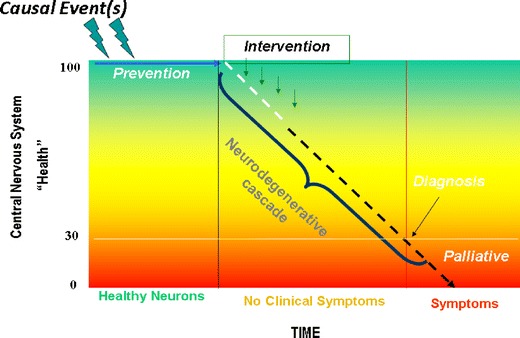
Mental and neurological disorders are increasingly prevalent and constitute a major societal and economic burden worldwide. Many of these diseases and disorders are characterized by progressive deterioration over time, that ultimately results in identifiable symptoms that in turn dictate therapy. Disease-specific symptoms, however, often occur late in the degenerative process. A better understanding of presymptomatic events could allow for the development of new diagnostics and earlier interventions that could slow or stop the disease process. Such studies of progressive neurodegeneration require the use of animal models that are characterized by delayed or slowly developing disease phenotype(s). This brief review describes several examples of such animal models that have recently been developed with relevance to various neurological diseases and disorders, and delineates the potential of such models to aid in predictive diagnosis, early intervention and disease prevention.
精神和神经紊乱的发病率不断上升,在全球范围内给社会和经济带来了重大负担。这些疾病和紊乱中有很多会随着时间推移逐渐恶化,最终导致可识别的症状,进而决定治疗方法。然而,特定疾病的症状通常在退行性过程的晚期才出现。更好地了解无症状前的事件可能会为新的诊断和更早的干预措施提供机会,从而减缓或阻止疾病进程。对进行性神经退行性变的这类研究需要使用具有延迟或缓慢发展的疾病表型的动物模型。本简要综述描述了最近为各种神经疾病和紊乱开发的几种此类动物模型的实例,并阐述了这些模型在预测诊断、早期干预和疾病预防方面的潜力。