Department of Radiology, Rheinische Friedrich-Wilhelms-University of Bonn, Bonn, Germany.
EPMA J. 2011 Jun;2(2):197-210. doi: 10.1007/s13167-011-0087-9. Epub 2011 Jun 9.
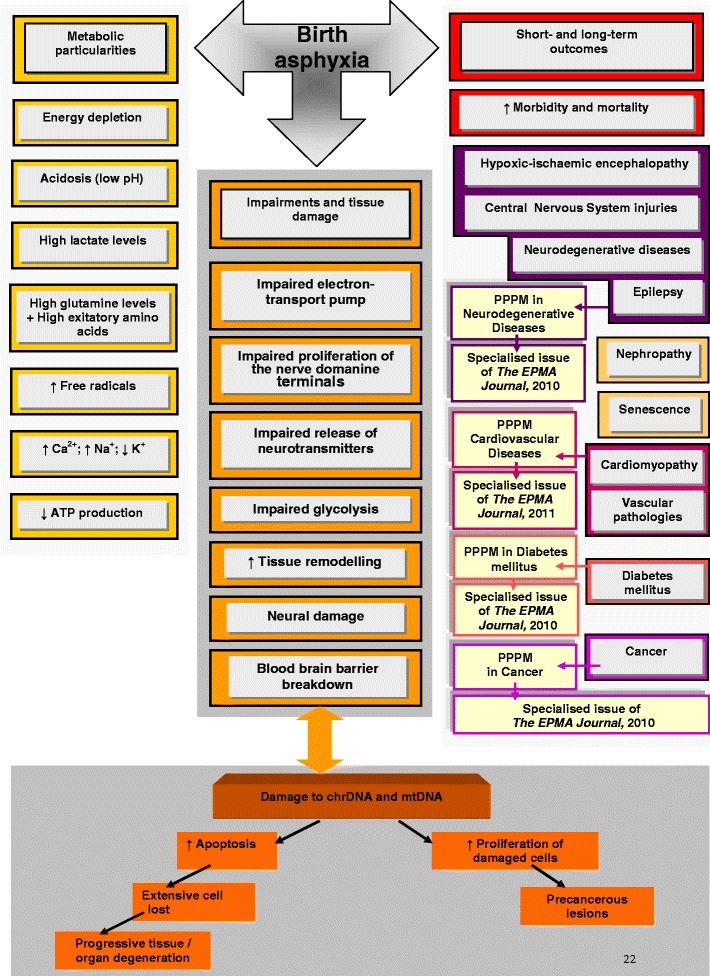
Perinatal Asphyxia-oxygen deficit at delivery-can lead to severe hypoxic ischaemic organ damage in newborns followed by a fatal outcome or severe life-long pathologies. The severe insults often cause neurodegenerative diseases, mental retardation and epilepsies. The mild insults lead to so-called "minimal brain-damage disorders" such as attention deficits and hyperactivity, but can also be associated with the development of schizophrenia and life-long functional psychotic syndromes. Asphyxia followed by re-oxygenation can potentially lead to development of several neurodegenerative pathologies, diabetes type 2 and cancer. The task of individual prediction, targeted prevention and personalised treatments before a manifestation of the life-long chronic pathologies usually developed by newborns with asphyxic deficits, should be given the extraordinary priority in neonatology and paediatrics. Socio-economical impacts of educational measures and advanced strategies in development of robust diagnostic approaches targeted at effected molecular pathways, biomarker-candidates and potential drug-targets for tailored treatments are reviewed in the paper.
围产期窒息-分娩时的氧气不足-可导致新生儿严重缺氧缺血性器官损伤,随后导致致命结局或严重终身性病变。严重损伤常导致神经退行性疾病、智力迟钝和癫痫。轻度损伤则导致所谓的“轻度脑损伤障碍”,如注意力缺陷和多动,但也可能与精神分裂症和终身功能性精神综合征的发展有关。窒息后再氧合可能导致几种神经退行性病变、2 型糖尿病和癌症的发生。在新生儿因窒息而出现终身慢性病变之前,进行个体预测、有针对性的预防和个性化治疗,应该成为新生儿学和儿科学的重中之重。本文综述了教育措施和先进策略的社会经济学影响,这些措施和策略旨在针对受影响的分子途径、生物标志物候选物和潜在的药物靶点,开发稳健的诊断方法,以进行针对性治疗。