Department of Ophthalmology, Wroclaw Medical University, Borowska 213,50-556, Wroclaw, Poland.
BMC Ophthalmol. 2012 Dec 2;12:61. doi: 10.1186/1471-2415-12-61.
Intraocular pressure (IOP) in the developing eye of a child is not always easy to measure and there is no technique that is known to be the most accurate for the young eye. Measurements are needed on many cohorts of children with different tonometers to determine how the values correlate between instruments, whether corneal parameters affect readings and whether correlations between age and IOP values can be discerned. The aim of this study was to undertake a comparative analysis of three different tonometers on a group of healthy children to see whether differences exist and whether these may be related to central corneal thickness and/or radius of curvature. In addition, the study adds to the relatively small body of literature on IOP in the growing eye which will collectively allow trends to be identified and ultimately norms to be established.
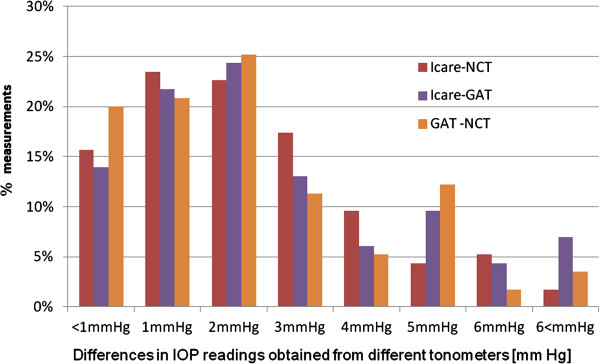
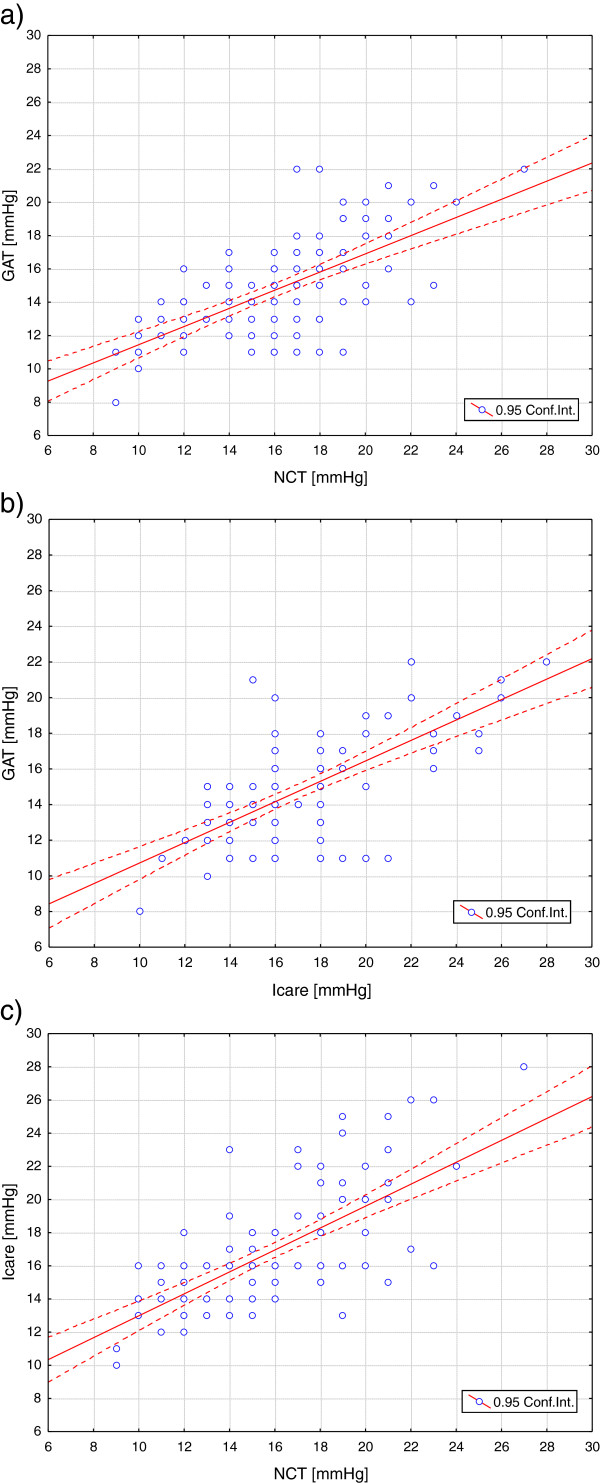
IOP was measured on 115 eyes in a group of Polish children, aged between 5-17 years (mean±standard deviation [SD] 11.3±3.0 years) using three different tonometers: non-contact (NCT), the ICare and Goldmann applanation (GAT). Readings obtained were compared between instruments and with central corneal thickness and radius of curvature.
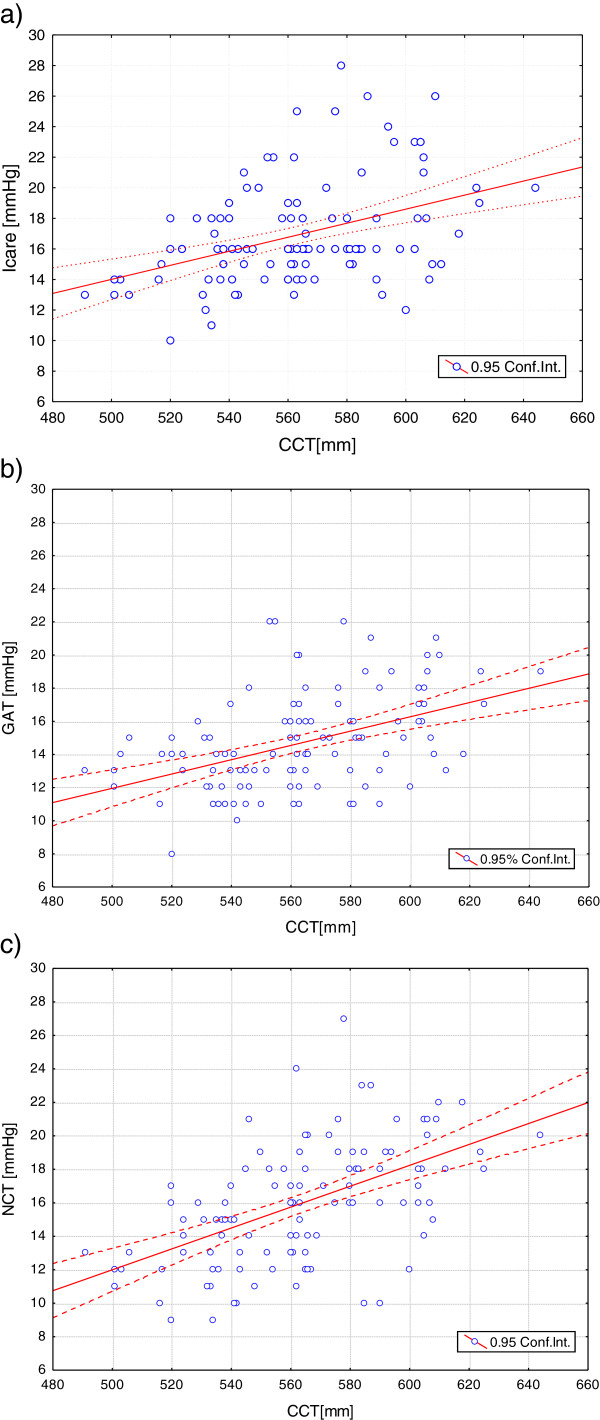
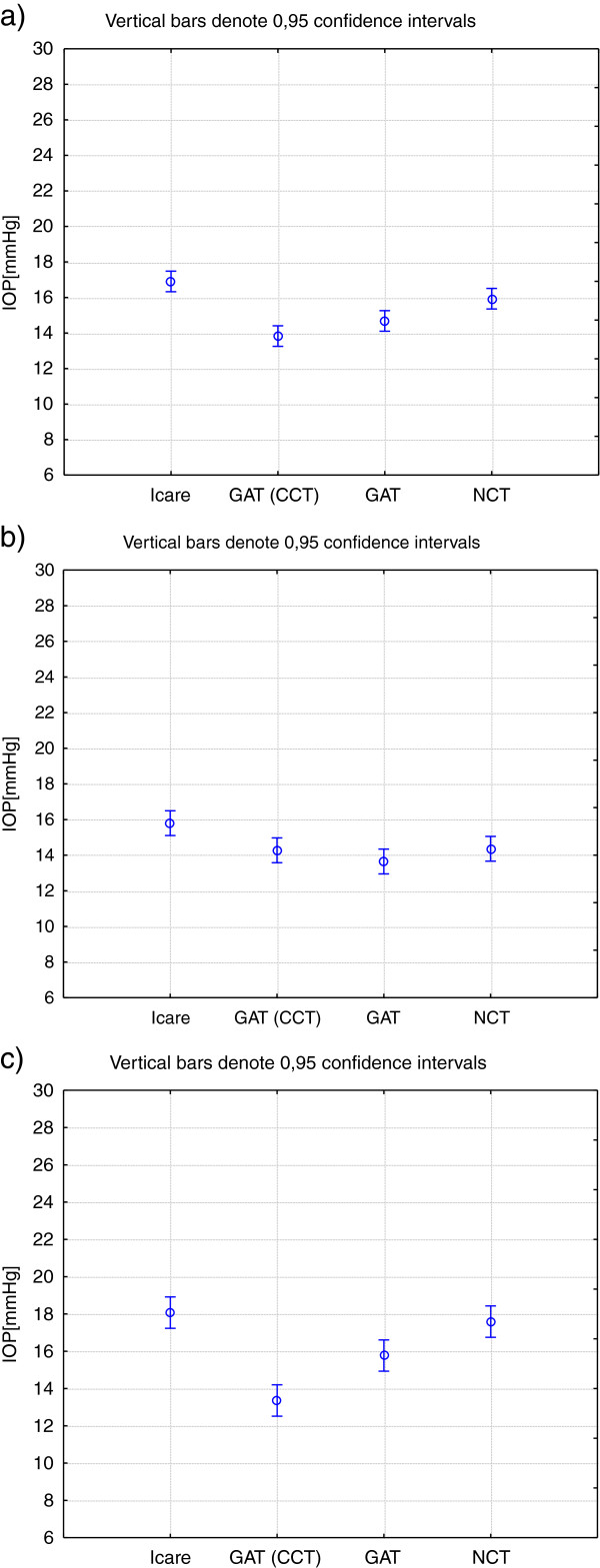
The ICare tonometer provided statistically higher IOP values (16.9±3.4 mmHg) than the GAT (14.7±2.9 mmHg) regardless of corneal thickness and whether or not a correction factor was applied. A correlation was found between central corneal thickness (CCT) and IOP values obtained with all three tonometers but only the IOP values detected with the ICare tonometer showed a statistically significant correlation with radius of curvature (p<0.004). No correlations with age or gender were found for IOP values measured with any of the instruments.
IOP measurements on children vary significantly between instruments and correlations are affected by the corneal thickness. Further studies on children are needed to determine which instrument is most appropriate and to derive a normative IOP scale for the growing eye.
儿童发育过程中的眼内压(IOP)并不总是易于测量,并且对于年轻的眼睛,没有一种技术被认为是最准确的。需要对具有不同眼压计的许多儿童队列进行测量,以确定仪器之间的数值相关性,角膜参数是否会影响读数,以及年龄和 IOP 值之间是否可以建立相关性。本研究的目的是对一组健康儿童使用三种不同眼压计进行比较分析,以确定是否存在差异,以及这些差异是否与中央角膜厚度和/或曲率半径有关。此外,该研究增加了关于生长中眼睛 IOP 的相对较少的文献,这些文献将共同确定趋势,并最终建立规范。
使用三种不同的眼压计(非接触眼压计[NCT]、ICare 和 Goldmann 压平眼压计[GAT])对一组波兰儿童(年龄 5-17 岁,平均±标准差[SD]为 11.3±3.0 岁)的 115 只眼睛进行了 IOP 测量。比较了仪器之间以及与中央角膜厚度和曲率半径的读数。
ICare 眼压计提供的 IOP 值(16.9±3.4mmHg)无论角膜厚度和是否应用校正因子,均显著高于 GAT(14.7±2.9mmHg)。用三种眼压计测量的中央角膜厚度(CCT)与 IOP 值之间均存在相关性,但只有用 ICare 眼压计测量的 IOP 值与曲率半径呈统计学显著相关(p<0.004)。用任何仪器测量的 IOP 值均与年龄或性别无相关性。
不同仪器之间儿童的 IOP 测量值差异显著,且相关性受角膜厚度的影响。需要对儿童进行进一步的研究,以确定哪种仪器最合适,并为生长中的眼睛制定正常的 IOP 范围。