Jožef Stefan Institute, Jamova 39, 1000 Ljubljana, Slovenia.
Sensors (Basel). 2012 Oct 15;12(10):13813-28. doi: 10.3390/s121013813.
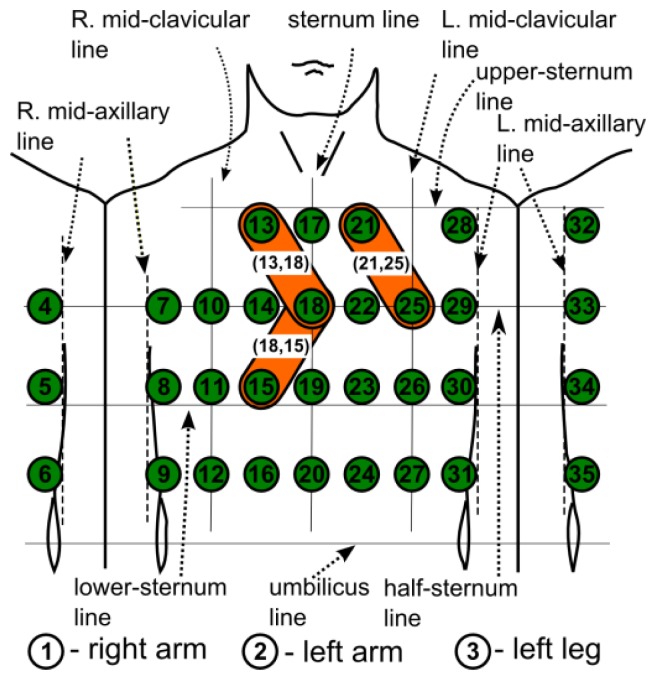
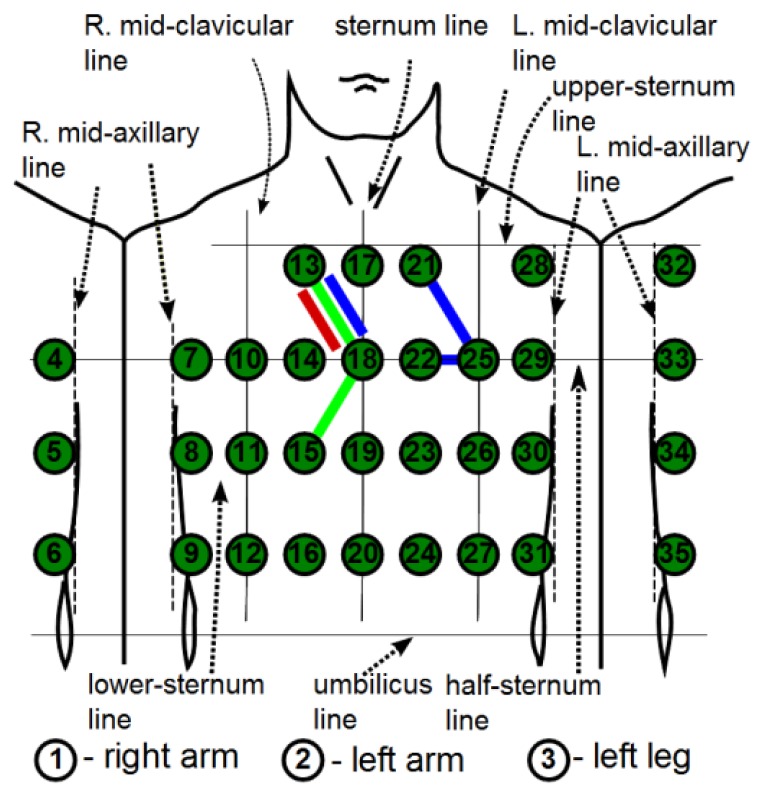
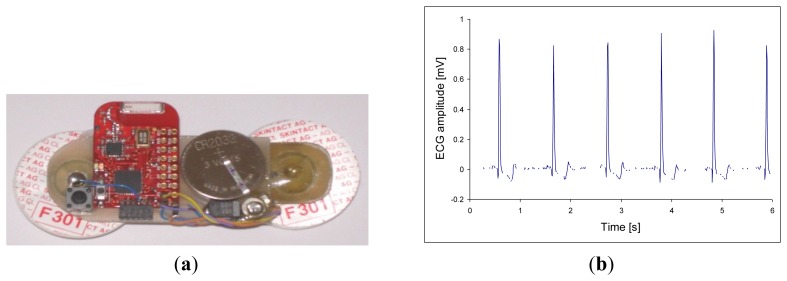
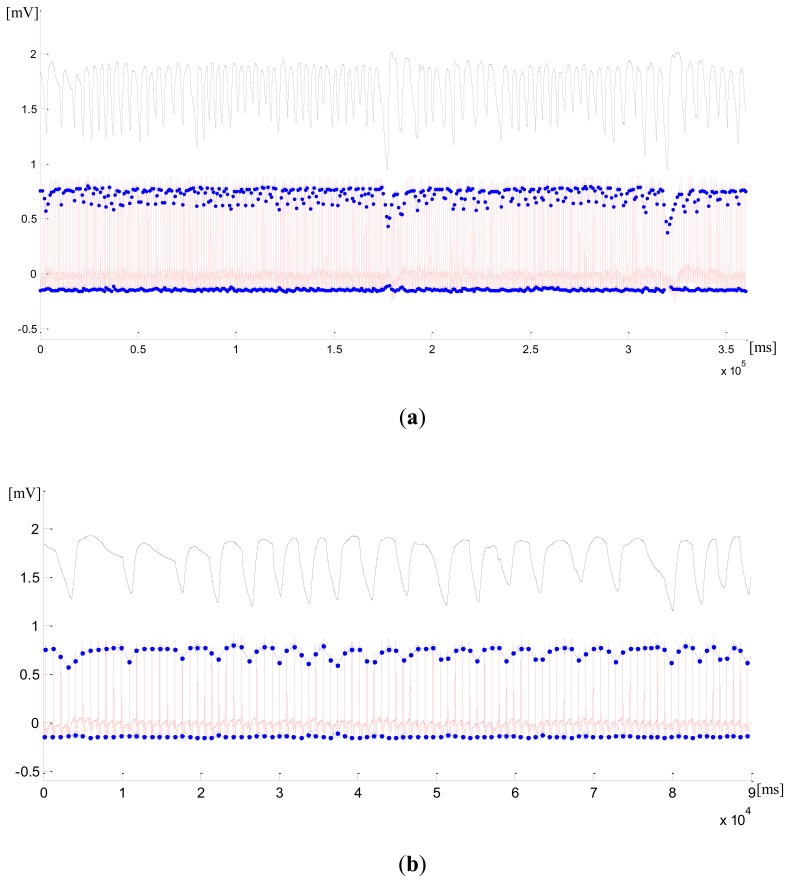
We propose a new body sensor for extracting the respiration rate based on the amplitude changes in the body surface potential differences between two proximal body electrodes. The sensor could be designed as a plaster-like reusable unit that can be easily fixed onto the surface of the body. It could be equipped either with a sufficiently large memory for storing the measured data or with a low-power radio system that can transmit the measured data to a gateway for further processing. We explore the influence of the sensor’s position on the quality of the extracted results using multi-channel ECG measurements and considering all the pairs of two neighboring electrodes as potential respiration-rate sensors. The analysis of the clinical measurements, which also include reference thermistor-based respiration signals, shows that the proposed approach is a viable option for monitoring the respiration frequency and for a rough classification of breathing types. The obtained results were evaluated on a wireless prototype of a respiration body sensor. We indicate the best positions for the respiration body sensor and prove that a single sensor for body surface potential difference on proximal skin electrodes can be used for combined measurements of respiratory and cardiac activities.
我们提出了一种新的体传感器,用于通过两个近端体电极之间的体表电位差的幅度变化来提取呼吸率。该传感器可以设计为类似石膏的可重复使用单元,可轻松固定在身体表面上。它可以配备足够大的内存来存储测量数据,也可以配备低功耗无线电系统,将测量数据传输到网关进行进一步处理。我们使用多通道 ECG 测量并考虑所有两个相邻电极对作为潜在的呼吸率传感器,探索了传感器位置对提取结果质量的影响。对包括基于参考热敏电阻的呼吸信号在内的临床测量的分析表明,该方法是监测呼吸频率和粗略分类呼吸类型的可行选择。在呼吸体传感器的无线原型上评估了获得的结果。我们指出了呼吸体传感器的最佳位置,并证明了近端皮肤电极上的体表电位差的单个传感器可用于呼吸和心脏活动的组合测量。