Wellcome Trust Centre for Stem Cell Research, University of Cambridge , Tennis Court Road, Cambridge CB2 1QN , UK ; Department of Biochemistry, University of Cambridge , Tennis Court Road, Cambridge CB2 1QN , UK.
Biol Open. 2012 Jan 15;1(1):58-65. doi: 10.1242/bio.2011029. Epub 2011 Nov 1.
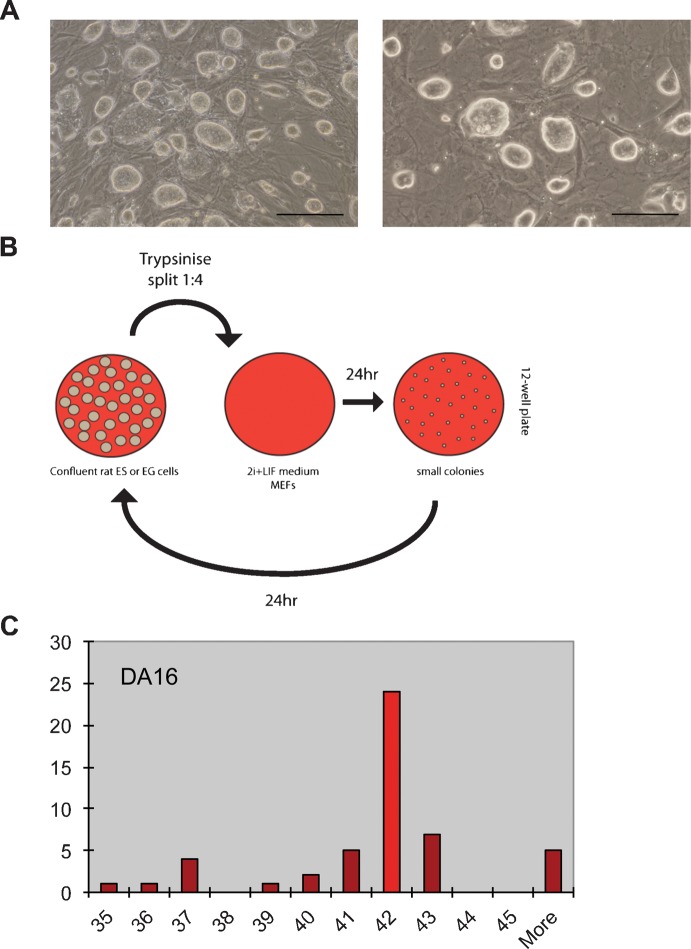
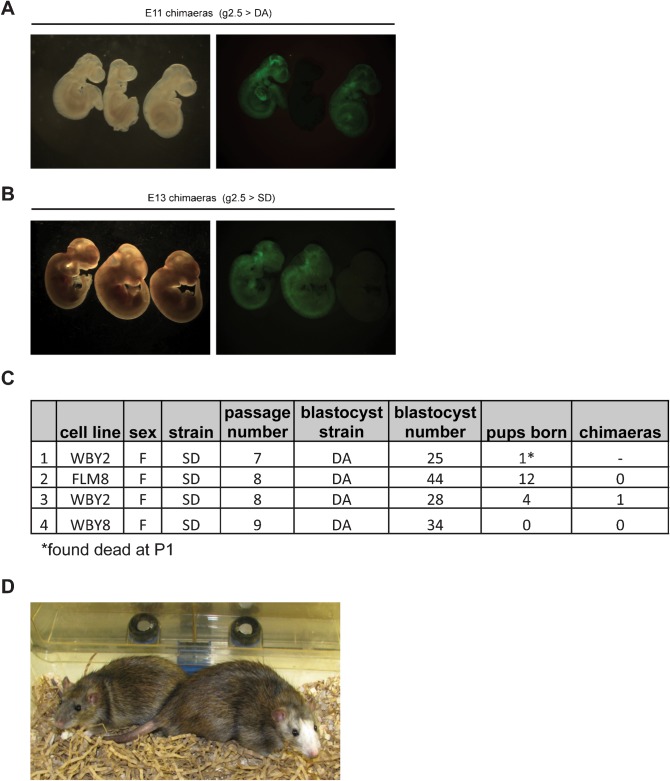
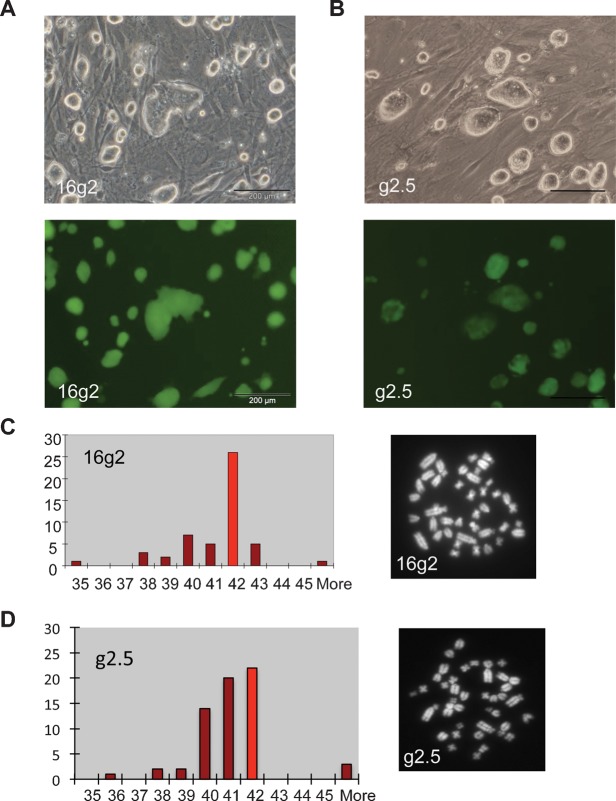
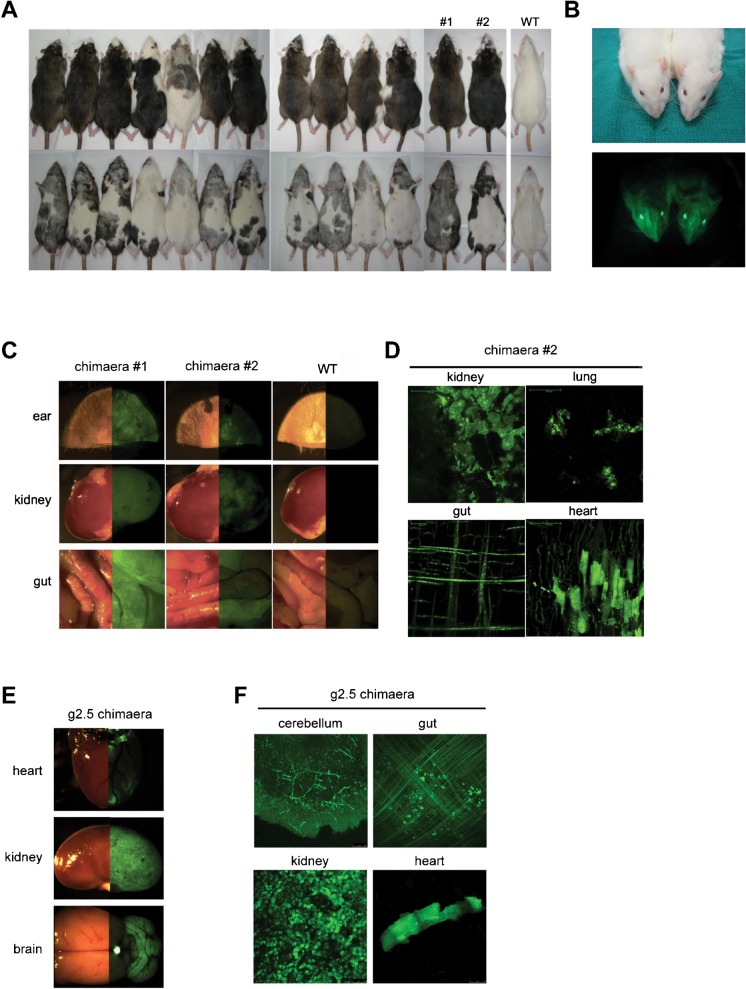
The ability of cultured pluripotent cells to contribute to the germline of chimaeric animals is essential to their utility for genetic manipulation. In the three years since rat embryonic stem (ES) cells were first reported the anticipated proliferation of genetically modified rat models from this new resource has not been realised. Culture instability, karyotypic anomalies, and strain variation are postulated to contribute to poor germline colonisation capacity. The resolution of these issues is essential to bring pluripotent cell-based genetic manipulation technology in the rat to the level of efficiency achieved in the mouse. Recent reports have described various alternative methods to maintain rat ES cells that include provision of additional small molecules and selective passaging methods. In contrast, we report that euploid, germline competent rat ES and embryonic germ (EG) cell lines can be maintained by simple adherent culture methods in defined medium supplemented with the original two inhibitors (2i) of the mitogen-activated protein kinase (ERK1/2) cascade and of glycogen synthase kinase 3, in combination with the cytokine leukaemia inhibitory factor (LIF). We demonstrate genetic modification, clonal expansion and transmission through the germline of rat ES and EG cell lines. We also describe a marked preference for full-term chimaera contribution when SD strain blastocysts are used as recipients for either DA or SD pluripotent stem cells.
培养的多能细胞将其遗传物质传递给嵌合体动物生殖系的能力对于它们在遗传操作中的应用至关重要。自从首次报道大鼠胚胎干细胞(ES 细胞)以来的三年中,人们期望通过这种新资源来大量繁殖经过基因修饰的大鼠模型,但这一目标尚未实现。培养不稳定、核型异常和品系变异被认为是导致生殖系定植能力差的原因。解决这些问题对于将基于多能细胞的遗传操作技术在大鼠中的应用效率提高到在小鼠中所达到的水平是至关重要的。最近的报告描述了各种维持大鼠 ES 细胞的替代方法,包括提供额外的小分子和选择性传代方法。相比之下,我们报告说,通过在含有最初的丝裂原活化蛋白激酶(ERK1/2)级联和糖原合酶激酶 3 的两种抑制剂(2i)的定义培养基中进行简单的贴壁培养方法,就可以维持具有正常二倍体核型和生殖系能力的大鼠 ES 和胚胎生殖(EG)细胞系。我们证明了大鼠 ES 和 EG 细胞系的遗传修饰、克隆扩增和通过生殖系的传递。我们还描述了当使用 SD 品系囊胚作为 DA 或 SD 多能干细胞的受体时,全期嵌合体贡献的明显偏好。